
 E-Paper



From concern to action: Gurugram resident’s green mission
For Ajay Singh, conversations about pollution and mounting waste were not just talk

 Prefer HTon Google


For Ajay Singh, conversations about pollution and mounting waste were not just talk.
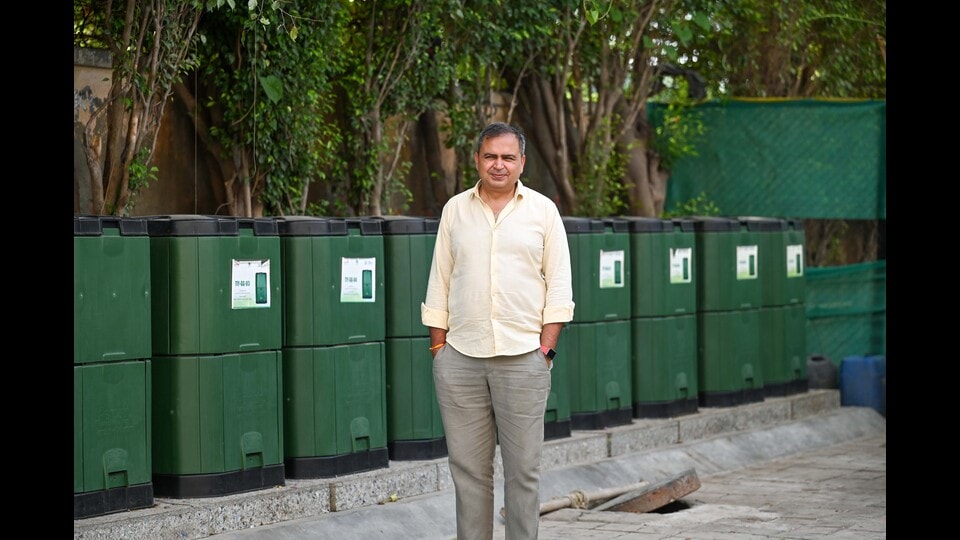
An information technology professional who runs a cybersecurity firm, the 51-year-old resident was troubled by the amount of untreated water, food waste and plastic routinely ending up in landfills. When he became the resident welfare association (RWA) president of Tulip Ivory in Gurugram, he saw an opportunity to test a simple idea: could a housing society treat its waste?
His first intervention was wastewater. Singh focused on upgrading the society’s sewage treatment plant (STP), ensuring that not a single drop of untreated wastewater flowed out of the premises. The society began reusing treated water, reducing dependence on fresh water and preventing discharge into drains.
“That was the starting point,” Singh said. “Once residents see that one system can work efficiently, they become more open to larger changes. People value honesty, intent and transparency.”
The next step came this January when Tulip Ivory introduced segregation of wet waste at source. As the RWA president, he installed 10 aerobins inside the society, where 170 kg of daily kitchen waste from households is converted into compost through aerobic processing. Instead of being transported to landfill sites, vegetable peels and food leftovers now return to the soil as manure used in gardens and green areas.
“The initiative gradually changed habits. Residents began separating waste at home, while housekeeping staff received training on collection and processing,” Singh said.
“We incentivised the housekeeping staff and treated them with dignity. They are given masks and gloves for waste segregation,” he added.
He added that most of this compost is used in society horticulture, and the surplus is sold to residents at nominal cost.
By March, Singh turned his attention to another challenge: plastic. The society placed collection baskets across the community to gather discarded plastic items. The material was then sent to recycling firms that convert low-value plastic into durable benches. Each bench uses nearly 90 kilograms of plastic waste.
“Some of these benches have been installed within the society, but many have found homes elsewhere, in government schools and economically weaker residential areas where seating facilities were limited,” Singh said.
In addition, the RWA president placed donation boxes inside the society, allowing residents to donate old clothes, books, toys, etc., which are then given to orphanages and poorer communities.
For Singh, the effort is not about one project or one society. It is about proving that waste management does not require complex technology or large budgets; it requires intent and consistency.
Over the past year, Tulip Ivory’s journey has shown how small interventions, when sustained, can create visible change — turning wastewater into a resource, food waste into compost, and discarded plastic into something useful for the community.


