E-Paper



Goa nightclub fire: HC takes suo motu cognisance of illegal nightclubs, seeks state reply
The Bombay High Court at Goa was hearing a writ petition filed by Pradeep Ghadi Amonkar and Sunil Diukar. The matter will be heard in early January.

 Prefer HTon Google


Panaji: The Bombay High Court at Goa on Monday took suo motu cognisance of illegally operating nightclubs in the state, including those running from premises without requisite permissions, and sought responses from the Goa government. The matter will be heard in early January.
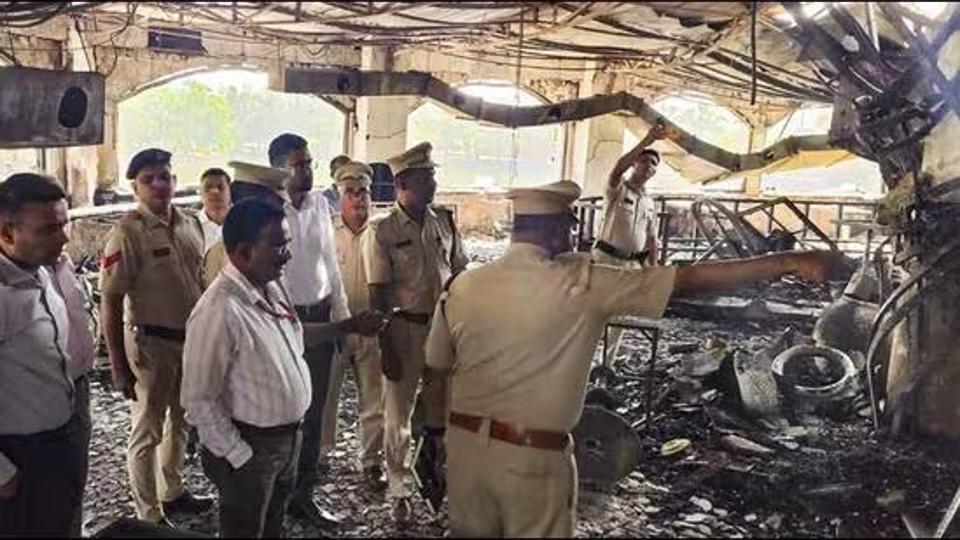
This comes after 25 people were killed and six injured when a massive blaze ripped through the nightclub — Birch by Romeo Lane — in the coastal village of Arpora in north Goa around 11.45 pm on December 6.
The court was hearing a writ petition filed by Pradeep Ghadi Amonkar and Sunil Diukar, who had approached the court with a plea that, despite complaints, authorities had failed to act against the illegal operation of Birch by Romeo Lane.
Arpora village panchayat, on the basis of whose trade licence issued in 2023 several other departments had granted permissions — including the Goa State Pollution Control Board, the Food and Drugs Administration and the excise department — is under scrutiny. The trade licence expired in March 2024, and the panchayat, following a complaint, had issued a demolition order against the establishment. However, the order was stayed on appeal by the deputy director of panchayats.
A division bench of Justices Sarang Kotwal and Ashish Chavan said the issues involved a larger public interest and that it was initiating a suo motu writ petition.
“From the arguments, what could be seen is that the problem lies in the construction of illegal structures and the indiscriminate grant of licences. Though there are certain provisions under local laws by which local bodies can take action, in many cases they are not implemented and remain dead letters in the statute books. In certain cases where demolition orders are passed by local bodies, they are stayed by the appellate authorities. Taking advantage of the stay orders, commercial activities continue in those illegal structures. In some cases, though the structures are illegal, licences are granted for commercial businesses. All this has led to a very serious issue in the State of Goa,” the bench observed.
“It is necessary that the authorities must work together proactively to address these issues rather than shifting the blame on each other. Considering the larger issue involved and its cascading effect on society, all parties must address these issues in a non-adversarial spirit. At this preliminary stage, we notice that it is necessary to assign accountability to the authorities to prevent recurrence of such unfortunate incidents,” it added.
“Though the petition was filed between two parties, we are taking suo motu cognisance of this very serious issue. For this purpose, we direct the Registry to register a suo motu PIL,” the bench said, appointing advocate Rohit Bras de Sa as amicus curiae.
The court directed him to “file a separate memo touching upon all these aspects, which would be exhaustive and cover the entire State of Goa, including different local bodies and adjudicating authorities.”
“We expect the State Government to file a response in the suo motu PIL pointing out what corrective measures can be taken and whether any particular officer or authority can be made accountable for avoiding such tragedies in future,” the High Court added.
Amonkar and Diukar were the complainants on whose complaints the Arpora village panchayat had issued a demolition notice against a structure allegedly belonging to Surinder Kumar Khosla, who had leased it to Being GS Hospitality Goa Arpora LLP, owned by Saurabh Luthra and Gaurav Luthra.