
 E-Paper



Haryana govt declares ‘solid waste exigency’ in Ggm
The initiative aims to tackle the city’s growing waste crisis by implementing comprehensive measures to manage and reduce untreated waste effectively

 Prefer HTon Google


Gurugram: The Haryana government on Wednesday declared a municipal solid waste exigency in Gurugram due to alarming levels of untreated waste adversely affecting the environment and public health, officials aware of the matter said.
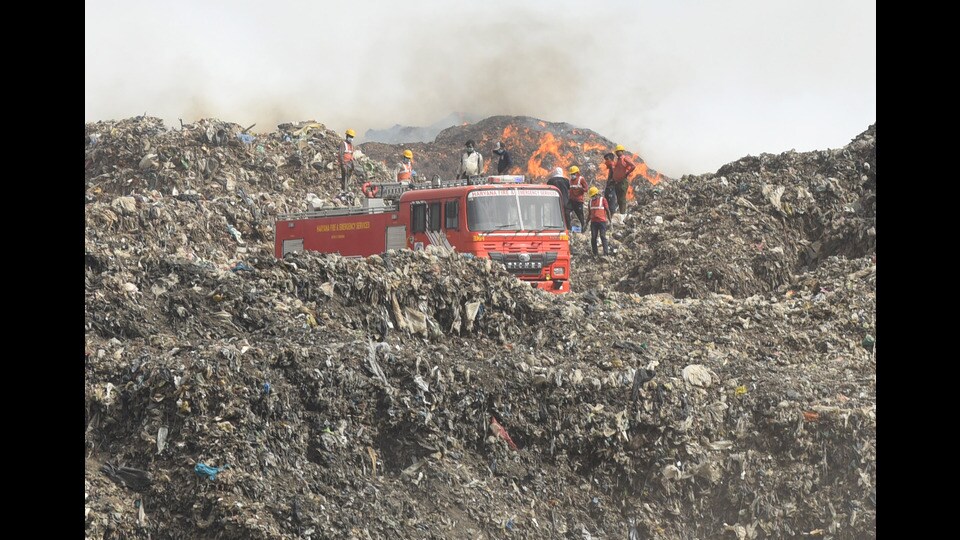
Haryana chief secretary T V S N Prasad, who also serves as the chairman of the Executive Committee of the State Disaster Management Authority (SDMA) said under Section 22 of the Disaster Management Act, 2005, the state government had launched the Solid Waste Environment Exigency Program (SWEEP) to address critical waste management issues in Gurugram.
The initiative aims to tackle the city’s growing waste crisis by implementing comprehensive measures to manage and reduce untreated waste effectively.
Prasad said the program aims to overhaul waste management in Gurugram by implementing a three-tier system for waste collection, segregation, transportation, processing, and disposal across all 35 wards of Gurugram and GMDA areas. “Additional measures include a 24x7 control room with a dedicated helpline, gap analysis of existing infrastructure, a GIS-based waste tracking map, and a robust grievance redressal mechanism. The program also targets the management of construction and demolition waste, ensures adequate machinery for waste processing, institutes cleanliness awards, and launches an Information, Education, and Communication (IEC) plan to raise awareness,” he said.
Officials said that daily reports will be submitted to the SDMA, and any violations will result in punitive measures as per relevant laws.
The chief secretary also said that any violation of this order will attract punitive provisions under the Disaster Management Act, 2005, the Municipal Corporation Act, 1994, and other applicable laws, which may include fines or imprisonment. “This move follows the Supreme Court’s order on May 13, 2024, and the National Green Tribunal’s (NGT) observations, highlighting the urgent need for a cleaner environment as a fundamental right under Article 21 of the Constitution of India,” he said.
The Supreme Court noted that untreated solid waste severely impacts the environment and infringes on citizens’ right to a pollution-free environment. The NGT had previously described the situation as an environmental emergency, underscoring the need for serious and immediate action.
Prasad said that the SWEEP program is led by a high-level committee, which includes the divisional commissioner, deputy commissioner, MCG commissioner, chief engineer of the Gurugram Metropolitan Development Authority (GMDA), senior environmental engineer of the Haryana State Pollution Control Board and the deputy commissioner of police (HQ).
Ruchika Sethi Takkar, founder member of Why Waste Your Waste, a civil society movement for a zero-waste city, said that they feel a bit reassured that the chief secretary has taken these extraordinary steps, recognising the prolonged suffering of the people due to indiscriminate open dumping and burning of municipal waste and horticultural waste in almost all sectors.
“The waste crisis being faced by Gurugram residents is having a direct bearing on our health and well-being including creating air water and soil contamination in our immediate environment. The current situation is nothing short of a health emergency with some sectors facing the worst exposure like Sector 37, Khandsa , Krishna Chowk near Catarpuri, Ghatta Chowk in Sector 55, Sector 29 Leisure Valley area, Golf Course Extension Road facing Nirvana Sector 50, Bajghera and many more,” she said.
Bhawani Shankar Tripathy, vice president, RWA Sector 23A and a public health and environmental expert, with years of experience working with large scale programmes said preparedness is a key component in disaster management that ensures adverse impacts on human and natural environment from the disaster can be minimized. “The current human and environmental health crisis in Gurugram, aggravated by land and air pollution, is a purely man-made disaster in the making and a result of mismanagement of recommended solid-waste and environmental systems. Therefore, under SWEEP, the government must also carry out a thorough review of the service provider agreements for city sanitation that have failed to deliver. Monitoring for results and fixing accountability are key components in disaster preparedness and prevention,” he said.
Rapid clean-up of C&D waste
To ensure a cleaner Gurugram, the Municipal Corporation of Gurugram (MCG) on Wednesday took action for removal of C&D (construction and demolition) waste from key areas such as the Faridabad-Gurugram Road and Sector 29. Officials said within the next 15 to 20 days they will remove all the C&D waste lying on the roadside. Authorities will also take strict action against illegal dumping, including issuing fines and impounding vehicles involved.
The decision was taken during a meeting chaired by Vikas Gupta, Commissioner and Secretary of the Urban Local Bodies Department, held at the Public Works Department Rest House in Gurugram on Wednesday, officials said.
Municipal commissioner Narhari Singh Bangar, said that senior officials from the district administration, GMDA, HSVP, and the Municipal Corporation have been assigned to oversee the cleanliness campaign ward-wise. “We have already started cleaning up areas and removing waste. Various areas are already witnessing intensified cleaning efforts, with a focus on maintaining cleanliness in critical spots and enhancing the overall sanitation infrastructure within the next few days,” he said.


