E-Paper



Odisha Budget 2023-24 focuses on agriculture, health and drinking water
Of the ₹2.3 lakh crore Budget presented, a major allocation was made towards the health sector with Rs.16,048 crore, an increase of about 27% over the previous year and about three times the allocation in the 2017-18 Budget

 Prefer HTon Google


Ahead of the next year’s assembly polls, the Odisha government on Friday announced its last full-fledged state Budget for the financial year 2023-24. State finance minister Niranjan Pujari tabled the Budget with a clear focus on agriculture, health, drinking water and road infrastructure that would give impetus to the rural economy.
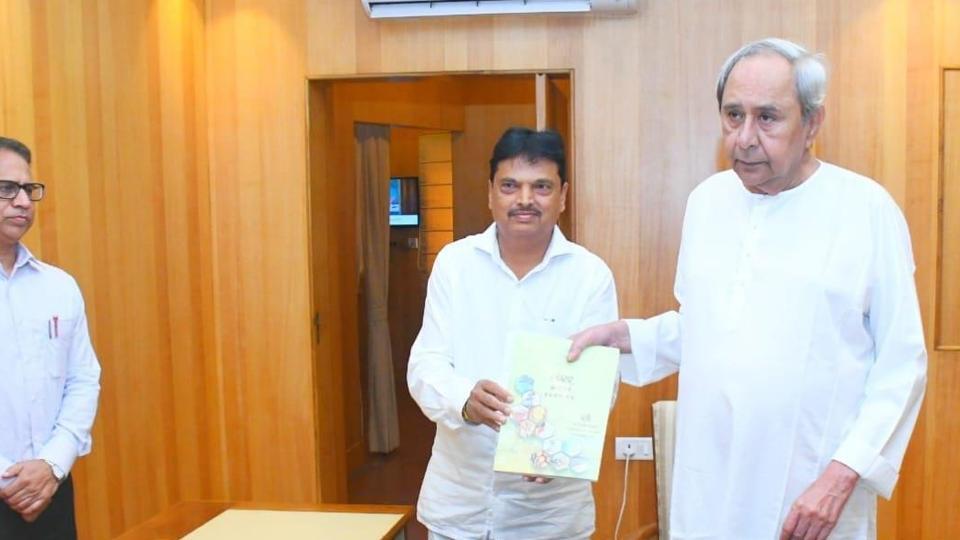
Pujari said it was based on chief minister Naveen Patniak’s vision of building a new Odisha– an empowered Odisha.
Also Read: Odisha economic survey projects 7.82% growth in 2022-23
“The state has not only been able to raise the aspirations of our people but has also been able to meet them by taking the state on an unprecedented growth trajectory. From a state often counted amongst the most underdeveloped states, Odisha is now surging ahead to lead the country in many sectors. Transformation is our singular aim,” he said.
Of the ₹2.3 lakh crore Budget presented, a major allocation was made towards the health sector with Rs.16,048 crore, an increase of about 27% over the previous year and about three times the allocation in the 2017-18 Budget.
The finance minister who allocated ₹750 crore for the transformation of 147 health facilities, including community health centres, sub-divisional hospitals and district headquarters announced that the work will be over before the end of the year. Similarly, to bring down the average response time of ambulances from 30 minutes to 20 minutes, 236 new ambulances would be bought, he said.
Pujari said that in a boost to agriculture and farmers, a Budget of Rs. 24,829 crore was allocated to the agriculture sector which is a 20% rise from the previous year’s Budget. Of this, ₹2,000 crore has been provisioned for a revolving fund which will be utilised for paddy procurement operations that have become a rallying point for aggrieved farmers in the politically-important western Odisha districts.
The Patnaik government also allocated ₹1,879 crore for the Kalia scheme, a cash-transfer scheme for farmers that began in January 2019 and helped the BJD win at least 45 assembly seats in the last assembly polls.
Other major budgetary allocations made by the finance minister include ₹13,215 crore for piped drinking water, and ₹2,800 crore for payment of wages under the Mahatma Gandhi National Rural Employment Guarantee scheme.
Also Read: Congress to propose legislation against hate crime, religious discrimination
For infrastructure in roads, bridges, railways and airports ₹51,683 crore has been provisioned, which is 34% higher than last year’s provision and includes ₹4,600 crore for double-laning of about 3000 km of roads with improved riding quality.
Further, ₹1,900 crore for 526 new bridge projects under the Biju Setu Yojana and ₹2,071 crore for 6000 km of roads under the Mukhyamantri Sadak Yojana were allocated. Besides, money has been allocated for the development of railway projects, viability gap funding subsidy under the UDAN Scheme for connecting smaller airports of Jharsuguda, Jeypore and upcoming state airports at Utkela, Rangeilunda and Malkangiri.
Keeping its focus on self-help groups (SHGs), the government allocated ₹50 crore for Mission Shakti Scooter Yojana under which scooters would be given to members of Mission Shakti SHGs.
While the chief minister praised the Budget calling it progressive, the opposition Bharatiya Janata Party (BJP) said the huge budgetary allocation means nothing while the state is faltering in capital expenditure. “The state is not among the top 10 states when it comes to capital expenditure between 2019 and 2022,” Samir Mohanty, president of Odisha unit of BJP said.