
 E-Paper



Review flags ‘gaps’ in waste management in Gurugram
In Gurugram, which has 5,006 registered sanitation workers, nearly 1,000 remained unassigned, raising concerns about human resource planning. Although the number of personnel marked present rose from 550 in January to 1,432 in March, photographic attendance verification was deemed unreliable due to unclear and incomplete images. Officials said several entries did not match the number of workers recorded

 Prefer HTon Google


Gurugram: A comprehensive review of the state’s solid waste management system has revealed glaring lapses across municipal bodies in the Gurugram division, raising concern about hygiene, operational efficiency and environmental compliance. The review, conducted by the Urban Local Bodies (ULB) department, highlighted critical issues in Gurugram, Panipat, Fatehabad, Mahendragarh, Rohtak, and Jhajjar districts.
The findings, compiled through data from the Solid Waste Management (SWM) Monitoring Portal launched in May 2024, pointed to persistent failures in sanitation worker deployment, vehicle tracking, machinery usage, and waste segregation. Despite the portal’s real-time monitoring capabilities, its use across districts has been inconsistent, defeating its core purpose.
In Gurugram, which has 5,006 registered sanitation workers, nearly 1,000 remained unassigned, raising concerns about human resource planning. Although the number of personnel marked present rose from 550 in January to 1,432 in March, photographic attendance verification was deemed unreliable due to unclear and incomplete images. Officials said several entries did not match the number of workers recorded.
Vehicle tracking — a crucial measure for transparency and operational mapping — was found to be entirely unutilized. None of the urban local bodies (ULBs), including those in Gurugram, Manesar, and Sohna, had uploaded any vehicle movement data as of the last audit.
In terms of machinery usage, Sohna fared best with a 97% utilization rate, while Gurugram remained at a dismal 28.4%. Manesar, Pataudi, and Jatauli Mandi performed relatively better.
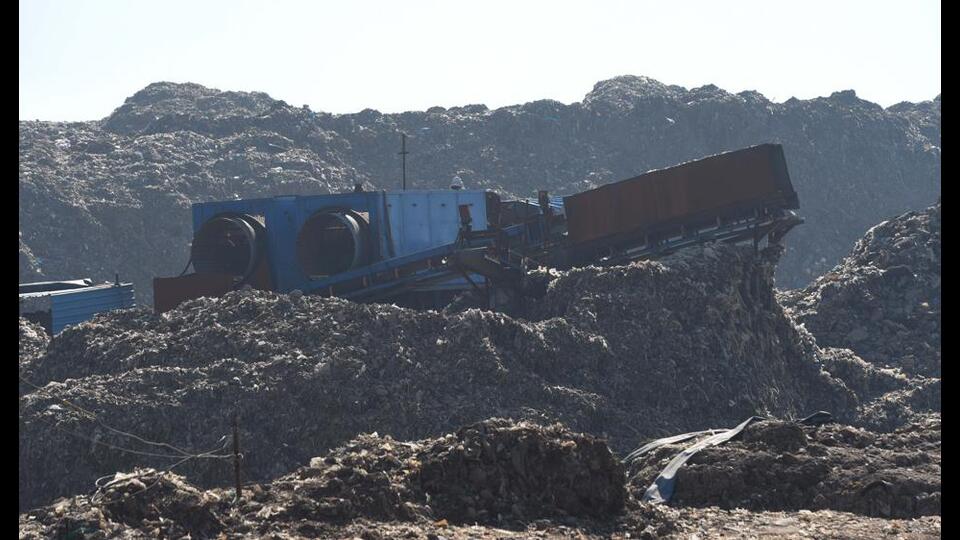
One of the gravest concerns was the near-zero segregation of waste at source in Gurugram and Manesar. Despite receiving large volumes of waste between January and March, almost no processing occurred. Sohna was the only ULB to record marginal processing in January. The situation, officials warned, risks unchecked landfill growth and long-term ecological damage.
Uncleaned secondary waste collection points further underscored the state of neglect. Not a single point was cleaned in Farrukhnagar during the three-month period. Sohna, which began the year with strong numbers, showed a steep decline.
Financial accountability also came under the spotlight. Gurugram topped the list of pending payments, with 13 to 14 SWM invoices awaiting approval. Farrukhnagar, in contrast, had cleared all dues.
Municipal Commissioner of Gurugram, Ashok Kumar Garg, said steps were being taken to address the lapses. “We have called an internal meeting and directed field teams to ensure that streets remain clean and waste is collected systematically. The review has been taken seriously and corrective measures are underway,” he said.
Meanwhile, Municipal Council Manesar Commissioner Renu Sogan stressed the importance of the SWM portal. “This is a first-of-its-kind initiative. It enables real-time tracking of manpower, vehicle deployment, and waste processing. Haryana is among the first states to implement it. Our staff has been sensitised on how to update the portal. However, much more effort is needed at the ground level to ensure accurate and timely entries,” she said.
Despite ₹742.84 lakh being allocated under the Swachh Bharat Mission for aspiration toilets in 2024–25, implementation has been either delayed or poorly documented. Manesar, for instance, had yet to transfer funds into its account.
As rapid urbanisation continues to strain civic infrastructure, experts warn that unless urgent interventions are made, solid waste mismanagement could spark a public health crisis across the region.


