
 E-Paper



ASI excavations: Call for report on decades of digs and display of artefacts
Historians and locals urge ASI to document and publish findings from past excavations in Bihar, as new digs begin at Balirajgarh site.

 Prefer HTon Google


As the Archaeological Survey of India (ASI) begins the fifth round of excavations at the ancient mound of Balirajgarh in Madhubani district, a growing chorus of historians and locals is demanding something far more basic than fresh digging: accountability for what has already been unearthed across Bihar.
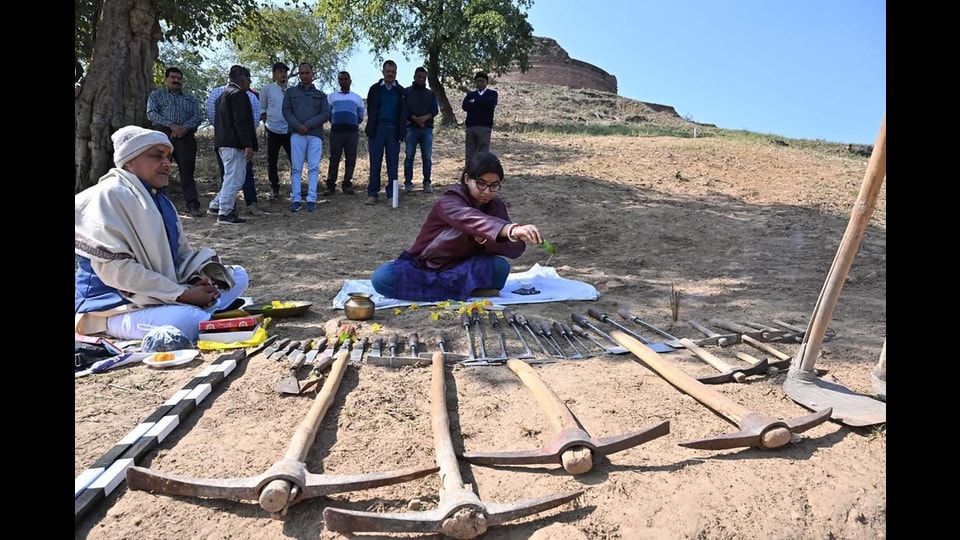
The Balirajgarh site, long tied to legends of the Mithila kingdom and Raja Janak, has been explored four times before — beginning with the ASI’s first effort in 1962-63. Later campaigns in 1972-73, 1974-75 and 2013-14 turned up a massive 10-foot-wide boundary wall estimated to be 2,200 years old and northern black polished ware pottery that could push human activity here back 3,500 years. Yet no comprehensive report has ever been published, and the artefacts remain tucked away from public view.
The ASI’s work does not stop at Balirajgarh. Over the decades it has led excavations at several of state’s most significant locations, including Jaffardih in Nalanda, where digs in 2006-07 uncovered Chalcolithic artefacts suggesting settlement as far back as 1400 BC — possibly the birthplace of Mahamoggallana, one of the Buddha’s foremost disciples. Other major ASI sites include Ghora Katora in Rajgir, Rukmini Sthan and Udyan in Nalanda, the sprawling monastic ruins of Vikramshila in Bhagalpur, Kolhua in Vaishali (famous for its Ashokan pillar and stupa), the brick stupa at Kesaria, Areraj in East Champaran, and Chirand in Saran. Each promised fresh chapters in the state’s layered past, yet most still await proper documentation and public display.
Apart from the ASI’s efforts, the state archaeology directorate and its partner agencies — including the Bihar Virasat Samiti — have carried out their own excavations at more than a dozen sites over the past three decades. Among them are Telhara in Nalanda, where two phases of digging (2009-14 and 2020-22) revealed the ruins of a three-storey Buddhist university believed to pre-date the celebrated Nalanda Mahavihara. Other state-led explorations include Chechar in Vaishali, Salempur in Madhubani, Chandi Asthan in Saharsa, Jaya Mangala Garh in Begusarai, Chausa Garh in Buxar, and Devan Garh in Nawada. Artefacts recovered from these places have largely remained uncatalogued, with reports either incomplete or unpublished.
Additional director general of the ASI, SK Manjul described the report-writing process as “cumbersome” but confirming that draft reports from several excavations have been submitted and are now being vetted. He added that the ASI is exploring ways to display recovered artefacts in museums closer to the sites.
State archaeology director Krishna Kumar pointed to a chronic shortage of technical manpower as one reason for the slackness but insisted the department was now addressing the problem. “The directorate is looking into the issues in inordinate delays in publication of reports on the sites explored in the last two-three decades,” Kumar said. He noted that the report on the first phase of Telhara has been published and that work on another site, Lali Pahari in Lakhisarai, is under way.
Shiv Kumar Mishra, state co-convener of INTACH and a former curator of government museums, also lamented the callous approach of the excavation agencies in handling the publication of reports and documentation of yields at the excavation sites. He argues that the entire purpose of excavation is defeated when findings stay hidden in storerooms. “Bihar possesses a treasure trove of archaeological sites, but historians, archaeologists and common people remain in the dark about their importance for want of authentic documentation,” Mishra said. “We are not even sure where many of the artefacts are kept.”
Former director of Patna museum and general secretary of Bihar Puravid Parishad Umesh Chandra Dwivedy said the archaeological finds of the excavation sites shall be displayed and people, especially those interested in the state’s hoary past, shall know about the new discoveries.
The silence around these digs carries real consequences. Bihar sits at the heart of ancient Magadha — the crucible of Buddhism and Jainism, the cradle of the Mauryan empire and home to some of the world’s earliest universities. Every unreported site is another missing page in that story. As the spades prepare to turn the soil once more at Balirajgarh, scholars and citizens alike are making one simple demand that finish the job properly this time — document, publish and let the past speak for itself.


Stay updated Bihar Lok Sabha Result and with all the Breaking News and Latest News from Bengaluru. Click here for comprehensive coverage of top cities including Delhi, Mumbai, Hyderabad, and more across India . Stay informed on the latest happenings in World News.


