
 E-Paper



Child marriage in Bihar: Expert backs Nitish line, says education works wonders
The UNFPA official presented data to show that the prevalence of child marriage was around 57% among out-of-school girls, while it dropped to 12% overall among girls having completed at least matriculation.

 Prefer HTon Google


United Nations Population Fund (UNFPA)’s population dynamics and research expert Sanjay Kumar on Monday said incidences of child marriage in Bihar was alarmingly higher in out-of-school girls, while it came down significantly among those who have at least completed their class 10 education.
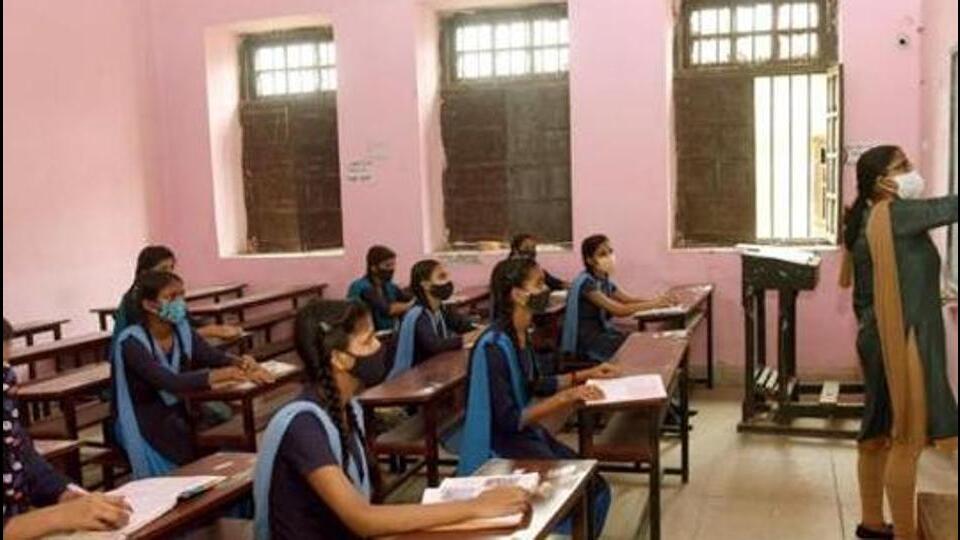
Making a presentation to underline the link between child marriage and education at a seminar at the AN Sinha Institute of Social Studies, the UNFPA official presented data to show that the prevalence of child marriage was around 57% among out-of-school girls, while it dropped to 12% overall among girls having completed at least matriculation.
“Even among the scheduled caste girls, it is just 25% in case of those who have completed matriculation,” he said, while speaking at a seminar on “Factors abetting child marriage in Bihar, experience and perspective”.
UNICEF’s child protection expert Banku Bihari Sarkar said the average rate of prevalence of child marriage in Bihar is around 40%, with seven districts accounting for 51-57% child marriages of girls. “Lakhisarai district has the highest prevalence of 57%. Saran district, which has the most adverse sex ratio (779/1000), also has the lowest rate of child marriage at 26.2% and the reasons need to be probed,” he said.
Experts also pointed to higher maternal mortality rate (MMR) and infant mortality rate (IMR) due to child marriage and reaffirmed its direct linkage with education level of girls, a line maintained by Bihar chief minister Nitish Kumar while narrating state’s experience towards population control on the floor of the Assembly earlier.
“We have witnessed the link between girl’s education and population control. In Bihar, the fertility rate is very high at 3.7%, but it drops significantly with increase in education level of girls. We have found if a mother is matriculate, it drops to two; if a mother is plus two, it goes down to 1.6, less than the national average of 1.7. So, education of girls is the masterstroke for population control,” CM Kumar had said, while underlining the need for girls’ education to control state’s burgeoning population.
Even in the Niti Yoga ranking of the states in terms of achievements vis-a-vis sustainable development goals (SDGs) this year, Bihar left many states far behind on two important social indices — gender equality and violence against women. The statistics also vouch for it. More girls have been enrolled than boys in class IX in Bihar schools for the last couple of years, almost a five-fold increase since 2007-08, bringing gender parity in school education, thanks to state government’s slew of initiatives.
According to Pratham study, the highest school enrolment leap of 13% for girls was registered during the 2006-10 period.


