
 E-Paper



GMRT in Pune to get supercomputing system developed by C-DAC
Prime Minister Narendra Modi will visit Pune on September 26 and 27 to open numerous projects via video conference, and this is one of the new projects he will inaugurate

 Prefer HTon Google


The Centre for Development of Advanced Computing (C-DAC) in Pune has created a supercomputer system for the Giant Metrewave Radio Telescope (GMRT), which is the world’s largest radio telescope of its kind and is located in Khodad. It was established by the National Centre for Radio Astrophysics (NCRA) in Pune, which is part of the Tata Institute of Fundamental Research (TIFR), Department of Atomic Energy, Government of India.
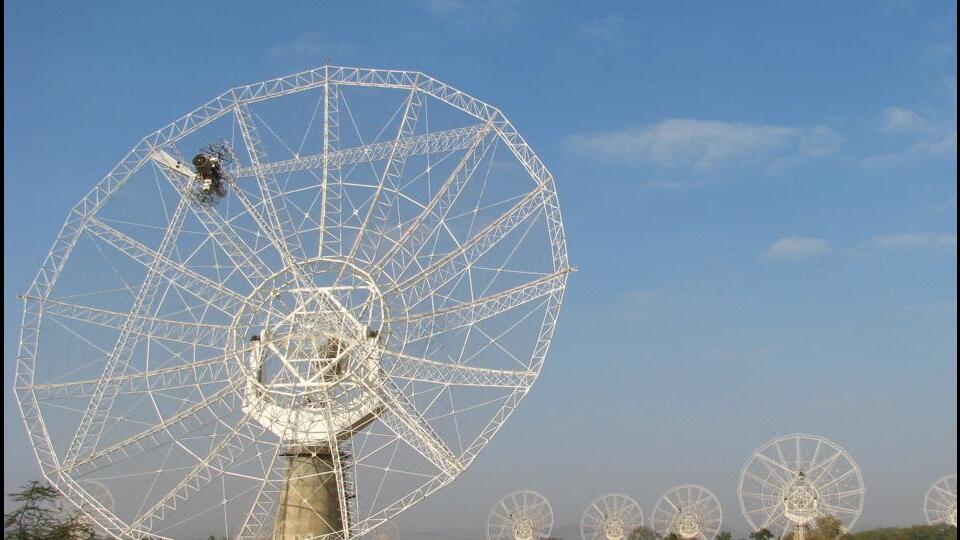
Prime Minister Narendra Modi will visit Pune on September 26 and 27 to open numerous projects via video conference, and this is one of the new projects he will inaugurate. One of NCRA’s senior officials, on the condition of anonymity, stated that the GMRT has received a supercomputing system from C-DAC and will be inaugurated by PM Modi.
The NCRA operates the GMRT in Maharashtra, while C-DAC Pune has commissioned a ‘1 Peta FLOP’ Param Rudra supercomputing system equipped with GPUs, which would increase the GMRT’s sensitivity to low and mid-radio frequencies, allowing for advanced investigations in radio astronomy and the interstellar medium.
The GMRT is among the world’s largest and most sensitive low-frequency radio observatories. It is run by the NCRA in Pune, which is part of the Tata Institute of Fundamental Research in Mumbai.
It is made up of an array of 30 45-meter-diameter antennas spread out over a 30-kilometer area around 80 kilometres from Pune, together with advanced electronics and computation to process data from all of the antennas.
The GMRT was conceptualised and proposed in the late 1980s, built and operational in the 1990s, and made available to the global astronomy community in 2002.


