
 E-Paper



IMD considers Vetal Tekdi for setting up Doppler radar
Now, the IMD’s quest for a suitable site may come to an end as the department has identified Vetal Tekdi as the potential location for installing a radar


Pune
As the changing climatic conditions especially the local climate events are putting challenges in weather forecasting for the India Meteorological Department (IMD), the department is planning to enhance its radar network in Maharashtra.
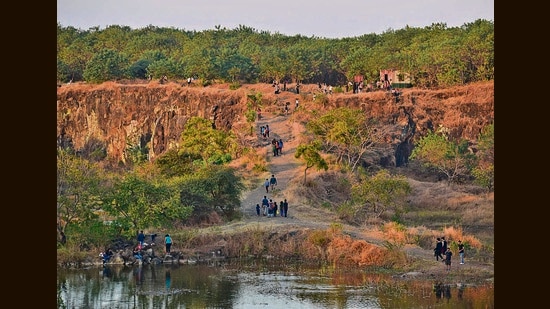
For this, a Doppler radar system has been allotted for Pune City. However, due to the unavailability of suitable land, the radar could not be set up for a long time. Now, the IMD’s quest for a suitable site may come to an end as the department has identified Vetal Tekdi as the potential location for installing a radar.
“We have identified this place as a suitable site for radar, and we will send the proposal to both local and state authorities for approval,” said a senior official from IMD Pune.
After the flash floods in the city in 2019 triggered Ambil odha (stream) to overflow, the IMD recognised the need for an independent radar for the Pune district, as also expressed by weather scientists. Subsequently, IMD approved radar for Pune city under its radar network enhancement project. It’s been over a year since the approval of radar, the department is yet to find a suitable location for installation.
KS Hosalikar, head of climate services and research, IMD, Pune said,” The Ministry of Earth Sciences (MoES) and Head office IMD have approved a radar system for Pune, and the bidding process has also been completed for the same. However, due to the unavailability of a suitable site, we are unable to commence the installation process. Earlier this month we identified a potential site at Vetal Tekdi, and a field survey has been completed. From our point of view, the site is suitable for the radar system, we are in the process of drafting a proposal to get the necessary permissions from the municipal as well as the state authorities.”
For radar installation, certain parameters need to be fulfilled. It includes particular height from the surface area, wind flow, minimal human interference, no noise disturbances, and some other technical parameters. Then there is also a need for human resources and infrastructure, said an IMD official.
“Earlier some of these parameters were compromised in the installation of the radar in other cities of Maharashtra. As a result, the outcome of these systems was not as expected while the other one remained unattended. Therefore, for the Pune district, we do not want any such compromises. It took a long time to finalise the location. Now if all goes well, we are hoping that the next monsoon season in Pune will be forecasted with the help of a radar system,” said Hosalikar.
Speaking about the country’s radar network enhancement project, Kamaljit Ray, advisor, MoES, who was in the city today for the conference held at the Indian Institute of Tropical Meteorology (IITM) said, “Currently there are 35 radars active in the country, the number is expected to grow in the coming year as the ministry with help of IMD and other weather research institute has undertaken an enhanced project. Under this, 55 new radars will be installed in the country. This will help us get advanced data required for weather forecasting, especially in the case of extreme events.”


