
 E-Paper



In its 93rd year, Gokhale Institute plans to start satellite campuses
Gokhale Institute, in its 93rd year, aims to upgrade itself with the latest requirements of its students and fellows, and start satellite campuses


PUNE The Gokhale Institute of Politics and Economics – established on June 6, 1930 – completed 92 long years on Monday. The institute is known for its social science research, and aims to upgrade itself with the latest requirements of its students and fellows. The institute also played an important role in the nationalist movement in India.
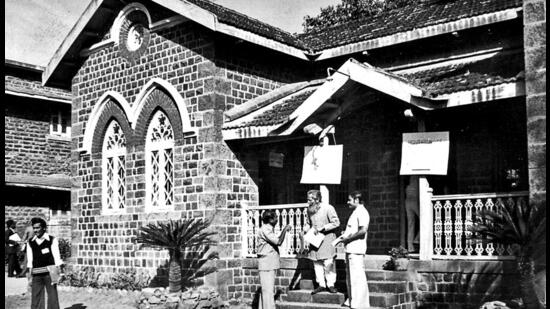
While the institute is carrying forward its legacy of social science research, it also plans to bring in some major changes to achieve a new vision. Dr Ajit Ranade, who was appointed vice-chancellor (VC) of the institute in January this year, aims to make the institute one of the topmost institutes for social science. “The institute established a ‘vision and roadmap committee’ in February, earlier this year, under the chairmanship of former SPPU VC Narendra Jadhav. The committee will interact with many stakeholders,” he said.
The committee, which consists of many eminent people, plans to expand the academic and residential infrastructure and allied facilities, including satellite campuses. The institute faced the challenges of faculty and infrastructure in the past. Dr Siva Reddy, member-secretary of the vision and roadmap committee, said, “We plan to expand and diversify research to other streams of social science such as politics and law. We also plan to integrate data science and technology in our core academic and research activities.”
Additionally, the institute plans to increase its intake of students from 900 to 3,000 by 2030. The institute also plans to start a public policy programme from the next year for understanding public finance and policy. The course which is in its deliberative stage will be open for students as well as people working in policy making or governance.
“The institute crucially depends on faculty support and funding from both the central and Maharashtra government. However in future as we expand, we will need more support from the government. We also would like to rope in more participation from the private sector,” said Ranade.
Reiterating the aim of the institute, Ranade concluded, “We wish to climb the ladder of quality and excellence in policy research as well as teaching. We are quite excited about it.”
Professor Sangeeta Shroff, head of the agro-economic research centre, said, “The highlight of our institute is that we have helped the government with research on various policies and policy making.”
Along with being known for its research and teaching, the institute is also known for its huge library. The library was established by Gokhale and the society back in 1905. Professor Nanaji Shewale, librarian of the Gokhale institute library, said, “We have a treasure of 284,000 books available for anyone interested in the field of social science research. The library was founded as a repository of knowledge.”
Apart from research, the institute has expanded its teaching courses and facilities to stay in sync with the latest developments and changes in the field. Among the earliest research conducted was the one on agriculture. Talking about present research in the field, professor Shroff said, “We are at present engaging in eight to nine projects. Some of them include research in title to land, Maharashtra’s soybean yield, etc. We plan to expand further under the NEP and use the hybrid mode in a better way.”


