
 E-Paper



Indoor mosquito breeding driving Pune’s dengue surge
Civic officials said mosquito breeding inside homes and other premises could be going undetected, even as field teams intensify inspections.

 Prefer HTon Google


Indoor mosquito breeding has emerged as a growing challenge for the Pune Municipal Corporation (PMC) amid a surge in dengue cases, with civic officials finding breeding spots in flowerpot saucers, money plants, uncovered water-storage containers, terrace areas, elevator ducts and parking lots.
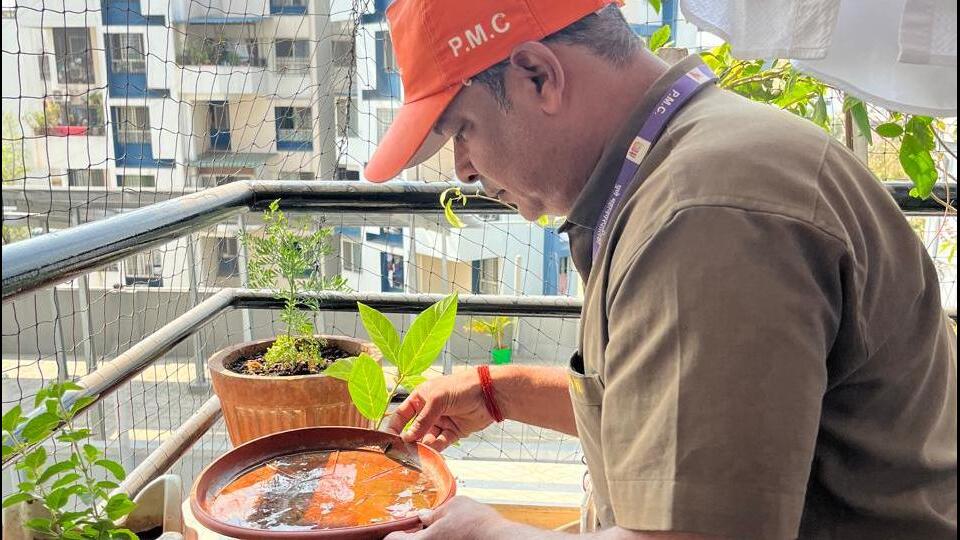
The findings have raised concerns about the effectiveness of routine outdoor surveillance, particularly as drought-like conditions and water scarcity have prompted residents to store water indoors. Civic officials said mosquito breeding inside homes and other premises could be going undetected, even as field teams intensify inspections.
PMC additional municipal commissioner Pavneet Kaur said excess water accumulating in plates beneath flower pots was among the common breeding spots identified during surveys.
“These plates collect excess water when plants are watered, creating breeding grounds for mosquitoes. We are appealing to people not to pour excess water into pots, allowing it to accumulate in the plates below. These, along with other indoor spaces, have emerged as key breeding spots during our ongoing surveys. The PMC is also taking action against such breeding spots,” Kaur said.
The city recorded 526 suspected dengue cases in October, including 38 confirmed cases, the highest monthly count of suspected cases reported this year. In September, the civic body recorded 508 suspected cases, of which 18 tested positive, according to PMC data.
The issue was discussed at a meeting of the PMC health department on Friday following the suspected dengue death of a nine-year-old girl from Lohegaon. Although civic teams conducted surveillance in the area after her death, they did not find mosquito breeding spots during their inspection.
This has prompted concerns that breeding inside homes and other premises may be escaping detection during routine field inspections, said Dr Rajesh Dighe, assistant health chief of the PMC and head of its vector-borne disease control programme.
According to civic officials, the PMC submitted an action-taken report to the state government earlier this month identifying water stored inside homes as the primary source of mosquito breeding, followed by under-construction buildings.
The civic body has detected 2,664 mosquito-breeding spots this year, issued notices and collected administrative penalties totalling ₹6.30 lakh. Most of the breeding spots were found indoors, officials said.
Dr Nina Borade, PMC health chief, said guppy fish should be introduced into water containers that cannot be emptied, as they feed on mosquito larvae.
“Citizens who develop symptoms such as fever, chills or a rash should visit a civic dispensary or hospital promptly for diagnosis and initial treatment. The PMC provides free diagnostic facilities for dengue and malaria at civic health facilities,” she said.
The civic administration has urged citizens, housing societies and institutions to cooperate with surveillance teams and eliminate stagnant water, warning that preventing mosquito breeding inside homes is crucial to controlling the spread of dengue and chikungunya.


