
 E-Paper



Lack of critical care at hospitals risking TB patients’ lives
Maharashtra continues to face a severe shortage of intensive care facilities for critically-ill tuberculosis (TB) patients


PUNE: As Maharashtra continues to face a severe shortage of intensive care facilities for critically-ill tuberculosis (TB) patients, the crunch is evident in Pune where the immunocompromised patients, who require oxygen therapy, ventilator support and ICU admission, are often denied the facilities as these are either unavailable or extremely limited.
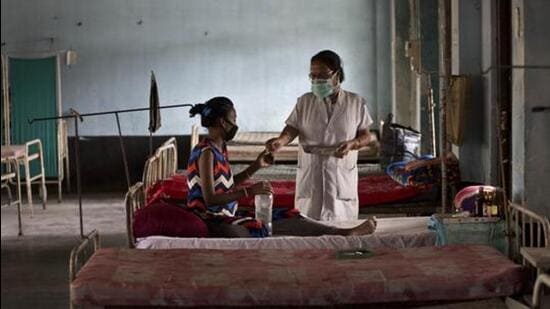
Data provided by the state Public Health Department highlight the sharp disparity between patient needs and available infrastructure. There are five dedicated hospitals for TB patients, with a total of 1,314 beds. However, only 24 beds - less than 2% - are equipped with ventilators or oxygen support. Two hospitals together have 14 ventilator beds, while another has 10 oxygen beds.
With only a handful of ventilator beds across the state, access to critical care remains alarmingly limited for TB patients in Pune. District TB officer, Pune, Dr Vikas Wadgaye, said, “We refer TB patients to Sassoon General Hospital (SGH) for critical medical management. However, due to the lack of expert doctors, ICU services have not yet started at the TB hospital.”
The case is no different at the only dedicated TB facility in the district, Aundh Chest Hospital, which also refers critical TB patients to SGH. “We don’t have a ventilator facility. But, regular TB patients are treated on an OPD and indoor basis,” said medical superintendent of the hospital, Dr Abhijeet Hosmani.
The SGH has six beds reserved for TB patients diagnosed at their OPD or referred from other hospitals. It also has three ventilator beds dedicated to critical TB patients. However, this is still inadequate considering the population of Pune district. Also, patients from Solapur, Satara, Sangli and Ahilya Nagar also come to SGH.
Admitting this, medical superintendent of SGH, Dr Yallapa Jadhav, said it was high time the Public Health department set up an ICU facility at their own hospital (SGH is under the state Medical Education department). “Critical TB patients are already vulnerable and are at high risk. Even after hospitalisation, their ICU stay is longer in comparison to other patients, which keeps the beds occupied for several days,” he said.
City TB officer of Pune Municipal Corporation (PMC), Dr Prashant Bothe, said that TB patients have to struggle to find ventilation support as even the dedicated Aundh Chest Hospital has no ventilator beds. “We have to take help from other medical colleges or SGH when these patients require ventilation or ICU facilities. In fact, finding ICU beds for TB patients is a herculean task,” he said.
Public health activists blame the situation on years of neglect despite repeated appeals to the government. “TB is still one of India’s biggest health burdens. While medicines are available, there is no infrastructure to handle serious cases,” said health activist Sharad Shetty.
Accepting that critical care treatment facilities for TB patients have remained neglected for a long time, the joint director for TB in Maharashtra government, Dr Rajratna Waghmare, shared that a proposal to start critical care treatment facilities at all existing TB hospitals and other government institutes is under consideration by the government. “Hopefully, once the proposal is approved, the issue will be solved,” he said.


