
 E-Paper



Monday Musings: Metro Line 3 and the wait between readiness and service
The Hinjewadi-Shivajinagar Metro has acquired an unusual distinction even before carrying its first passenger

 Prefer HTon Google


The Hinjewadi-Shivajinagar Metro has acquired an unusual distinction even before carrying its first passenger. Its construction has progressed in stages, safety clearances have followed, more stations have become ready, but the start of passenger services has continued to move ahead on the calendar.
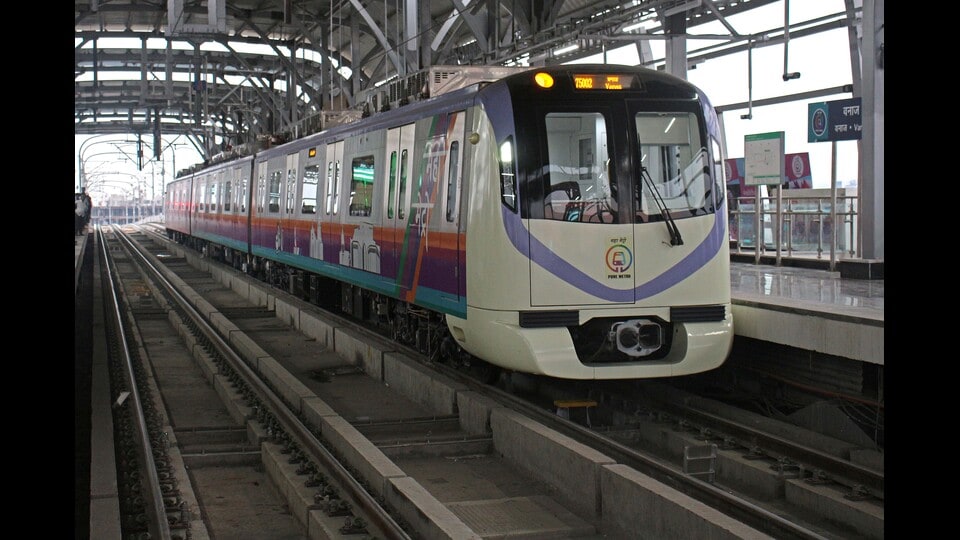
The 23.2-km Line 3, with 23 stations, was originally expected to be completed in March 2025. Several subsequent timelines were missed. In July this year, the planned opening of the first operational stretch was again delayed as the project awaited mandatory safety clearance from the Commissioner of Metro Railway Safety (CMRS).
That clearance eventually came on July 23 for the first 12 stations. The authorisation was provisional and allowed passenger operations on the cleared stretch even as the trains did not immediately begin carrying passengers. The project then moved into another phase of waiting — this time for an inauguration date.
By September, five more stations had been prepared for inclusion, taking the proposed initial operational stretch to 17 of the 23 stations, subject to the required safety clearance. The five additional stations were towards Shivajinagar, extending the service beyond the original 12-station plan.
There was therefore an interesting sequence. A project that had initially been waiting for construction to finish was, later, waiting for safety clearance. After clearance of the first stretch, it was waiting for an inauguration date. As more stations became ready, the proposed opening stretch itself expanded.
And then came another calendar complication.
The model code of conduct for the Maharashtra Legislative Council elections in the graduates’ and teachers’ constituencies came into force in September. The Pune Metropolitan Region Development Authority (PMRDA) was still awaiting an inauguration date from the Prime Minister’s Office. The authority indicated that it would seek guidance from the district administration on the implications of the code for the metro launch. Reports subsequently said the opening was likely to be affected by the code.
It is worth distinguishing the inauguration from the operation of the railway. The election code has become part of the latest delay narrative, but whether and how it affects actual passenger operations is a matter for the competent authorities and the Election Commission’s directions.
The immediate issue is therefore less about a ceremony than about when the service can legally and operationally begin.
That distinction is relevant because Line 3 is not an ordinary extension of Pune’s existing Metro network. PMRDA describes it as the first metro project in the country to be implemented on a public-private partnership basis under the Central government’s New Metro Rail Policy, 2017. It follows the Design, Build, Finance, Operate and Transfer model, with a private concessionaire responsible for the project under the agreed framework.
The project also has another unusual feature. Nearly 100 women have been recruited and trained to operate the trains, creating an all-women train-pilot workforce for the line.
For Pune’s commuters, however, the significance of Line 3 is much more straightforward. The corridor connects the city centre with Hinjewadi, one of the region’s largest employment clusters. Its stated purpose is to address the traffic problems around the Rajiv Gandhi IT Park and provide a faster public transport connection.
The project has consequently reached a stage where construction milestones, safety clearances, inauguration arrangements and election-related restrictions have all become part of the story.
There is also a useful lesson in the changing definition of “ready”. First, 12 stations were ready for operation after safety clearance. Then five more were brought into the proposed opening plan. Six stations remain outside the initial operational stretch. In other words, readiness itself has been incremental.
The eventual inauguration will provide the formal beginning of a project that has been years in the making. But the more important date for daily commuters will be the one on which the first passenger train actually begins its scheduled service.
For a project built to change the daily journey between Hinjewadi and Shivajinagar, that is perhaps the milestone that will finally turn construction progress and safety clearances into a transport service.


