
 E-Paper



Pune, German cities explore partnership in mobility, waste management, technology
Four priority areas were identified: MSME development and European market access; waste management and the circular economy; urban planning and infrastructure; and urban mobility and transportation

 Prefer HTon Google


Discussions have started between the Pune Municipal Corporation (PMC) and a delegation from three German cities on a long-term partnership covering urban mobility; waste management; technology; infrastructure; and opportunities for Pune-based startups and micro, small and medium enterprises (MSMEs) to enter European markets. The delegation from Raunheim, Rüsselsheim and Kelsterbach in Germany’s Frankfurt Rhein-Main region; along with representatives of the German-Indian Business Alliance (GIBA); on Tuesday met PMC officials to explore areas of cooperation.
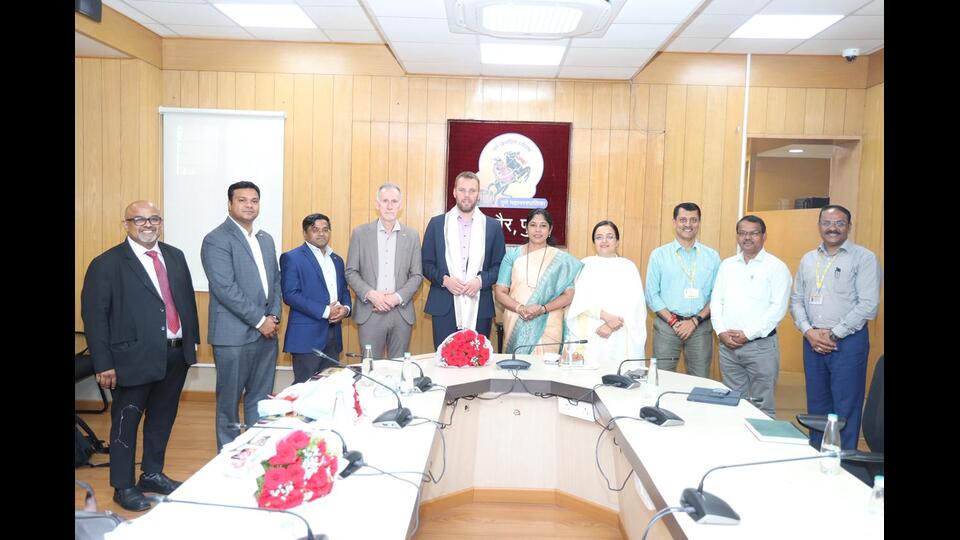
Four priority areas were identified: MSME development and European market access; waste management and the circular economy; urban planning and infrastructure; and urban mobility and transportation. The proposed partnership could include a 12-month programme to help Pune-based MSMEs establish a presence in Germany and access the wider European market. The programme could cover market assessment, market-entry strategies, business establishment support, and connections with European customers and business partners. The two sides also discussed waste segregation, recycling, waste-to-energy and biogas, in addition to urban planning, sustainable infrastructure and mobility.
The German delegation comprised Raunheim mayor David Rendel, Rhein-Main Innovation Hub CEO Stephan Wittekind, GIBA chairman Selvakumar Periasamy, GIBA CEO Nirmal Raman Kannaiyan, and Expandeers India partner Charudatta Pande. The PMC delegation included mayor Manjusha Nagpure, municipal commissioner Naval Kishore Ram, additional municipal commissioner Pavneet Kaur, city engineer Aniruddha Pawaskar, project department chief engineer Dinkar Gojare, municipal secretary Yogita Bhosale, and Bhavan department superintending engineer Bipin Shinde.
Nagpure backed a structured city-to-city or twin-city partnership with the German cities. “The engagement with the German cities provides an opportunity to take the longstanding association between Pune and Germany to a new level through focused and meaningful cooperation. Pune is keen to develop a long-term partnership in areas including technology, urban development, waste management, mobility and cultural exchange,” Nagpure said.
Ram said that Pune could benefit from German expertise while its strong manufacturing and MSM E ecosystem could afford opportunities for German companies. “Germany has consistently been a guiding force for India in technology, innovation and industry. Pune has a strong ecosystem comprising education, IT, startups, manufacturing and a highly skilled workforce, providing significant opportunities for collaboration with German cities in areas such as artificial intelligence, urban governance, mobility, waste management and city planning,” Ram said. He added that German experience and international best practices could help Pune address challenges arising from rapid urban growth, and improve the efficiency and sustainability of civic services. “Pune would greatly benefit from the experience and best practices of German cities, particularly in urban mobility, waste management, technology and urban governance. At the same time, Pune’s strong manufacturing-oriented MSME ecosystem offers significant potential for collaboration with German companies and for facilitating access to European markets,” Ram further said.
Kaur highlighted the PMC’s commitment to strengthening twin-city partnerships and international cooperation. Rendel said that the delegation wants to build stronger links between companies, institutions and people in Pune and the Frankfurt Rhein-Main region. “It is a great pleasure to be in Pune and to initiate what we hope will develop into a strong and lasting partnership. Pune and the Frankfurt Rhein-Main region share significant potential in innovation, technology and economic development,” Rendel said. “We aim to build stronger linkages between our companies, institutions and people and establish a strategic partnership based on trust, economic cooperation, innovation and meaningful engagement. We hope that this meeting marks the beginning of concrete and long-term cooperation between Pune and the region,” Rendel added.
Officials said that the discussions will continue to identify specific programmes, institutional mechanisms and nodal teams to take the proposed partnership forward.


