
 E-Paper



Guest Column| Beyond arrests: Sharpen the strategy to tackle drug menace
Punjab needs one integrated mission connecting enforcement, treatment, mental healthcare, education, employment and community action in its anti-drug fight

 Prefer HTon Google


Punjab’s struggle against drugs is neither imaginary nor unique. Substance dependence troubles many Indian states, although the drugs consumed, their routes of supply, and the severity of their impact differ. In Punjab, the problem appears especially acute because opioid dependence, organised trafficking, cross-border smuggling, pharmaceutical misuse and deepening social distress have converged. Repeated political promises to eliminate drugs have also raised public expectations. Every overdose, seizure and arrest is therefore seen as a test of the government’s resolve and credibility.
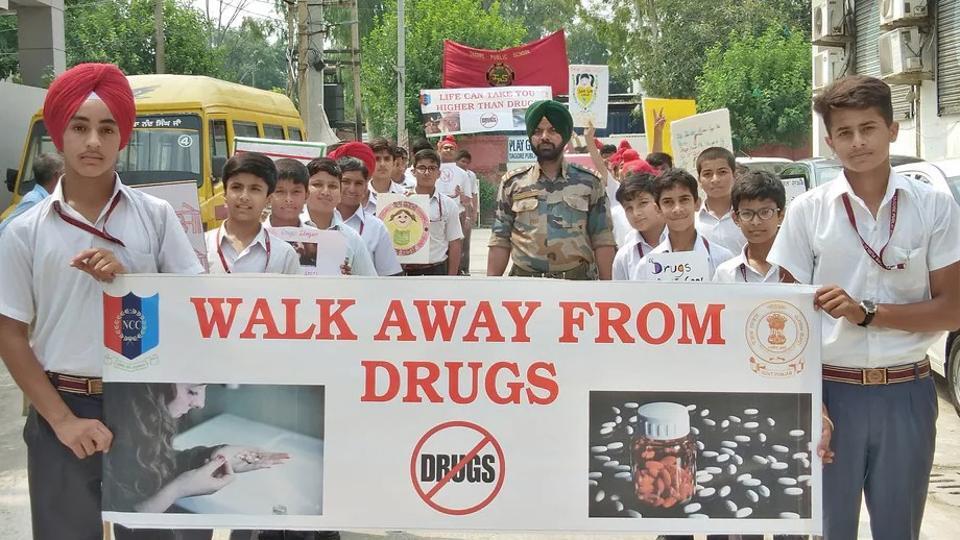
The available evidence confirms that Punjab faces a serious problem, but it also cautions against sweeping conclusions. One major study estimated that the state had about 2.7 lakh opioid-dependent persons and found heroin to be the most commonly consumed opioid among the difficult-to-reach population surveyed. It also identified prescription-opioid misuse and injecting drug use as significant concerns.
Another representative household study found alcohol and tobacco dependence to be numerically more widespread, although opioids caused greater social anxiety and often more devastating consequences.
Border state factor
Punjab’s vulnerability has several dimensions. Its international border exposes it to trafficking from the Golden Crescent, increasingly through drones carrying smaller and more dispersed consignments. Geography alone, however, cannot explain a crisis that has persisted for decades. Drugs eventually reach consumers through domestic supply chains, local distributors, criminal intermediaries and, in some cases, the diversion of pharmaceutical products.
Nor is supply the entire story. Addiction is often linked to unemployment, uncertain livelihoods, psychological distress, family disruption and a lack of meaningful opportunities. For some young people, drugs offer temporary escape from disappointment, anxiety or a diminished sense of purpose. The crisis must therefore be understood not only as a law-and-order problem, but also as a public-health, mental-health and social-development challenge.
Successive governments have responded through different strategies. These have included police action, de-addiction and rehabilitation programmes, outpatient opioid-assisted treatment, the comprehensive action against drug abuse framework, drug abuse prevention officers, the school-based buddy programme and the three-pronged approach of enforcement, de-addiction and prevention. The present government’s Yudh Nashian Virudh has intensified raids, arrests, seizures and proceedings against properties allegedly connected with trafficking. The governor’s Nasha Mukt Rangla Punjab campaign and related initiatives have added to public awareness and social mobilisation. A civil society initiative, Mothers Against Drugs, is also gaining traction among common people.
These efforts deserve acknowledgement. Sustained political attention is preferable to official denial, while determined enforcement can disrupt supplies and restore public confidence. Yet the number of raids, cases and arrests cannot, by itself, establish success. Government figures after 500 days of Yudh Nashian Virudh recorded tens of thousands of arrests and cases under the Narcotic Drugs and Psychotropic Substances Act. This demonstrates administrative mobilisation. But the more important question is whether the availability of drugs, overdose deaths, dependence, relapse and recruitment of new users have declined correspondingly.
Arrest figures also require careful interpretation. Those arrested may include major traffickers, street-level sellers, couriers, dependent users and persons carrying small quantities. Treating these categories alike can burden prisons and courts without dismantling the criminal and financial structures controlling the trade. Enforcement should be assessed by the major traffickers prosecuted, convictions secured, commercial quantities seized, supply chains disrupted, illegal assets confiscated after due process, and proceeds of crime traced. The objective must be to break the business of drugs, not merely increase the number of people arrested.
Focus on hotspots
Punjab now needs a strategy of precision. Drug use and trafficking are not spread uniformly across the state. Some border belts, villages, urban wards and neighbourhoods are far more severely affected than others. Police and health authorities already possess information that can identify such hotspots, often down to the police-station level. These areas should become the primary units for concentrated, coordinated intervention.
Each hotspot should have an updated vulnerability profile covering the substances in circulation, supply routes, overdose incidence, treatment demand, school dropout, repeat offending, pharmaceutical diversion, unemployment and available health services. Resources must then be allocated according to the severity and character of the local problem. A village where heroin is readily available cannot be treated in the same manner as an area where drug use remains occasional.
In every hotspot, intelligence-led policing should target suppliers, financiers and repeat offenders. At the same time, health teams must identify dependent persons, offer evidence-based treatment and support their families. Schools, panchayats, municipal bodies, religious institutions, sports organisations and credible community groups should reinforce prevention without publicly identifying individuals or stigmatising entire communities. Being declared a hotspot should bring additional attention, protection and services—not collective suspicion.
Treatment cannot end with detoxification. Substance-use disorder is frequently chronic and relapse-prone. Patients may require clinical assessment, medication-assisted treatment where medically appropriate, psychiatric care, counselling and continuing community support. Families also need guidance because fear, exhaustion and social shame often delay treatment. Punjab’s network of outpatient opioid-assisted treatment clinics and de-addiction centres provides a valuable foundation, but its staffing, quality, accessibility and outcomes require independent evaluation. Registrations indicate activity; treatment retention and sustained recovery demonstrate effectiveness.
Rehabilitation must also acquire real economic content. A recovering person who returns to unemployment, isolation and the same environment remains vulnerable to relapse. Skill development, apprenticeships, continuing education, sports, employment partnerships and credit-supported self-employment should form part of individual recovery plans. Prevention initiatives such as Buddy and DAPO must similarly be evaluated not by enrolment or events alone, but by measurable changes in awareness, behaviour, early reporting and willingness to seek treatment.
Coordination with neighbours
No state can defeat organised trafficking in isolation. Punjab needs structured operational cooperation with neighbouring states and Union Territories, as well as national agencies. Intelligence concerning suppliers, pharmaceutical diversion, transport corridors, prisons, digital payments and cross-border networks must move across jurisdictions in real time. The Union and State governments should treat such cooperation as a shared responsibility, insulated from political differences.
It is sometimes alleged that drugs were deliberately allowed to circulate to weaken political radicalism. A charge of this gravity cannot be accepted without credible and verifiable evidence. It would be irresponsible either to endorse it through insinuation or to disregard specific evidence should it emerge. Any substantiated allegation must be investigated impartially by a legally competent agency. Unsupported claims, however, divert attention from demonstrable failures of regulation, enforcement and institutional accountability.
Punjab does not need another slogan to replace earlier slogans. It needs one integrated mission connecting enforcement, treatment, mental healthcare, education, employment and community action. Progress must be measured through reduced availability, fewer overdoses, higher treatment retention, lower relapse, successful prosecution of major traffickers, and the return of affected persons to productive life.
Arrests matter, but they are a means—not the measure of victory. The purpose is not merely to wage war against drugs. It is to dismantle the networks that profit from addiction and help individuals, families, and communities reclaim their lives. sureshkumarnangia@gmail.com

The writer is a retired Punjab-cadre IAS officer. Views expressed are personal


