
 E-Paper



Taste of life: Navratri a feast of flavours and tradition
Fairs were held at various temples in Pune and the neighbourhood during Navratri, the biggest and most important being that of the Goddess Chatushringi

 Prefer HTon Google


Devi, or the goddess, is designated as “Shakti”, the Prowess of Divinity, in the standard enumeration of the school of theology and sects of worship. She is conceived as the Female Principle, being the complement of the Male Principle, God.
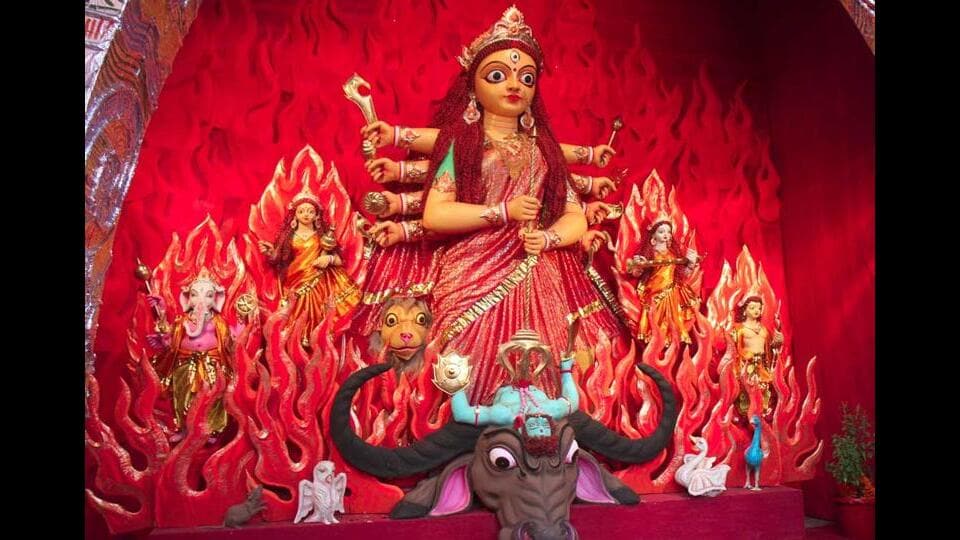
Navratri is one of the most popular and important annual festivals in Maharashtra and many parts of India, where the Devi is worshipped. The festival is significant in temples dedicated either to Shiva and his consort or to the various independent goddesses.
The worship of Bhavani is important in many ways to the Maharashtrian cultural identity. Chhatrapati Shivaji Maharaj was a great disciple of the Goddess, and the festivals of Navratri and Dasara became symbols of valour and strength during the colonial era.
Several “talims”, or wrestling gymnasiums, celebrated Dasara to worship the Goddess and her great devotee, Chhatrapati Shivaji Maharaj. Mohanlal Vastad’s “talim” was the epicentre of these celebrations, where more than two thousand men, both Hindu and Muslim, assembled to attend the pooja ceremony. Songs praising the Goddess and Chhatrapati Shivaji Maharaj were sung. All those in attendance were given milk and jalebis.
During Navratri, married women of the Konkan Vadwal caste, with a hollow, dried gourd wrapped in cloth hanging from their right arm, begged in the name of Goddess Bhavani from house to house. Each day, they were given a handful of rice, and on one of the nine days, an elderly married woman of each household worshipped the hollow gourd.
The Sonars, or the goldsmiths, set up a new hearth and cooked food on it.
The Navratri festival organised by the Tilvan Teli community included “kirtans”, lectures, and bhajans every night. On the second day of Dasara, a community feast was organised for men and women.
Dasara is believed to mark Goddess Bhavani’s defeat of the buffalo-demon Mahishasur. Even though several castes and communities followed Brahmanical rituals, especially of fasting, associated with Navratri and Dasara, they also slaughtered an animal and offered it to the Goddess.
According to the Gazetteer of Bombay Presidency (1885), on the first day of Navratri, members of the Kunbi community went to Bhavani’s temple in the city with music and homemade offerings. The priest sowed eighteen grains in front of the Goddess. From the first to the tenth, both near the temple image and the house image of the Bhavani, a garland was hung by some who abstained from grain, butter, and animal food. The tenth was a day of rejoicing; all wore new clothes and feasted on mutton.
Several Maratha families had a tradition of offering a sheep to the Goddess. The Khatris, a weaver caste, offered meat to their family goddess on Dasara and abstained from animal food and liquor during the nine weeks between the first of Shravan and the seventh of Ashvin.
The Lonaris, the Vaidus, and the Vadars too slaughtered sheep for the Goddess. The Otaris, or casters, worshipped their goddess with flowers and boiled mutton, and ate the mutton as a favour from the goddess. The Salis, or weavers, slaughtered a goat in honour of the Devi of Tuljapur and performed the “gondhal” dance.
Some Prabhus fasted during the Navratri, living on fruits and roots. On the ninth day, the Goddess Durga was worshipped; a sacred fire was lit and fed with firewood and butter. The Dhruv Prabhus of Pune sacrificed a goat on Dasara day in front of the Goddess Durga and afterwards feasted on the flesh. The Pathare Prabhus too feasted on mutton and sweetmeats.
Dasara was the day when the yearly buffalo fight took place in several villages in the Deccan. The winner was the buffalo that forced the other back. A bull-buffalo was offered as a sacrifice to Goddess Durga in almost every village near Poona. The village headman cut off the head if possible with a single stroke of his sword. The flesh of the sacrificed buffalo was given to families belonging to certain castes.
Members of several communities went to Tuljapur and offered a goat to the Goddess there. A day before Dasara, sheep and goats were brought to Pune from Ahmednagar and Baramati. They were sold in the local markets in Guruwar Peth and Ganj Peth and were bought by families for ritual slaughter on Dasara.
Fairs were held at various temples in Pune and the neighbourhood during Navratri, the biggest and most important being that of the Goddess Chatushringi. The temple was located outside the city and drew large crowds. The annual fair was not only an occasion for social gathering, economic marketing, and amusement, but also a sort of protective rite for the health and protection of the family and the village.
It was a custom in some homes for newly married women to worship the Goddess during Navratri for the first five years. These women gathered at a house where the rituals were held. The householder typically did not charge any fee for the expenses incurred. After the worship, a meal was served to women who were not fasting.
In the 1930s, in Pune, on the day of Dasara, young children wore new clothes and ornaments and went to school for Saraswati Puja, where they put flowers on their slates and books. After the puja, they were given milk and laddoos.
The designated sweet dish for Dasara was “shrikhand” in most Brahmin households. Men rushed to shops selling yoghurt early in the morning with utensils in their hands.
Men decorated their cars and bicycles with garlands of marigolds. Around one o’clock in the afternoon, the tangawalas of Pune took out a procession of the tangas and horses. The horses were painted with chalk and adorned with marigold garlands. The sound of drums and cymbals woke up men who were not able to resist the afternoon siesta after several bowls of “shrikhand”.
After four in the evening, men went out for “Seemollanghan”, or crossing the city limits. But since the limits of Pune were extended, they went to the nearest temple or to relatives or friends.
Women attended “haldi-kunku” ceremonies. “Khirapat”, a sweet offering of grated dried coconut, sugar, and dry fruits, was exchanged. The Jogeshwari temple in Budhwar Peth and the Ashtabhuja Devi temple in Shaniwar Peth often witnessed the exchange of “khirapat” between women who visited the temples.
When the palanquin of Lord Bhairavnath in Kasba Peth came near the Bolhai temple near Sassoon Hospital, a large crowd gathered. The devotees offered pedhas to the God and the Goddess.
Dasara was an auspicious day to start a new business or open a shop. “Paan-supari” was organised on the occasion. The Aryabhushan Printing Press organised a “paan-supari” ceremony that was attended by many. Coffee and coconut barfi were offered to the guests.
In the late 1930s, the Bengali community in Pune started organising Durga Pooja. A feast was held on the ninth day.
Food lies at the heart of Durga Puja. The number of Durga Puja pandals in Pune has gone up over the last two decades. Bengalis and non-Bengalis of the city dress up and visit pandals to worship the Goddess and eat delicious food from the sixth day onwards. This is a feast not just of flavours, but also of cultural heritage.
Chinmay Damle is a research scientist and food enthusiast. He writes here on Pune’s food culture. He can be contacted at chinmay.damle@gmail.com


