
 E-Paper



Two female leopards released into the wild after immunocontraceptive treatment
The forest division first proposed the birth control project in December 2023 and submitted a formal proposal to the MoEFCC in June 2024

 Prefer HTon Google


Two female leopards were released into the wild in the first week of October after being administered an immunocontraceptive drug under a pilot study by the Junnar Forest Division. The animals will be monitored to assess the safety and effectiveness of immunocontraception as a potential tool for managing leopard populations in high-density areas.
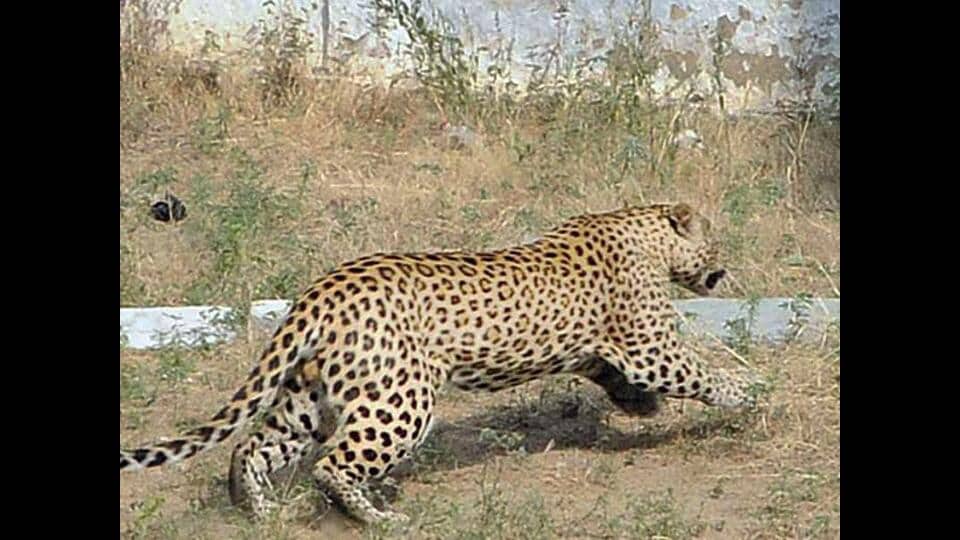
Approved by the Union Ministry of Environment, Forest and Climate Change (MoEFCC) under the Wildlife (Protection) Act, 1972, the project aims to explore scientific approaches to wildlife population management and mitigate human-leopard conflict in areas such as Junnar, where leopards come into contact with human settlements.
The forest division first proposed the birth control project in December 2023 and submitted a formal proposal to the MoEFCC in June 2024. Following a scientific assessment by the Wildlife Institute of India (WII), which studied leopard behaviour, movement and population dynamics in Junnar between 2020 and 2024, the Centre approved the pilot on November 17, 2025. Maharashtra thus became the first state in India to undertake such an initiative.
The project comes amid frequent leopard sightings, attacks on people and livestock, and growing concerns over the overlap between human settlements and leopard habitats. Sugarcane cultivation, which provides leopards with shelter and breeding grounds, has contributed to this overlap. The pilot uses immunocontraception, a non-surgical method of temporarily preventing reproduction, rather than permanent sterilisation.
Smita Rajhans, assistant conservator of forests, Junnar Forest Division, said, “The two female leopards were released into the wild 20 days ago. We will monitor their behaviour in their natural habitat over the next two-and-a-half years as part of the study. We are also looking to identify three more female leopards to be included in the project in due course.”
The Junnar Forest Division is conducting field operations with a focus on animal welfare, veterinary care and safety protocols. The Indian Council of Medical Research’s National Institute for Research in Reproductive and Child Health (ICMR-NIRRCH), Mumbai, is collaborating on the study. Blood samples and reports will be analysed to track hormonal changes in the treated leopards and assess the drug’s long-term effects.
The study aims to determine whether immunocontraception can be used safely and effectively to manage leopard populations in high-density areas. Its findings will help establish the feasibility of incorporating the method into long-term wildlife management strategies.


