
 E-Paper



Jharkhand Governor returns anti-lynching Bill
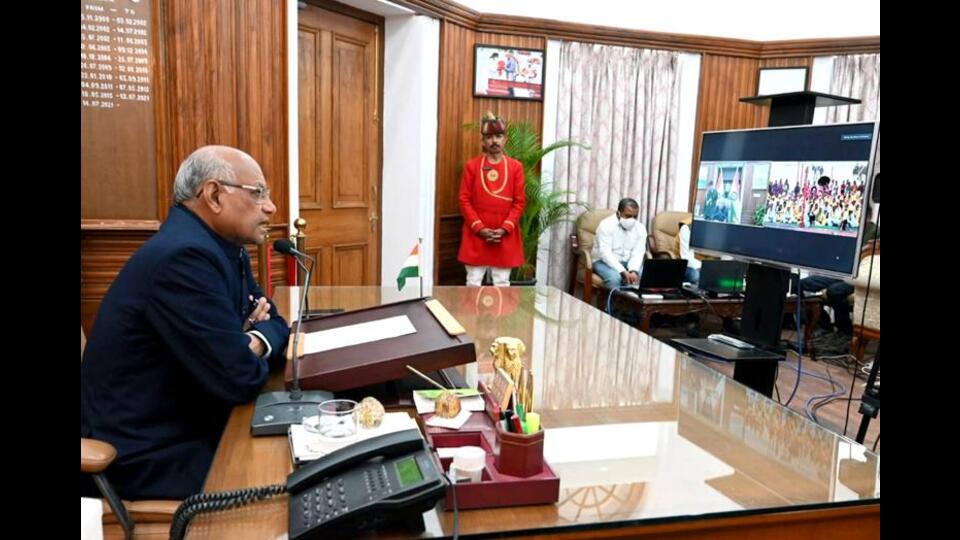
Jharkhand Governor Ramesh Bais has returned the anti-lynching Bill back to the Hemant Soren-led state government with two specific suggestions, including one to reconsider the definition of “mob”, which, as defined in the proposed law, was “not in consonance or in line with the well-defined legal lexicon or glossary”.

 Prefer HTon Google


Jharkhand Governor Ramesh Bais has returned the anti-lynching Bill back to the Hemant Soren-led state government with two specific suggestions, including one to reconsider the definition of “mob”, which, as defined in the proposed law, was “not in consonance or in line with the well-defined legal lexicon or glossary”.
On December 12, during the winter session last year, the Jharkhand assembly had cleared the “Prevention of Mob Violence and Mob Lynching Bill, 2021,” which provides for jail terms ranging from three years to life imprisonment and fines of up to ₹25 lakh against those involved in mob lynching leading to “injury or death” of an individual.
The law also provides for punishment for “conspiracy or abetment or attempt to lynch”; ”obstructing legal process”; “dissemination of offensive material” and “enforcing a hostile environment”, besides compensation for the victims as per the “compensation scheme” of the state government.
With the passage of the Bill, Jharkhand had become the third state in the country, after West Bengal and Rajasthan, to have put in place such a law against the crime.
The BJP, however, had opposed the Bill in the assembly in its present form and demanded to send it to a select committee. But the government managed to get it passed in the House and sent it to the Governor for his approval before it could be notified.
On February 11 this year, members of tribal community under the banner of “Janjati Suraksha Manch” had met the Governor, requesting him not to give his nod to the proposed law.
Top sources said the Governor returned the Bill on Wednesday with two major recommendations.
“There is a mismatch between Hindi version and E flush version of the Bill. In section 2, sub section 1, sub clause xii, deals with ‘witness protection scheme’ in English version of the bill. This sub clause-xii is missing in the Hindi version of the Bill. This needs to be rectified so that there is symmetry in both the versions of the bill,” a top official said, quoting from the observation note sent back to the government.
“Secondly, there is a need to reconsider the definition of mob as given in section 2 (vi) of the bill. A group of two or more individuals cannot be called a tumultuous crowd. A mob is large, angry and disorderly crowd of people who are often uncontrollable or violent. The state government must revisit the definition of mob,” the note added.
When contacted, Vinay Chowbey, principal secretary to chief minister Hemant Soren, refused to comment.
Supriyo Bhattacharya, principal general secretary and spokesperson of the ruling Jharkhand Mukti Morcha, said, “It won’t be right for me to comment on the issue as I am not aware of the grounds on which the Governor has returned the Bill. It is a policy matter and the government would deal with it accordingly,” he said.
Last week, in a reply to query raised by CPI (ML) legislator Binod Singh in the ongoing budget session, rural development minister Alamgir Alam said government was planning to set up fast-track courts in the state for speedy trial of mob-lynching cases.
In his reply, the minister informed the House that 46 cases of mob lynching had been recorded in the state between 2016 and 2021. In 11 such cases, 51 accused were convicted to life imprisonment after completion of the trial, the minister said.


