
 E-Paper



Two Ambala villages lead the way against stubble burning
Both villages situated adjacent to National Highway-44, have young and educated sarpanches who are working together to ensure the success of the project

 Prefer HTon Google


Two Ambala villages, Bara and Ugara, have not reported even a single incident of stubble burning this year as 95% paddy farmers from these areas are making money by selling straw.
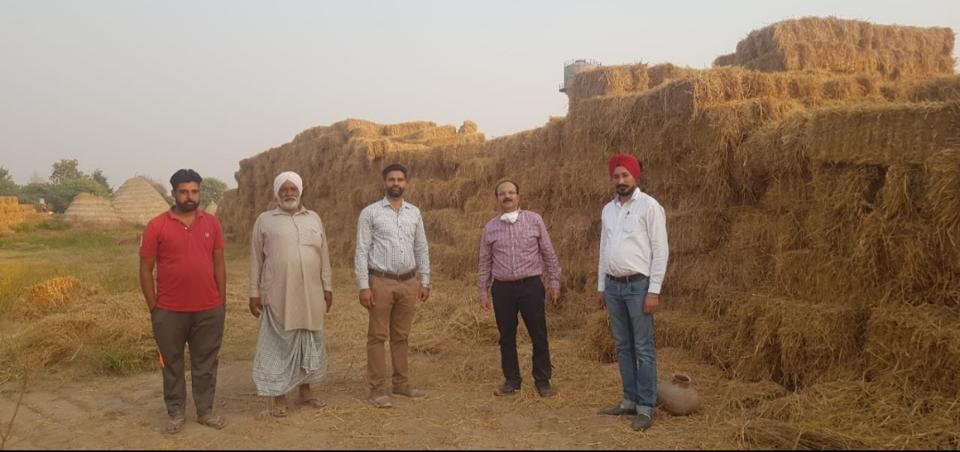
Under a project launched in October, bales of straw are piled up in Ugara’s panchayat land to be supplied to the Naraingarh Sugar Mill in Shahazadpur for power generation.
Both villages situated adjacent to National Highway-44, have young and educated sarpanches who are working together to ensure the success of the project.
An engineer and a postgraduate
Bara sarpanch Vikas Behgal is an engineer and his counterpart from Ugara, Harinder Kaur, has completed her postgraduation.
“Farmers came to us every day to register their land for crop residue management and the task is undertaken within 48 hours. There are around 55 paddy farmers here holding 700 to 750 acres of land, of which around 685 acres have been registered. The others have adopted in-situ measures,” Behgal said.
Bahadur Singh, a farmer holding 10 acres of land, said, “This extra income will help me make arrangements to grow wheat. Eight to 10 of my family members with nearly 40-acre land have also registered for the project.”
The scheme is fetching farmers extra income of Rs 500 per acre with Rs 1,000 per acre from the state government for not burning the residue.
Kaur said she decided to take up the initiative this year after a few villagers were booked last year for burning the straw.
“Jaswinder, my husband, and Vikas are old friends and the project has been a success because of their efforts as well as that of the agriculture department,” Kaur said.
Satnam Singh, 24, who looks after eight acres of his family’s ancestral land, had burnt stubble last year. This year, he stood with the sarpanch to make other farmers aware of the initiative.
Health awareness
“This year, I understood that nothing is more important than our health,” he added.
Girish Nagpal, deputy director of agriculture, the brains behind the project, has been working on it since last year and ensuring its execution on ground.
“I presented the model last season, and when Vikas and Jaswinder came to know about this, they started working on it enthusiastically. They spread the word in their respective villages and the result is before us,” he said.
“The government will give an incentive of Rs 1,000 per acre at Rs 50 per quintal on ex situ measures on the condition that the residue is converted to bales. I expect farmers of both these villages to get Rs 90 lakh before Diwali,” Nagpal added.


