


 Live Score
 Teams
 Players


Aditya Bhattacharya is the Sports Editor at Hindustan Times Digital, with close to 15 years of experience in sports journalism. Over the course of his career, he has worked with leading media organisations including Cricbuzz, The Times of India, Network18 and Zee. Primarily a cricket writer, Aditya has covered several marquee events, including the 2016 ICC World T20, the 2019 ICC World Cup in England and the 2023 World Cup in India. His reporting portfolio also includes international cricket across England, South Africa and New Zealand, along with forays into tennis, including coverage of the Australian Open. He has interviewed several prominent athletes across sports. Aditya began his career with a brief stint at CricketNext before getting his first major break at Cricbuzz, where he was part of the Times Network’s startup venture GoCricket, which later merged with Cricbuzz. After nearly 18 months there, he moved to The Times of India, covering his first World Cup assignment and reporting first-hand on landmark moments such as Virat Kohli’s iconic innings against Australia in Mohali. During his three-year tenure, he played a key role in both reporting and desk operations and was recognised as TOI Employee of the Quarter in 2016. He later joined Zee, where he covered the 2019 World Cup across five venues in England—an assignment he considers a career highlight. At Hindustan Times, Aditya’s leadership came to the fore as he was promoted to lead the sports team within 18 months. Under his stewardship, the section has delivered extensive coverage of global sporting events, including the IPL, Olympics, Cricket World Cups, FIFA World Cups, Commonwealth Games and Asian Games. In 2024, he was named HT DigiStar of the Year. Aditya continues to adapt to the evolving digital publishing landscape, with a sharp focus on search and audience engagement. Outside work, he occasionally plays the guitar and remains an avid gamer.
Morkel urges India bowlers to ‘be braver’ with Kookaburra ball, New Zealand’s Latham stresses the need to ‘adapt’
After Wellington draw, India face a different challenge in Christchurch, with the Kookaburra ball and pitch conditions back in focus.


Morne Morkel, India’s bowling coach, has urged his pacers to show more courage with the Kookaburra ball as Shubman Gill and Co. prepare to take on New Zealand in the second Test in Christchurch, starting Friday. The first Test ended in a draw despite India securing a substantial first-innings lead of 352 runs.
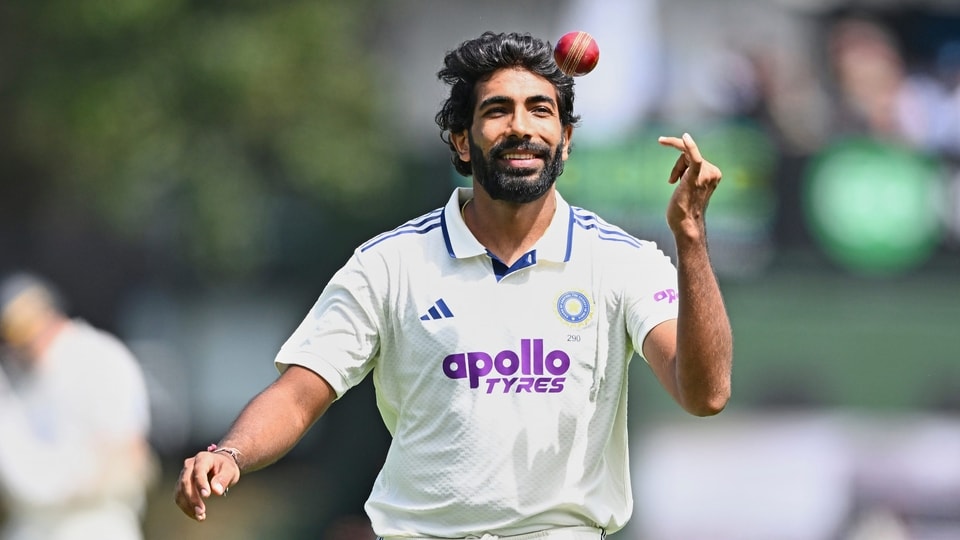
On Day 5, India reduced the Kiwis to 176/5, raising hopes of a rare victory. However, a strong rearguard effort from Glenn Phillips and Daryl Mitchell - the duo batted for 259 balls, putting together an unbeaten 63-run partnership - denied India. The lack of assistance from the pitch, meanwhile, became a talking point, with India captain Gill opting to shake hands with 15 overs remaining.
The conditions at Hagley Oval, however, promise to be different. With a green layer expected on the surface, Morkel wants his pace attack - whether changed or unchanged from the Wellington Test – to be a lot ‘braver’.
“The data and the facts, black and white facts, is that [Wellington] wicket lost a lot of pace quite quickly early in the Test match. And from there on, we quickly needed to readjust our plans. But still, for me, we created a couple of opportunities. If Akash [Deep], for instance, got that run out or the short leg, you open up certain things. So when the conditions get tough and it gets slower, it’s for us as a team to be ready for that 50-50 chance,” Morkel said on the eve of the 2nd Test.
“It does make life a lot harder, especially when the surface also loses a little bit of pace with the softer ball. That is my experience, playing for 16 years with the Kookaburra ball, that you need to make that new ball count. You need to get the ball in the right area, sometimes be a bit braver in terms of your lengths and your lines, even going for a few runs, because when the ball gets soft, you can always put a ring field in and bring the run rate back. That is stuff for our bowling unit and for the team to understand, and we need to get better at that. We play with the SG ball in India, where we bring spin into the game. But playing with the Kookaburra ball in these conditions, there is a different pattern that you need to be comfortable with, and you need to sometimes be brave.”
After the draw, Gill urged the ICC to reconsider the saliva ban. The use of saliva on the cricket ball was prohibited as a precautionary measure in 2020 amid the Covid-19 pandemic, with the restriction made permanent in 2022. Gill’s comments reignited the debate, but his New Zealand counterpart Tom Latham has a different view.
“I think sometimes the wicket can dictate what the ball does, whether it’s a little bit flatter or a little bit more abrasive, then the ball can deteriorate a little bit quicker, whether that be a Dukes ball, whether that be a Kookaburra ball,” said the New Zealand captain.
“So I think from our point of view, we’re always trying to adapt and find what’s the best way to look after the ball to keep it in good condition as much as we can.”


