


 Live Score
 Cricket Teams
 Cricket Players
Averaged 106 with bat, dismissed Kallis on debut; 18 months of being bedridden hurt India career, eye surgery ended it
A record-breaking Ranji season and Player of the Series in ODI debut promised a long India career, but injury and vision trouble cut it to just 13 matches.

 Prefer HTon Google


A Ranji Trophy season with 1,280 runs at an average of 106.66 would ordinarily have been enough to define a domestic career. Four centuries, seven fifties and a record for the most runs in a single edition of the tournament at the time made it almost impossible for the national selectors to look elsewhere. Yet the batting numbers told only half the story.
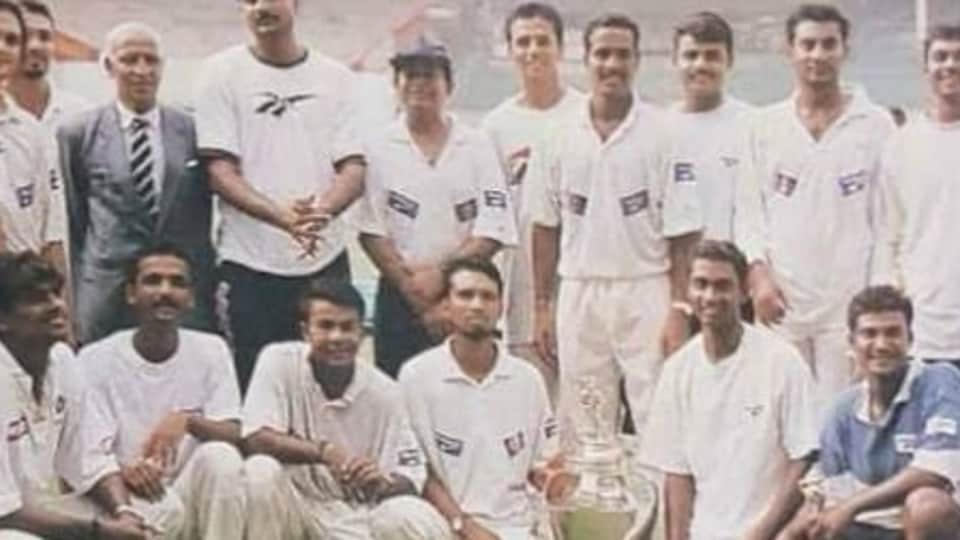
When Karnataka reached the final against Madhya Pradesh, their leading run-scorer produced 86 in the first innings and another 75 in the second. Then, with the title slipping away on the final afternoon, he turned to his off-spin and took 6/24 to bowl Madhya Pradesh out for 150. Karnataka won by 96 runs. A season overflowing with runs had ended with their premier batter effectively winning the Ranji Trophy with the ball.
India came calling a few months later, and things became stranger still. In his first international tournament, the newcomer took 10 wickets at 12.20, returned three consecutive three-wicket hauls and scored 89 runs at an average of 89. By the end of four ODIs, he had been named Player of the Series.
This wasn't an all-rounder India had spent years grooming for the role. Vijay Bharadwaj considered himself primarily a specialist batter who happened to bowl useful off-spin. Yet his first taste of international cricket had produced the sort of beginning that should have opened the door to a long career. Instead, Bharadwaj played only 13 matches for India.
Long before that extraordinary international introduction, Bharadwaj had already established himself as far more than another member of Karnataka's golden generation. Rahul Dravid, Anil Kumble, Javagal Srinath, Venkatesh Prasad and Sunil Joshi were among the players around him during a period when Karnataka dominated Indian domestic cricket, winning the Ranji Trophy three times in four seasons between 1995-96 and 1998-99.
Bharadwaj repeatedly made himself central to those triumphs. In the 1995-96 final against Tamil Nadu, he scored 146 as Karnataka piled up 620/8 declared and secured the title on first-innings lead. Two seasons later, his 122 against Uttar Pradesh came in another enormous Karnataka total of 617/9 declared, helping deliver another championship.
Then came 1998-99, the season that changed everything. Bharadwaj scored 1,280 runs from 15 innings, averaging 106.66. He finished 243 runs clear of Jacob Martin, the second-highest run-scorer that season, and registered four centuries and seven half-centuries. His highest was an unbeaten 200 against Kerala. He also contributed with the ball, taking 19 wickets at 22.10.
The final against Madhya Pradesh encapsulated just how complete his season had been. Karnataka conceded a 75-run first-innings lead despite Bharadwaj's 86. His 75 in the second innings helped Karnataka leave Madhya Pradesh 247 to win, but at 130/4 at tea on the final day, the chasing side still had every chance of surviving, if not winning. Bharadwaj changed that with his off-spin. Chandrakant Pandit fell soon after the interval, Raja Ali followed, and the collapse gathered pace. Bharadwaj eventually finished with 6/24 from 14.5 overs as Madhya Pradesh were dismissed for 150. Karnataka won by 96 runs, and Bharadwaj was named Player of the Match.
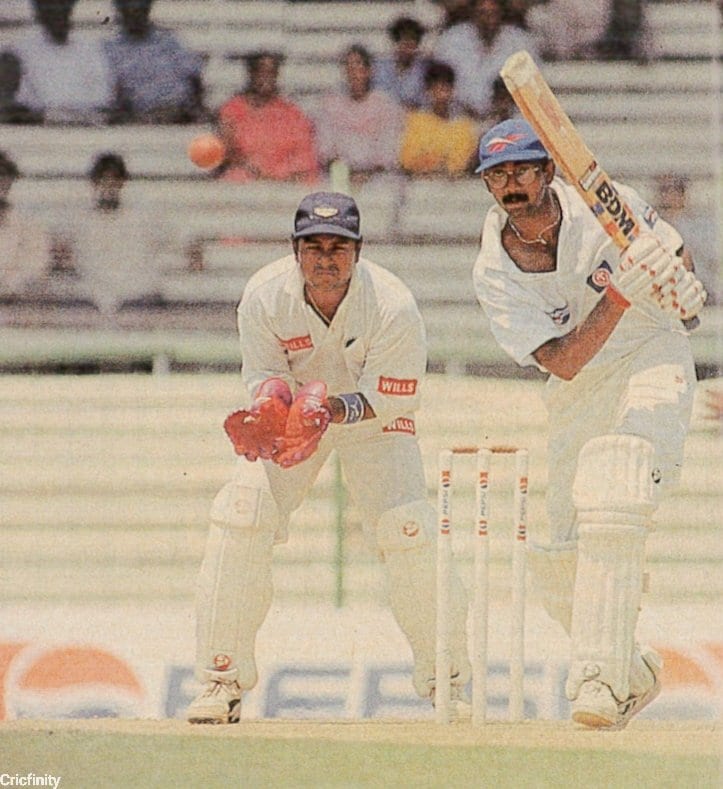
Even his one-day numbers from that domestic season bordered on absurd. Bharadwaj scored 305 runs in five matches in the Ranji one-day competition. He was dismissed only twice, averaging 152.50, with an unbeaten 108 and two fifties.
By then, an India call-up had become difficult to resist.
Player of the Series in his first ODI tournament
Bharadwaj's international debut came against South Africa in Nairobi in September 1999. India bowled South Africa out for 117, with the debutant returning figures of 10-3-16-1 and dismissing Jacques Kallis. He then remained unbeaten on 18 as India completed an eight-wicket victory.
Three days later against Kenya, Bharadwaj made an unbeaten 41 from 30 balls and took 3/38 to win the Player of the Match award. Against Zimbabwe, he followed it with 3/34. Then, in the final against South Africa, came another 3/34 along with 24 from 19 balls.
Four matches into his international career, Bharadwaj had 10 wickets at an average of 12.20. His batting returns read 18 not out, 41 not out, 6 not out and 24. He finished with 89 runs and was dismissed only once. The Player of the Series award followed.
For someone who viewed batting as his primary skill, it was an almost comically successful introduction as a bowler. Bharadwaj would later stress that he wanted to establish himself as a specialist batter, but his first few days in international cricket had suddenly made his off-spin one of the biggest talking points around him.
A Test debut came almost immediately. Against New Zealand at Mohali in October 1999, India were bowled out for 83, and Bharadwaj made a four-ball duck, dismissed by Chris Cairns. He did manage to take the wicket of Shayne O'Connor, which would eventually remain his only Test wicket. In the next match at Kanpur, he made a patient 22 from 106 deliveries as India won by eight wickets.
Then came the tour of Australia. Bharadwaj played only the third Test in Sydney, where India were comprehensively beaten, completing a 3-0 series defeat. He scored six in the first innings and was listed as absent hurt when India batted again.
At the time, it looked like another entry in an already miserable tour for India. For Bharadwaj, however, it became far more significant. He later revealed that he had suffered a serious back injury during the Sydney Test. The problem was severe enough to keep him out of cricket for an extended period, with Bharadwaj recalling that he was effectively bedridden for around a year and a half.
While recovering, another setback arrived from a completely different direction. Bharadwaj had played cricket wearing spectacles and underwent an eye procedure in 2000 after being advised that it could remove his dependence on glasses. According to Bharadwaj, the procedure went badly wrong and affected his ability to track the ball.
"My vision went for a toss. After that, I was not the same cricketer anymore," he recalled years later. For a batter, there could scarcely have been a more damaging problem. Bharadwaj said he struggled to follow the trajectory of the ball properly, even while fielding. He nevertheless attempted to rebuild his career and eventually returned to the India A setup, but the player who had dominated domestic cricket and forced his way into the national side was fighting circumstances very different from ordinary form or selection.
His ODI career had already stalled by then. Bharadwaj had played nine ODIs between September and November 1999, scoring 136 runs at 34 and taking 15 wickets at 18.33. Then came a gap of more than two years.
There would be one last India appearance. Bharadwaj returned against Zimbabwe in Guwahati in March 2002. His comeback with the bat lasted only one delivery as he was run out without scoring. He did take 1/32, dismissing Stuart Carlisle, as India won by 101 runs.
It proved to be both his comeback and his farewell. Bharadwaj finished with three Tests and 10 ODIs. His Test record contained only 28 runs and one wicket, numbers that reveal almost nothing about the player who had arrived at the international level. His ODI record offers a slightly better glimpse: 136 runs and 16 wickets at 19.18.
He continued playing domestic cricket after his India career ended and finished with 5,553 first-class runs at 41.75, including 14 centuries and 26 fifties. His off-spin brought another 59 wickets. Bharadwaj eventually left Karnataka and represented Jharkhand before retiring in 2006 at the age of 31.
Cricket, however, remained part of his life. Bharadwaj moved into coaching, scouting and talent identification after retirement, working in different roles around Indian cricket and the IPL. He is currently associated with the Delhi Capitals as their Head Talent Scout. There is a certain irony in where the journey eventually took him. Bharadwaj now spends his time identifying cricketers worthy of an opportunity. More than two decades ago, he had made himself impossible for India's selectors to ignore.
A record-breaking Ranji season, 6/24 to win a final, Player of the Series in his first international tournament, and 10 wickets at 12.20 from his first four ODIs should have been the beginning of something substantial. Instead, Vijay Bharadwaj's India career was over after 13 matches, leaving behind one of the more compelling what-ifs of his generation.


