


 Live Score
 Teams
Teams Players
Triple century, a gift from Tendulkar and two records that still stand 25 years later: One of India’s strangest careers
He was able to establish himself as India’s leading bowler in the mid-2000s, but his career promised so much more.

 Prefer HTon Google


He was once considered promising enough with the bat for Sachin Tendulkar to hand him a pair of batting gloves. Long before international cricket entered the picture, he had trained under renowned Mumbai coach Ramakant Achrekar and even struck a triple century in the Giles Shield. Years later, he would walk out at No.3 for India in an ODI and come within five runs of a century.
There are more contradictions. This player once smashed an ODI half-century from just 21 balls, a record that remains the fastest fifty by an Indian in the format. Against Zimbabwe at Rajkot in 2000, he finished unbeaten on 67 from only 25 deliveries, striking seven fours and four sixes, and then contributed with the ball as well. Two years later, promoted to No.3 against West Indies in Jamshedpur, he made 95 from 102 balls. Yet batting was never the skill for which India primarily picked him.
With the ball, he had already announced himself spectacularly. After making his ODI debut against Australia in Kochi in April 1998 and claiming Adam Gilchrist as his first international wicket, he raced to 50 ODI wickets in only 23 matches. At the time, nobody in the history of the format had reached the landmark faster, with Dennis Lillee's previous record of 24 matches falling. The world record has since been bettered, but no Indian has reached 50 ODI wickets quicker.
The cricketer behind this collection of unlikely numbers was Ajit Agarkar, whose international career rarely followed a predictable script. A fast bowler capable of producing decisive spells, Agarkar also accumulated enough bizarre batting achievements and spectacular failures to make his numbers look as though they belonged to several different players.
From the 'Bombay Duck' to a Lord's hundred
Perhaps nothing captures Agarkar's career better than what happened against Australia and then at Lord's. Against the Australians, he endured seven successive ducks in Test innings, a sequence that contributed to the infamous "Bombay Duck" tag. Five of those ducks came during India's 1999-2000 tour of Australia. For a player who had entered senior cricket with considerable batting promise, it became one of the most memorable unwanted sequences associated with an Indian international.
And then came Lord's. In the first Test against England in 2002, Agarkar made an unbeaten 109 from 190 deliveries, hitting 16 fours. It remained his only Test century, but it placed his name on the Lord's honours board. The achievement came with an irresistible piece of trivia: Sachin Tendulkar, despite everything he accomplished in Test cricket, never made a Test hundred at Lord's. Agarkar did.
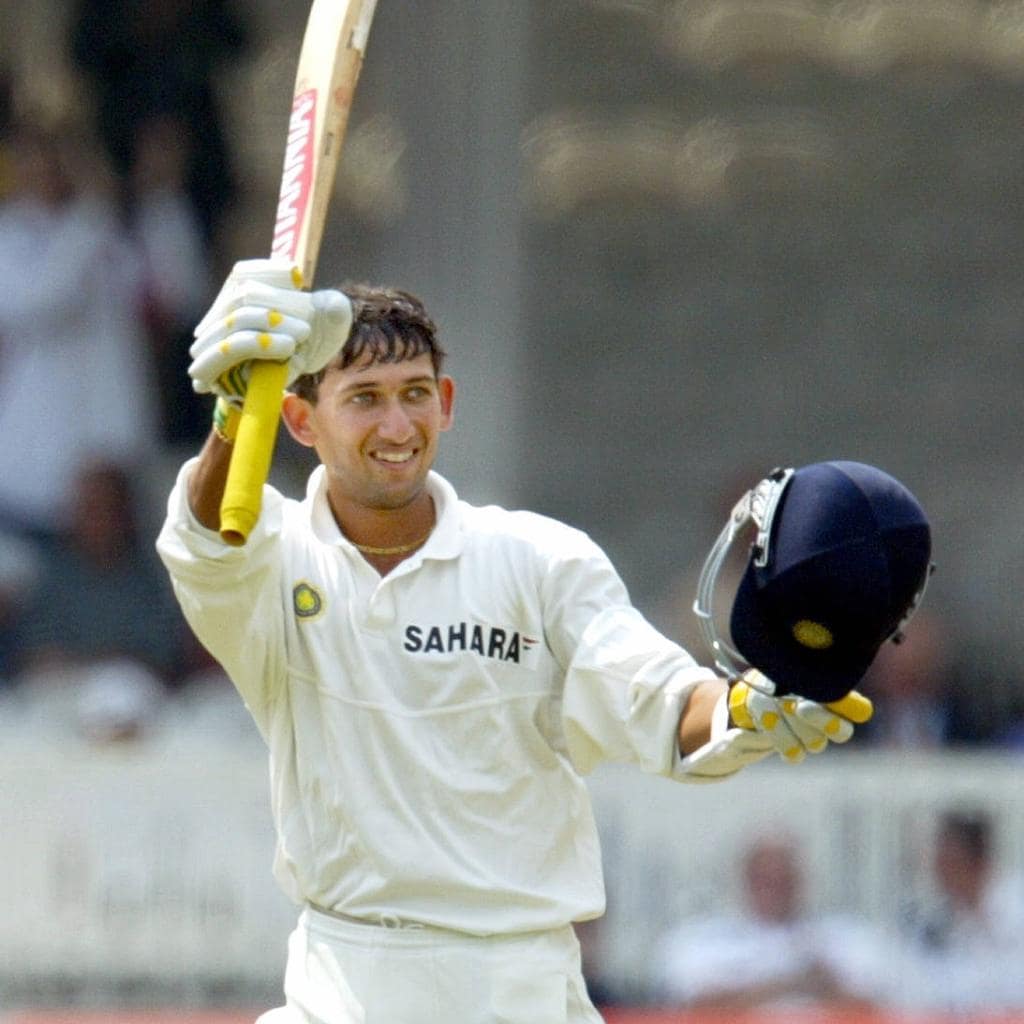
He would later have some fun with that distinction while sharing a dressing room with Ricky Ponting at Kolkata Knight Riders. Agarkar recalled teasing the Australian great about their records at the ground, asking him how many hundreds he had at Lord's. It was the kind of line only a player with Agarkar's peculiar career could legitimately deliver.
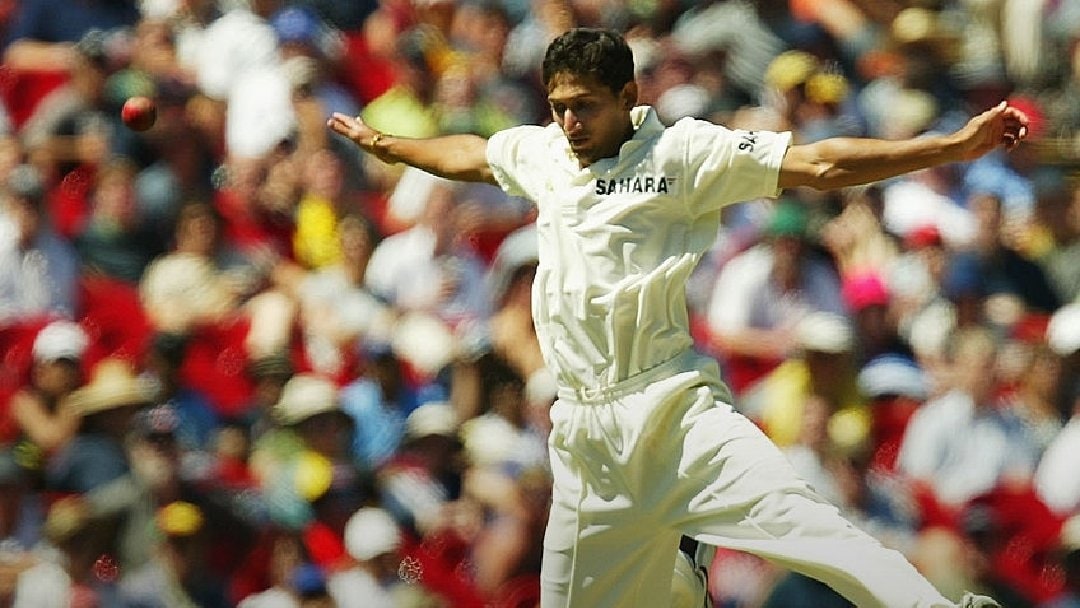
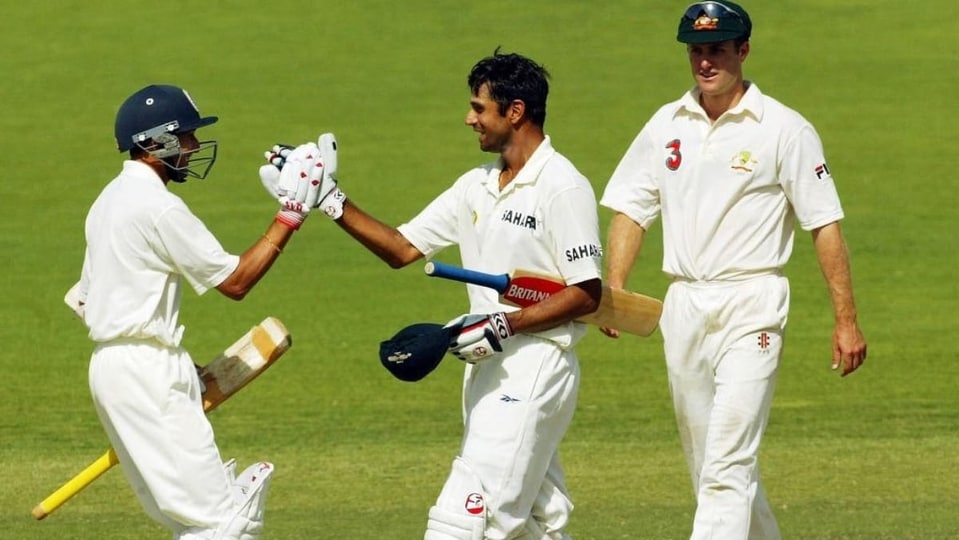
His most important Test contribution with the ball arrived in another place where India had traditionally struggled. At Adelaide in December 2003, Agarkar took 6 for 41 in Australia's second innings, helping dismiss the hosts for 196. India then chased 230 to complete a famous four-wicket victory, their first Test win in Australia for nearly 23 years. Rahul Dravid struck the winning runs; fittingly, Agarkar was standing unbeaten at the other end without having faced a delivery.
His ODI career was far more substantial. Agarkar finished with 288 wickets in 191 matches, alongside 1,269 runs. In 2004, he also became the fastest player at the time to complete the ODI double of 1,000 runs and 200 wickets, getting there in his 133rd match. He was part of India's first-ever T20I in 2006, taking 2 for 10 against South Africa, and was also a member of the squad that won the inaugural World Twenty20 the following year.
Years after his playing career ended, Agarkar found himself on the other side of perhaps cricket's most unforgiving conversation: selection. In July 2023, he was appointed chairman of India's senior men's selection committee. Nearly three years later, he remains at the head of a panel that also includes Shiv Sundar Das, Ajay Ratra, RP Singh and Pragyan Ojha, overseeing India through a period of significant transition.
There is a neat symmetry to it. The man whose own career lurched between selection battles, unforgettable highs, unwanted records and unexpected reinventions is now among those deciding who gets India's next opportunity. And with his current term approaching the three-year mark and discussions around his future continuing, Agarkar's influence on Indian cricket may yet stretch considerably further than even his wonderfully unpredictable playing career did.


