E-Paper



Declare important Himalayan valleys, meadows national parks or sanctuaries: Uttarakhand HC
The Uttarakhand high court has also directed the state government to conduct a systematic survey of the flora of the Himalayan meadows at the earliest to prepare a comprehensive manual within six months.

 Prefer HTon Google


Expressing concern over the ecology of Himalayan meadows, the Uttarakhand high court has directed the state government to consider declaring all important high altitude valleys and alpine meadows/ sub-alpine meadows/ bugyals with rich diversity of flora as high altitude national parks or sanctuaries within the six months.
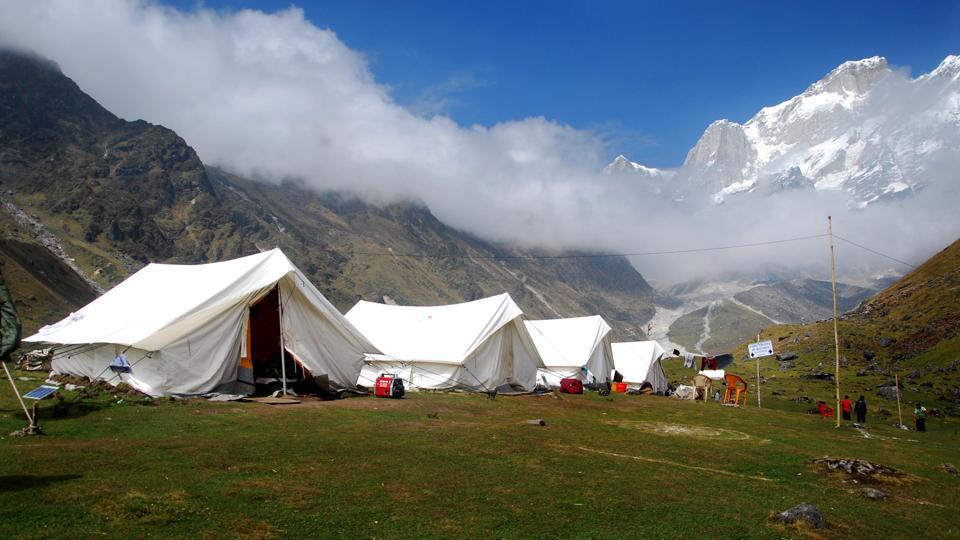
The court has also directed the state government to conduct a systematic survey of the flora of the Himalayan meadows at the earliest to prepare a comprehensive manual within six months.
The court stressed that there are 16 national parks and 60 wildlife sanctuaries in the Himalayan region of India covering about 6% of its geographical area. “There is an urgent need to explore, collect and study the exuberant, multilayered bryophyte flora of these magnificent Himalayan heights before these large yet fragile ‘blocks of diversity are lost without being studied scientifically’ by man-made disturbances of their habitats”, the order said.
“Every forest division should have a herbarium of important medicinal, rare, threatened and botanically interesting plants for reference. The exploitation of medicinal plants should be limited and it should be done through government/public sector”, the HC order said.
The directions were issued by the division bench of acting chief justice Rajiv Sharma and Justice Lok Pal Singh while disposing of a public interest litigation (PIL) on August 21 filed by Chamoli- based Aali-Bedini-Bagzi Bugyal Sanrakshan Samiti in 2014.
Aali-Bedini-Bagzi Bugyal is a famous meadow of the state located in Chamoli district. Bugyals are high-altitude grasslands, pastures or meadows.
Citing various books, articles, documents and research papers, the high court said that the Himalayan vegetation is being affected by mountaineering and tourism. “Excessive tree felling for timber and fuelwood, the establishment of cattle camps (creating artificial pastures), unplanned tourism and pilgrimage etc have caused a tremendous pressure on high altitude forests,” the order said.
HC pointed out that in general, the potential area of sub-alpine forests in the Himalaya is about 50,760 sq km, of which only 0.2-13% is forested. “During 1952-1976, a total of 1960050 hectares forests have been lost from Indian Himalaya. This indicates that there has been a tremendous pressure on the remaining forests of temperate and sub-alpine regions”, the order stated.
The court has also pointed out that in recent years, the biotic pressure on land resources had increased manifold, resulting in the destruction of flora and fauna on a large scale.
“The biotic pressure, coupled with erosion, landslides, floods and avalanches have caused a considerable damage to the flora and vegetation of high altitudes during the last four decades. The impact of man and his domestic animals on the vegetation is seen everywhere. The opening of the interior high altitude valleys by constructing roads and bridges for developmental purposes has brought about a significant change in the landscape”, the order said.