E-Paper



Limit vehicle speed to curb wildlife deaths: HC to Uttarakhand govt
Expressing concern over the death of wild animals in vehicle hits, the Uttarakhand high court has directed the state government to prescribe a maximum speed of 40 km per hour for motorists on national and state highways passing through national parks and protected forests to avoid accidents

 Prefer HTon Google


Expressing concern over the death of wild animals in vehicle hits, the Uttarakhand high court has directed the state government to prescribe a maximum speed of 40 km per hour for motorists on national and state highways passing through national parks and protected forests to avoid accidents.
A division bench of acting chief justice Rajiv Sharma and justice Lok Pal Singh gave the directive on Friday while hearing a public interest litigation filed by the NGO, Operation Eye of the Tiger India.
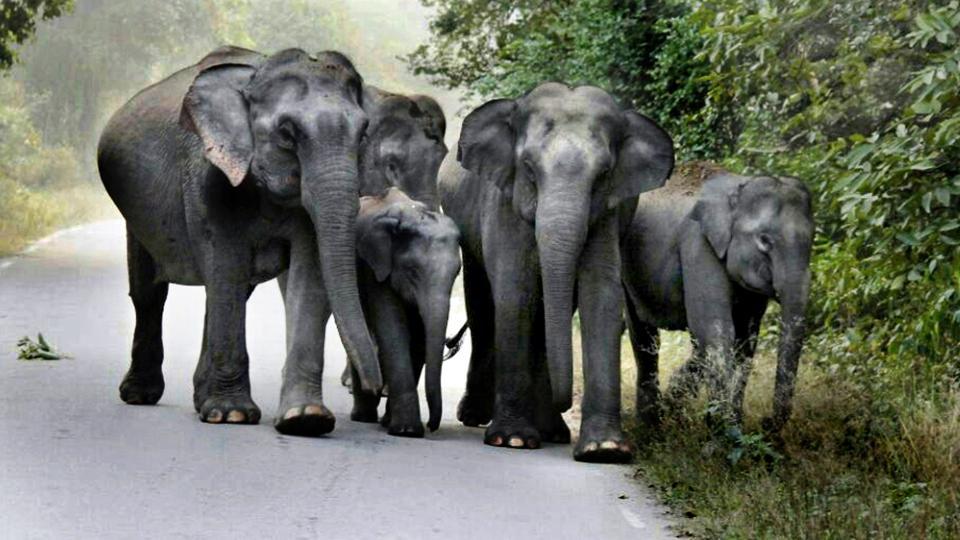
Concerned over the death of elephants and other wild animals in accidents involving trains and other vehicles, the court emphasised that officials should have compassion while dealing with the matters related to the wildlife in the state.
In the last 17 years since the formation of Uttarakhand, 340 elephants have died in the Himalayan state, including 11 that were killed after being hit by trains.
The HC directions will go a long way in checking the mortality of the wild animals in road accidents, said animal rights activist Gauri Maulekhi who is also an executive member of the Society for the Prevention of Cruelty to Animals (SPCA), Dehradun.
“Uttarakhand has its substantial area under forests. Due to this, man-animal conflict and death of wild animals in road accidents remain a major concern,” Maulekhi said.
“To improve things further, I would suggest that the forest department change its beat system of patrolling to the one used by ITBP which is more scientific; ITBP uses criss-cross patrolling which is more effective.”
The petitioner’s counsels also gave suggestions to HC on how to check the death of wild animals, especially elephants, on rail tracks.
They said modern wireless animal tracking system and satellite space navigation system could be used to ensure that drivers remain cautious in areas where elephants are likely to cross railway tracks. They also suggested that use of surveillance radar system could help in avoiding accidents.
Responding to the suggestions, HC directed the railway ministry and the state forest department to use the satellite space navigation system to track movement of elephants, particularly in the vicinity of tracks, within 12 weeks.
The National Green Tribunal (NGT) also directed the ministry of environment, forest and climate change (MoEF) and the National Board for Wildlife (NBWL) on Friday to take cognisance of the death of wild animals along Bareilly-Haridwar national highway due to vehicular traffic.
The NGT heard a PIL that pointed out that vehicles had killed 222 wild animals within a 30-km stretch on NH 74 in the Haridwar forest division.