
 E-Paper



Sightings in Corbett Tiger Reserve raise hopes on conservation of endangered vultures
Sightings of white-rumped and long-billed vultures in Uttarakhand’s Corbett Tiger Reserve and its landscape have been reported, raising hopes about conservation

 Prefer HTon Google


Sightings of white-rumped and long-billed vultures in Uttarakhand’s Corbett Tiger Reserve and its landscape have been reported, raising hopes about conservation of India’s two critically endangered species.
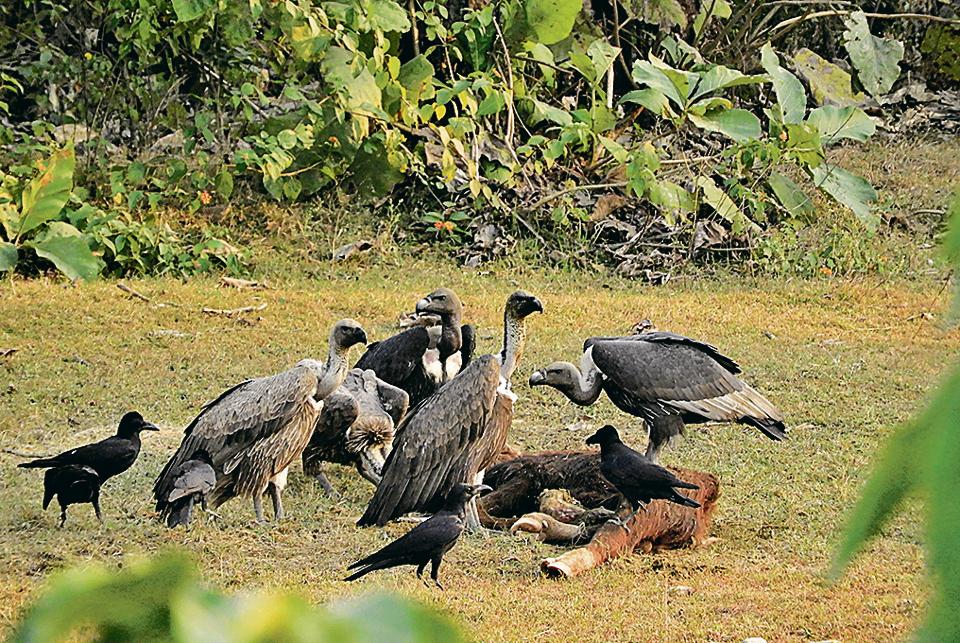
A survey by Dehradun-based Wildlife Institute of India (WII) reported three sightings of four white-rumped vultures and a single sighting of long-billed vulture in Corbett. An independent study by a Doon University research scholar has recorded sightings of 9 white-rumped vultures in and around Corbett in 2015-16 and of 20 birds in 2017-2018.
The WII survey, done with All India Tiger Estimation of 2014, mapped vulture species for the first time in 18 tiger states of the country.
“The sightings of white-rumped vulture in Corbett are encouraging and need monitoring, especially their nesting sites (as this species nest on trees),” says the survey report, titled ‘Status of Vultures in Tiger Landscapes of India’.
The survey was done during November-December. “Many vulture species are winter visitors to Corbett. Breeding of vultures is sporadic in the country. But, there are a few nesting sites in Corbett and its landscape that could strengthen the bird’s population,” said YV Jhala, senior scientist at WII who mentored the survey and authored the report.
The Doon University research scholar’s study, carried out in the Terai belt of the state since 2015, has shown a trend of increasing population of the vulture species in Corbett landscape.
“The sighting of white-rumped vultures in the landscape is encouraging. We also recorded juveniles, indicating that breeding is happening. Long-billed vulture is also sighted, but not frequently,” said Khima Nand Balodi, the research scholar who is leading the project, titled ‘Population status and threat assessment of vultures in Uttarakhand’.
BC Choudhary, senior advisor to the Wildlife Trust of India (WTI) and a former WII scientist, said drugs like ketoprofen and nimesulide, prescribed by veterinarians, posed a threat to vulture species.
“The vultures feed on cattle carcass. Such drugs remain in the body of cattle and when vultures feed on them, they die,” he said.
The population of vulture species in Uttarakhand has not been scientifically recorded. A forest department estimation of 2008 recorded 5066 vultures.
“All wildlife species inside Corbett are well protected. We also interact with neighbouring divisions to ensure safety of the species,” said Amit Verma, deputy director of the Corbett reserve, which has the highest density of tigers in the world – 240 as per the national estimation.


