
 E-Paper



To ease traffic, 15% Vikrams to remain off road every week
According to the regional transport office, at present, there are around 738 Vikram vehicles and 600 e-rickshaws plying in the city.


To decongest roads in Dehradun, the police are mulling over a proposal to bar 15% Vikram vehicles from plying every week on a rotation basis.
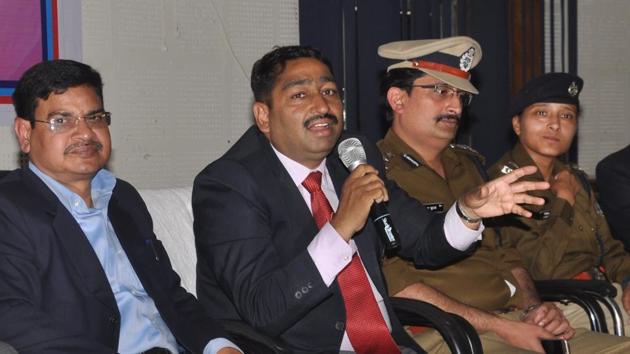
Speaking at a public workshop on traffic management, senior superintendent of police (SSP) Nivedita Kukreti Kumar said, “We are deliberating on a proposal to bar 15% Vikram vehicles from plying on a weekly basis in rotation. This is likely to help us decongest city roads. Besides this, we are also planning to impose a cap on the number of e-rickshaws in the city and earmark dedicated routes for them.”
The workshop was organised by the police department to seek suggestions from public on issues of road safety and traffic management in the city.
Participants in the workshop also raised concerns about the lack of safety measures in Vikram vehicles and overloading of schoolchildren in them. “These vehicles don’t stop at their designated points and are recklessly driven,” said Dr Mukul, a city resident.
According to the regional transport office, at present, there are around 738 Vikram vehicles and 600 e-rickshaws plying in the city.
Besides causing traffic problems, Vikram vehicles are also a major contributor to the city’s air pollution. Recently, Gati Foundation, a city-based environment think tank, attributed Vikrams to be one of the major contributors of particulate matters in the city’s air. Studies by other organisations had also arrived at the same conclusion in the past.
It is also seen that the city’s traffic flow is often disrupted due to political rallies and religious processions that pass through the city’s core area--around the Clock Tower. To tackle this, police will work towards minimising such processions.
“There is a need to regulate political rallies and religious processions in the city. It will be our endeavour not to grant permissions for these events or keep them to minimum. We will also work towards earmarking alternate routes and locations so that the traffic is not affected. People’s support is of vital importance for this,” said additional director general of police (ADGP) Ashok Kumar.
To increase people’s participation, the department said it is inviting NGOs and individual citizens to be part of its ‘Sarthi Campaign’ wherein the individual will contribute two hours every week towards resolving traffic issues along with the traffic police.
“We will also award Rs 100 to every person who reports about any motorcycle using modified silencers that cause excessive noise pollution. The amount will be given against every case reported,” said DIG (traffic) Kewal Khurana.
He added that the department will soon start a WhatsApp number where people can send photographs and videos of traffic violators.
Municipal commissioner Vijay Kumar Jogdande said that his department is planning to introduce no-vending zones in the city. “To control the city’s traffic, we need to ensure that either Vikram or e-rickshaws are allowed to ply on the city’s core area. Simultaneous service of the two is causing traffic snarls. We are working towards correcting this,” he said.
The traffic police said it will also install signboards informing people about the locations of free public parking spaces in the city. “To minimize accidents at night, we are soon going to start a drive against those driving in high beam,” said Khurana.


