
 E-Paper



Delhi feels the sting as Covid work made priority
At present, besides undertaking sanitisation drives and tracing Covid-19 patients, the sanitation staff is working at 10% below its total capacity.


Breeding of drain-borne Culex mosquito is a cause for concern as the municipal staff is mostly engaged in activities, such as spraying disinfectants, to contain coronavirus. April is the start of the breeding season for this genus of mosquito and officials have started receiving complaints of mosquito menace from residents.
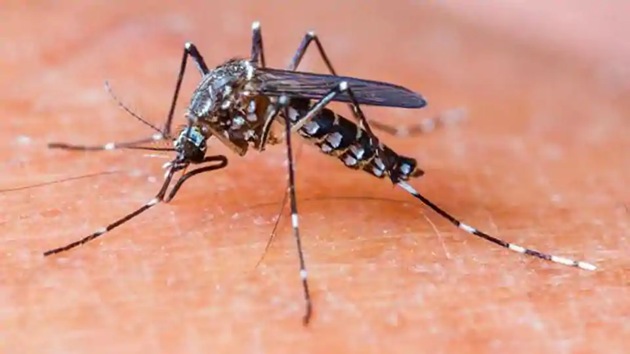
Usually, around this time of the year, field workers (FWs) of civic agencies undertake drives to kill mosquito larvae in drains and ponds. Equipped with backpacks and 6,000-litre tanks, workers spray chemicals — BTI (bacillus israelensis), temephos emulsifier and diflubenzuron — to contain the mosquito growth.
At present, besides undertaking sanitisation drives and tracing Covid-19 patients, the sanitation staff is working at 10% below its total capacity. Many field workers and domestic breeding checkers (DBC), who primarily destroy larvae in coolers and water tanks in households, are unable to reach their work stations due to the lockdown.
“Many of our workers come from far off places like Sonepat and Ballabhgarh in Haryana, and Baghpat in Uttar Pradesh, via trains. But with the train service shut, they are unable to reach Delhi,” said Devanand Sharma of the Anti-Malaria Ekta Karamchari Union.
“Some of us have been promised health insurance, but not everybody wants to risk contracting Covid-19 and worse, spreading it to their families at home,” Sharma said.
The three municipal corporations of Delhi employ around 5,000 FWs and DBCs, who are the front-line workers to contain the spread of vector-borne diseases such as dengue, malaria and chikungunya. These two posts — FWs and DBCs — were created after a massive dengue outbreak in Delhi in 1996, which affected 10,252 people and caused 423 deaths.
“The silver lining here is that Culex in Delhi is not known to cause any disease, unlike the malaria-causing Anopheles or dengue-causing Aedes Aegypti. Both Anopheles and Aedes breed in freshwater, such as in puddles formed during monsoon, and not in drains. Culex is infamous for its nuisance value only,” said Dr Lallan Verma, public health officer, South Delhi Municipal Corporation (SDMC).
“However, Culex is definitely responsible for causing several hundred cases of Japanese encephalitis and filariasis in eastern Uttar Pradesh and Bihar. Migrants from these areas are always coming to Delhi for work opportunities and there is always a chance of these diseases arriving in Delhi too with them, via the Culex,” he said.
Municipal health officer (MHO) with the East Delhi Municipal Corporation (EDMC), Dr Somashekhar, said even the DBCs who are undertaking drives to check mosquito breeding are facing problems.
“People are not opening the gates. They are obviously scared that our workers, who are out in the public, may be carrying the virus. So our FWs are passing on instructions to residents at the gates. We (the authorities in headquarters) have also shot letters to group housing societies today that in such paralysing conditions, they will have to ensure that water doesn’t collect anywhere on their premises, in coolers or puddles,” he said.
Meanwhile, the north municipal corporation’s mayor, Avtar Singh, wrote to the Lieutenant Governor, Anil Baijal, on Monday requesting that his employees be “exempted from participating in a COVID warriors team ordered for by the Chief Secretary.”
“We are already constrained with the anti-larvae work we have to carry out. We request you to please excuse us from this work,” he wrote.
The north municipality commissioner, Varsha Joshi, said, “It is true that a lot of mosquito-related complaints are coming and we are doing our best to contain larvae proliferation, including raising the larvae-eating Gambusia fish at designated spots like PUSA Institute.”

Stay updated with all top Cities including, Bengaluru, Delhi, Mumbai and more across India. Stay informed on the latest happenings in World News along with Delhi Election 2025 and Delhi Election Result 2025 Live, New Delhi Election Result Live, Kalkaji Election Result Live at Hindustan Times.


