
 E-Paper



Pollen pollution shoots up during March, post-monsoon
Scientists, in the absence of any permissible standard for pollen pollution, could not say by how much the safe limit was exceeded. But they say the numbers shoot up alarmingly during a particular time of the year.


NEW DELHI
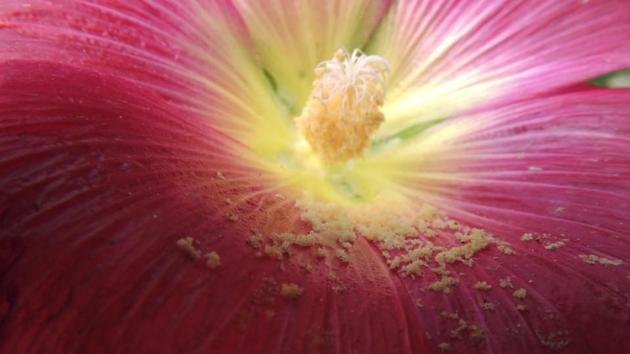
At a time when Delhi is battling to improve its quality of air, concentrating largely on particulate matter and gases, scientists from Vallabhbhai Patel Chest Institute have found that pollution from plant pollen has also been occasionally skyrocketing during certain months of the year.
“Data collected from Delhi University’s north campus since 2013 shows that pollution from pollen spikes particularly during March and April. Another spike is witnessed every year during the post-monsoon (September-November) season,” said Raj Kumar, acting director and head of pulmonary medicine of the institute.
Scientists, in the absence of any permissible standard for pollen pollution, could not say by how much the safe limit was exceeded. But they say the numbers shoot up alarmingly during a particular time of the year.
The months when pollen pollution peaks corresponds with the time when more people complain about allergies and other respiratory ailments.
“There is almost a 20% – 25% rise in patients during March and April. The patients show symptoms, mainly triggered by pollen allergy. Cases of asthma and chronic bronchitis shoot up. Such diseases also shoot up during winter but the reason is different,” said Dr Naval Vikram, professor of medicine at AIIMS.
“Data collected over the past four years shows that while during winter (December to February), the pollen count drops to around 100-200, in March and April, the pollen count shoots up and stays somewhere between 600 and 900 — meaning an almost a four-fold rise”
Between May 2013 and April 2014, the team had collected more than 42,200 pollen. During that period, the maximum pollen count of 4,805 was recorded in September. The minimum was found in July-August and again in December when the count dropped to 1,973.
“Continuous monitoring over the past four years has shown the trend of rise and fall in pollen count is almost the same every year,” he said.
An earlier study carried out by CR Babu and AB Singh in the 1980s had said that the dominant pollen in Delhi was those of grasses, Amaranth, Ailanthus, Ricinus, Morus, Xanthium, Cannabis, Artemisia and Holoptelea.
“The potency of pollen lies in their proteins and glycol proteins. These react with the mucus of humans and become more virulent. The proteins get absorbed in our blood, triggering allergies. They are hydrophilic in nature – get attracted to water. So when moisture levels increase in the air, pollens become more virulent,” said Singh, emeritus scientist at Institute of Genomics and Integrative Biology a premier research laboratory in Delhi under the CSIR.
More than 90% of the pollen in the air are larger than PM10 particles, meaning that unlike the ultrafine and more harmful PM2.5 particles, they can’t reach the lungs and get trapped in the upper respiratory tract.
“Even though pollen forms an important part of the PM10 pollution and could be termed as ‘biological particulate matter’, it is understudied compared to other pollutants,” said CR Babu.
He said winds can carry pollen, depending on the size, weight and buoyancy for hundreds of kilometres. While some stay air borne for just a few hours, other float for nearly a week.
“Pollen is a natural contributor to Delhi’s pollution. People say dust triggers irritation in eyes and nose. But is actually pollen pollution that triggers the irritation. More investigation is needed,” said D Saha, former head of the CPCB’s air quality laboratory.

Stay updated with all top Cities including, Bengaluru, Delhi, Mumbai and more across India. Stay informed on the latest happenings in World News along with Delhi Election 2025 and Delhi Election Result 2025 Live, New Delhi Election Result Live, Kalkaji Election Result Live at Hindustan Times.


