
 E-Paper



Working class women back CM plan, will reverse fare hike woes
Delhi chief minister Arvind Kejriwal’s announcement to make travel in Delhi Metro and in public buses free for women on Monday faced flak from several women passengers, but those from the working class backgrounds hailed it.


Every day, 37-year-old Meena travels from Outer Delhi’s Narela to Minto Road in central Delhi, a distance of over 40 km, where she works as a domestic help.
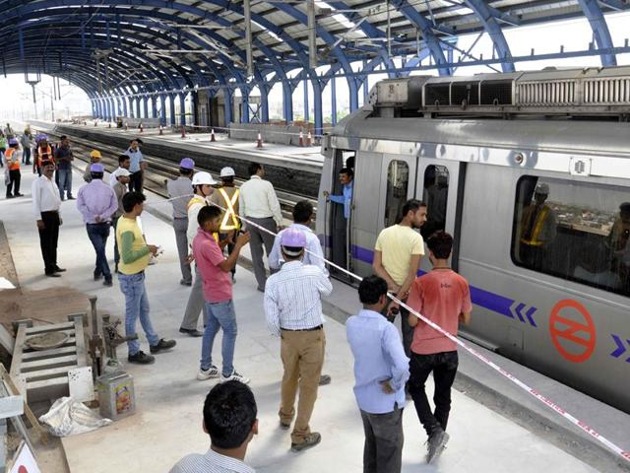
The Delhi Metro fare hike in 2017 forced her curtail her daily commute on the metro to just once a week; the rest of the days she has to change three public buses to work and back. “There is no direct bus from my place. Travelling is difficult, especially during summers. The air conditioned metro train is a relief, but now I can’t afford it,” she said.
Delhi chief minister Arvind Kejriwal’s announcement to make travel in Delhi Metro and in public buses free for women on Monday faced flak from several women passengers, but those from the working class backgrounds hailed it.
“Public transport is the safest for women but due to the increase in Metro prices, they are not able to use the services,” Kejriwal said. Many wondered that if this benefit was announced with an aim to provide economic relief, why was the scheme just limited to women. When asked to clarify the government’s stand on this, Kejriwal said they will include the underprivileged sections in the scheme, once the incentive proves successful for women passengers.
Anumita Roy Chowdhury, executive director (research and advocacy) at Centre for Science and Environment (CSE) said that subsidy is a good way to discourage commuters from using private vehicles. However, it is also the responsibility of the government to make these modes affordable for the economically weaker sections. “The aim of public transport networks in a city should be that it is affordable to all, even the poorest of the commuter,” she said.
In 2017, the Delhi Metro had increased the fares in two phases, dipping its ridership considerably despite the network expansion. The AAP government had attacked the Delhi Metro Rail Corporation (DMRC) and the Centre for the hike.

Stay updated with all top Cities including, Bengaluru, Delhi, Mumbai and more across India. Stay informed on the latest happenings in World News along with Delhi Election 2025 and Delhi Election Result 2025 Live, New Delhi Election Result Live, Kalkaji Election Result Live at Hindustan Times.


