
 E-Paper



Quiet Aya Nagar in south Delhi charms culturati
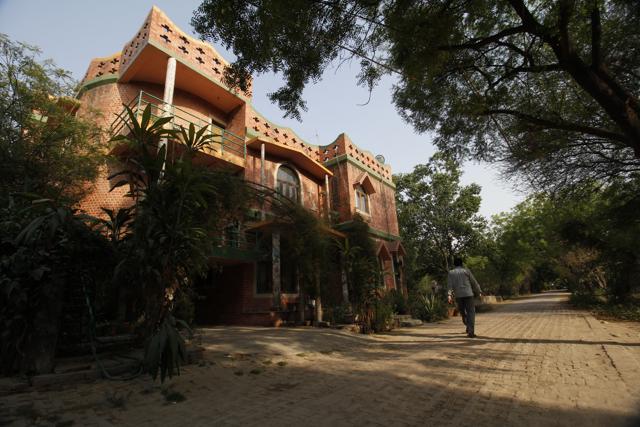
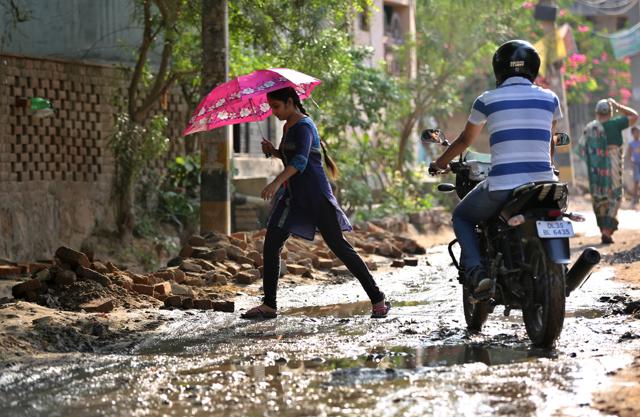
Inside the unpaved sewage-filled lanes of the village, one is surprised to find a green gated complex with 21 red-brick individual ultra-modern houses surrounded by thick green bushes. While all of these are not occupied yet, a handful of people living here include architects, budding artists and professors.


A number of cots are lined up in a large courtyard with hookah-smoking men sitting around in a two-storey house in Aya Nagar village. The house wears a relatively modern look in green and white, standing distinctly among the others. It belongs to Chaudhary Basant Lal, 83, one of the oldest residents in the area and also the village head.
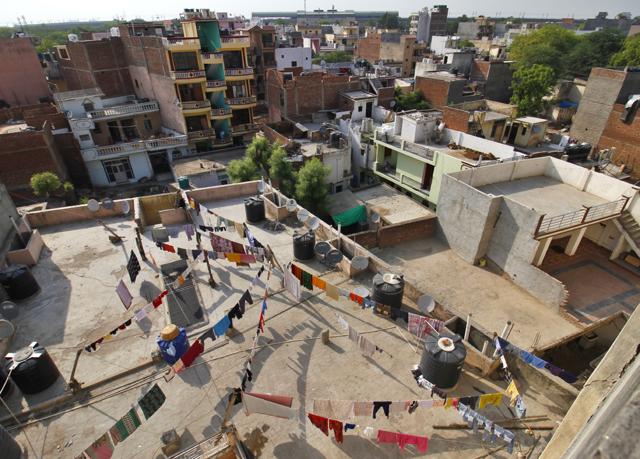
Once a predominantly Muslim village, called Yahyah Nagar, post-Independence it has been a Gujjar-dominated locality. The small settlement of some 80-odd houses then now houses around 1.5 lakh people. However, the village, marred by open drains and poor roads, is turning out to be a new housing opportunity for those looking for a quiet life amid the greens.
The area grew as an unauthorised colony when a large number of migrants from different parts of the country settled here in the 80s. While the village lags behind on the development front, urbanisation has changed its face into a small township with the coming up of several apartment blocks here. Located on the Mehrauli-Gurgaon road, it is the last village of south Delhi. The settlement is bound by the Aravalli Hills, an Air Force station and ravines formed by an ancient river course now dry.
Inside the unpaved sewage-filled lanes of the village, one is surprised to find a green gated complex with 21 red-brick individual ultra-modern houses surrounded by thick green bushes. While all of these are not occupied yet, a handful of people living here include architects, budding artists and professors.
“Aya Nagar, for me, is a laboratory. I have been studying the process of urbanisation here. Most of the urban planners are unaware of how cities come up. I have seen people create a city here after having come from far-off places across the country. The population was around 50,000 then which has now increased almost four times. They neither have the means nor any government sanctions, but they relentlessly worked on developing this zone,” said MN Ashish Ganju, 71, an architect, who moved here in 1999.
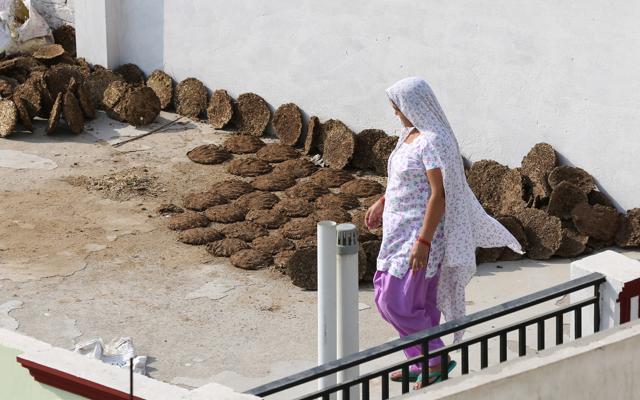
Ganju said that one would find a unique social mix of cultures, communities and castes here. While one grocery store belongs to a Gujjar family, the other has a board in Malyalam. The colony has extended on what was once agricultural land, remembers Chaudhary, better known as Basant Pradhan in the area.
“All this land used to be agricultural while most of the place was a jungle when I was a child. We used to play by the johad (pond) which was surrounded by a lot of houses. There were no formal schools at that time. Since it had been a Muslim village, we used to learn Urdu and a little Mathematics at the village chaupal,” said Pradhan, also the vice -president of the Aya Nagar Vikas Samiti.
Having given up on farming and cattle-rearing now, for most Gujjar families, land is the major source of revenue. “I have built an apartment block on the land we had. The flats are mostly rented by young people who come from other states to work in Delhi. The apartments that have come up are no less modern. There are elevators and ample stilt parking space,” said Pradhan.
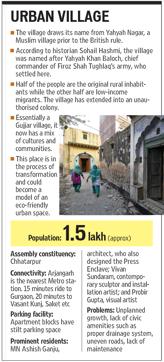
The first school in the area came up in 1960. Government intervention brought electricity, water supply facilities and a bus terminus connecting the village to the city in 1970-72. However, the johad, symbolic of the village society, which used to be the sole water resource for people then, is now left neglected and is used as a garbage dump. Plans to revive the pond as an eco park for almost a decade, despite a High Court order, still remain in the pipeline.
The main Aya Nagar Road leading up to the colony has a number of small restaurants, mostly selling Indian version of traditional Chinese cuisine. The main market and most of the flats have come up haphazardly. While the village still awaits proper drainage and waste disposal system, many still would not know that the Delhi government’s Bhaagidari (developing a locality along with RWAs) scheme was invented here, claimed residents.
“During 1999-2000, former chief minister Sheila Dikshit had come here, when we proposed developing the place with community involvement and government aid,” said Ganju, who had researched and proposed a development project as a consultant to the Delhi Urban Arts Commission (DUAC). Dikshit had declared the place a model village in 2000, a year after which the Vikas Samiti was registered in 2001 to implement development plans here along with local residents.
The place will also be the site for a pilot project for implementing sanitation improvement plan. The samiti members are awaiting an appointment with PWD minister Satyendra Jain in this regard. “Drainage is the key to development. This place has an immense potential of becoming an eco-friendly urban space,” he added.

Stay updated with all top Cities including, Bengaluru, Delhi, Mumbai and more across India. Stay informed on the latest happenings in World News along with Delhi Election 2025 and Delhi Election Result 2025 Live, New Delhi Election Result Live, Kalkaji Election Result Live at Hindustan Times.


