
 E-Paper



‘River view’ New Friends Colony of 1980s now landlocked
The colony which started with the sale of plots for 50 paisa per square yard in 1970s is now one of the most sought after addresses of the Capital

 Prefer HTon Google


New Friends Colony (NFC), together with Friends Colony (East and West) located on either side of Mathura Road, was aptly called ‘Marine Drive’ of Delhi as Yamuna once flowed along these affluent neighbourhoods which are now abode of the who’s who of the city. However, the construction of the Ring Road changed the course of the river. While Friends Colony was set up in the 1950s, NFC came up as its extension and was hence named after it.
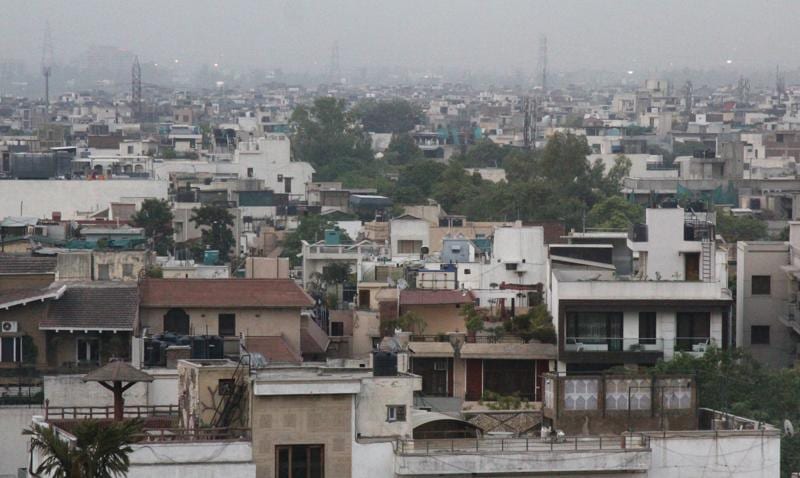
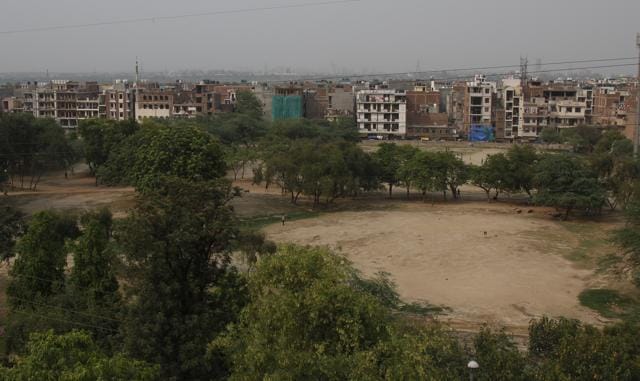
The area where once Yamuna flowed and villagers brought their animals to graze is now densely populated because of fast-developing builder flats and nearby villages. About seven to eight villages surround NFC, including Khizrabad, Bharat Nagar, Taimoor Nagar, Sarai Julena and Zakir Nagar.
NFC’s development began in the 1970s when large 800-1,000 acre plots were sold by a cooperative housing society set up by Ram Lal Jaggi, a businessman who bought land from villagers (mostly Gujjars) to develop the place. The colony is divided into four blocks: A, B,C and D.
“Jaggi sold the flats at 50 paisa per square yard at that time. Most of the buyers included navy and army officers as well as a few businessmen,” said Sanjiv Rai Mehra, who moved here in 1979. Construction of the allotted plots started in 1973-74 and most buildings were single-storey flats, he said. “At that time there were no roads. There used to be kachha pathways. There was a large green land with Yamuna flowing past it. Also, there was no electricity and Delhi Electric Supply Undertaking took a long time to lay underground wires. Some of the families who had already moved into the new houses got together to get temporary connections from neighbouring Khizrabad village,” said Mehra.
Many residents also recall the 1984 anti-Sikh riots, during which a number of Sikh houses were looted and burnt down. “I remember that time. Many of our neighbours’ houses were looted. My father and his friends brought some of the families to our house to hide them. The horror continued for days and no government authority came to help,” said Mehra, 63.
Old-timers claimed that by the 1980s, NFC turned into a prime location and was being compared to Marine Drive of Mumbai, because of its affluence and proximity to the river. “The place had become a premium colony with the houses being described as river-view apartments,” he said.
Residents said in 1978, the river’s level rose due to heavy rains and houses located on the periphery had to be vacated because of massive flooding. Block A resident Rajiv Kapoor, whose house is one of the oldest here, said, “Earlier there was no public transport here. While growing up, we had to rely mostly on two-wheelers,” Kapoor said.
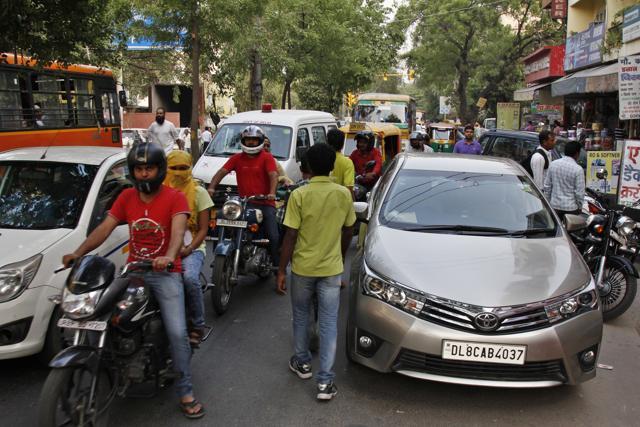
The large Ashoka Park, opposite block A, used to be a vast green land, has shrunken and tall buildings surround it. “Snakes from the dense bushes would, at times, get inside the houses. And, with no lights it was scary to get out after dark,” said Rajiv. However, he said, with rapid urbanisation, a large mass of migrant population settled into the neighbouring villages giving an impetus to unauthorised construction. The houses, shops and vendors kept pushing the river back and gates had to be installed in the colony, in order to keep them from encroaching the colony land. Traffic snarls due to rampant encroachment on the roads have become the order of the day. Getting out on CV Raman Marg is a huge hassle.
“The colony’s charm has somewhat dissolved. It used to be a peaceful and green place with a number of historic buildings which have now long been ravaged,” said Madhavi Sachar, a resident.
Friends Colony (East & West)
Like NFC, these are also cooperative societies set up by Nathu Ram, a businessman, who bought the land and allotted plots to buyers. Together, these two colonies have 297 plots. The two colonies, divided by Mathura Road, were developed in the 1950s when people started settling here post-Partition. The plots were sold at eight annas per square yard. From top industrialists, politicians, judges, proprietors, hoteliers and senior government employees, the two colonies boast of the city’s most affluent inhabitants. The colony has retained its thick green cover and is still more peaceful, if compared with NFC. However, the approach roads remain crowded and jammed during peak hours.
MD Gupta, who has been working for the Friends Club located in Friends Colony (West) for 36 years, said, “Many well-known personalities come at the club. I remember coming here in my 20s for work. I used to cycle down from Kotla Mubarakpur. Today, no one can even think of riding a bicycle in the maddening traffic.” Gupta still remembers the old houses and their plot numbers by heart. The Friends Club (open only to members) was established in 1961.
Many retired IAS and IFS officers have also settled here. Also, most residents have added more storeys to the original single-storey houses. Over the years, a number of four-storey apartment blocks have also come up, occupied mostly by expats.


