E-Paper



Number Theory: The Kisan factor in Haryana elections – II
Can the Congress harvest anger among farmers to capture power in Haryana after a ten-year gap?
Updated on: Sep 20, 2024, 14:02:01 IST

 Prefer HTon Google
Share via


Copy link

The first of this two-part series on agriculture in Haryana showed that even though agriculture is losing its importance in Haryana’s economy, it is still a high-value proposition than in the rest of the country. But can the Congress harvest anger among farmers to capture power in Haryana after a ten-year gap? Do official statistics on agriculture in Haryana tell us anything substantive about this question? Here is what data tells us.
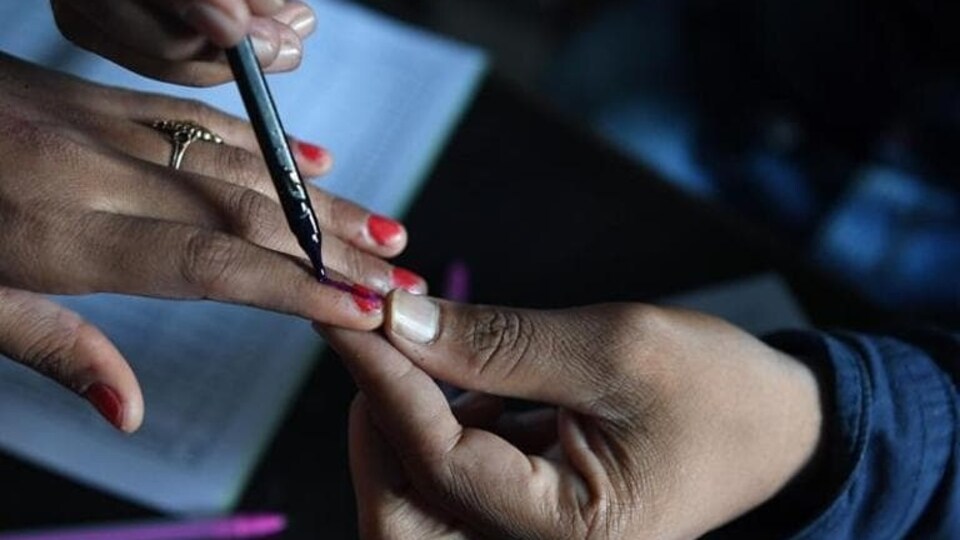
 Non-SC-ST-OBC rural households have a much larger stake in agriculture in HaryanaThis is another important characteristic which differentiates agriculture in Haryana from the rest of India. Rural households who do not belong to Other Backward Classes (OBC), Scheduled Caste (SC) or Scheduled Tribe (ST) are significantly more likely to be agricultural households in Haryana than the national level. While OBCs are proportionately represented in the ranks of agricultural households in Haryana, this number is smaller for SCs. Because there are very few STs in Haryana, their relative share among agricultural households is not significant when it comes to the state’s larger political economy. It is worth underling the fact that Haryana has a larger than all-India average share of non-SC-ST-OBC population. Among other things which the larger representation of non-SC-ST-OBC in agricultural households could mean is a concurrence of social and economic headwinds against the BJP in the “jat-farmer” cohort. Jats are expected to have a population share anywhere between one-fifth to on-fourth in Haryana’s population and are being seen as an important component of the Congress’s social-political base this time.
- Haryana has seen slightly higher reverse migration in agriculture in the post-pandemic periodThat share of agricultural employment increased in India after the pandemic is a well-known fact. This is largely seen as a result of the first the lockdown’s disruption and then the lag in revival of urban jobs especially in contact-intensive services. An analysis of 2018-19 and 2022-23 PLFS data – the former is the last pre-pandemic survey as the PLFS follows the July-June period and the latter the latest available annual data – shows that Haryana’s reverse migration in agriculture is slightly larger than what was seen and continues to persist at the all-India level. The ratio of Haryana’s and all-India agriculture employment share was 0.63 in 2018-19. This increased to 0.64 in 2019-20, fell 0.61 in 2020-21 but increased again in 2021-22 to 0.66 and was still at 0.65 in 2022-23, the second highest ratio since 2017-18, the latest year for which we have PLFS data. An age-wise break-up shows that the increase in the ratio is largely a result of a relative increase in agriculture’s employment share of less than 40-year-old workers in Haryana.
- Part of the labour force may have decided to become unemployed rather than work in agricultureTo be sure, another statistic, namely, a large rise in ratio of rural unemployment in Haryana and all-India in the post-pandemic period, shows that a significant group of people might have decided to enter the ranks of the unemployed than take up farming in Haryana.
- Has cow-vigilantism had an impact on Haryana’s livestock economy?Ever since the BJP captured power in Haryana in 2014, the state has frequently been in the news because of cow-vigilantism related incidents. While cow-vigilantes and their supporters claim that their activities are directed against so-called cattle smugglers, many people have argued that they have generated headwinds for the cattle economy because of difficulties in transporting animals and disposing of ‘dry-animals’. Does data tell us anything about the impact of cow-vigilantism on Haryana’s livestock economy? SAS does give us data on share of agricultural households who do animal farming including those who report milk receipts (sale of milk). To be sure, the 2012-13 data does not tell us whether the animals being farmed for milk are cows, buffaloes, goats or something else so one cannot track change among such farmers by kind of animal owned. A comparison of 2012-13 and 2018-19 data shows that Haryana suffered a disproportionate fall in the share of agricultural households who reported animal farming as well as milk receipts and the fall was greater when it came to the latter. A religion-wise break up of data on milk receipts shows that Muslim agricultural households show a much bigger fall in Haryana than Hindus, although both have shown a larger fall than at the all-India level. This data does suggest some level of religion-based exit from the cattle business because of cow vigilantism in Haryana. This could have generated an economic factor among Muslim farmers for turning against the BJP.