
 E-Paper



Monsoon's progress is bad, but not unprecedented | Number Theory
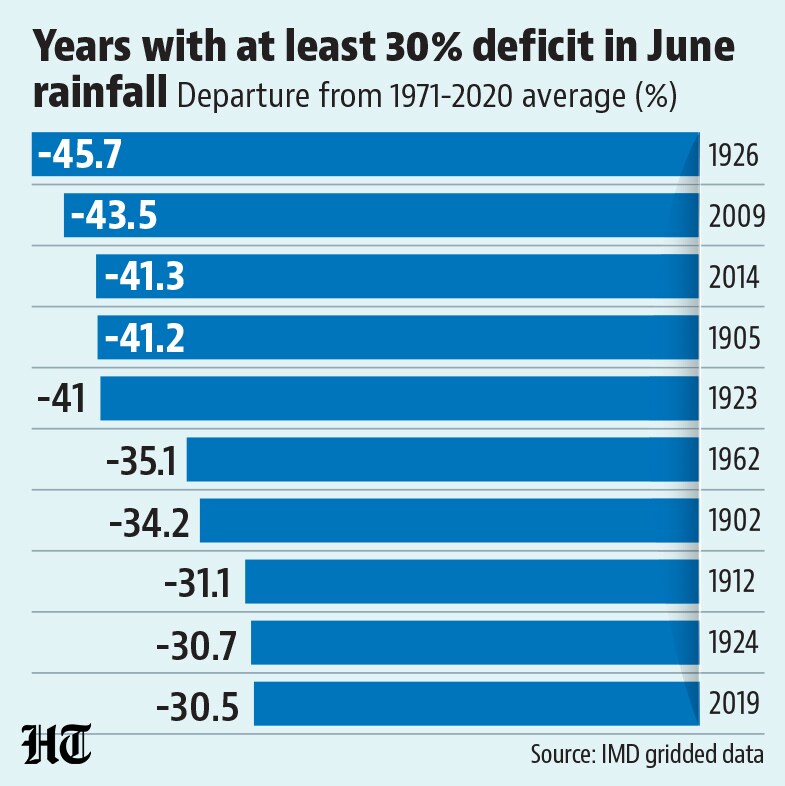
There are 10 years since 1901 when June ended with a deficit of 30% or more, of which three - 2019 (30.5%), 2014 (41.3%), 2009 (43.5%) – were not too long ago.
Published on: Jun 24, 2026, 08:20:43 IST

 Prefer HTon Google
Share via


Copy link

June, the first month of India’s monsoon season quadrimestre, has just one week left. So far, monsoon rainfall, which brings three-fourth of India’s annual rains, has been disappointing despite signs that the weather system’s stall might be finally ending. As the country prepares for a below normal monsoon, the only silver lining is mitigation efforts need not go very far in time. Here is a longer explanation of the argument.

Monsoon progress is bad, but not unprecedented
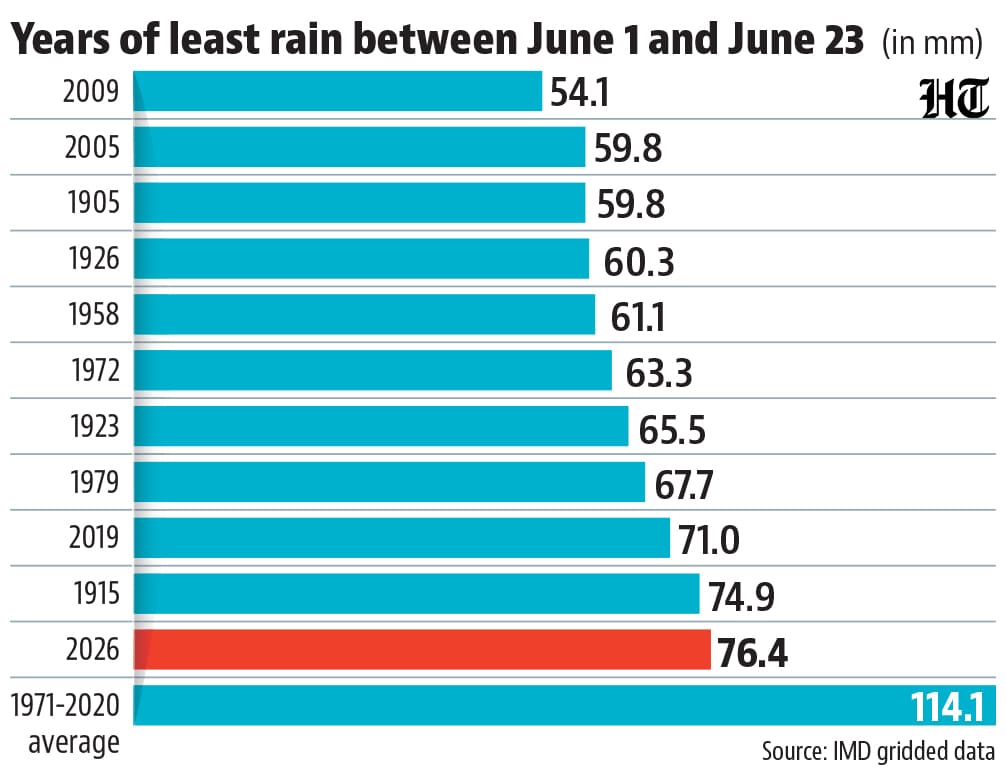
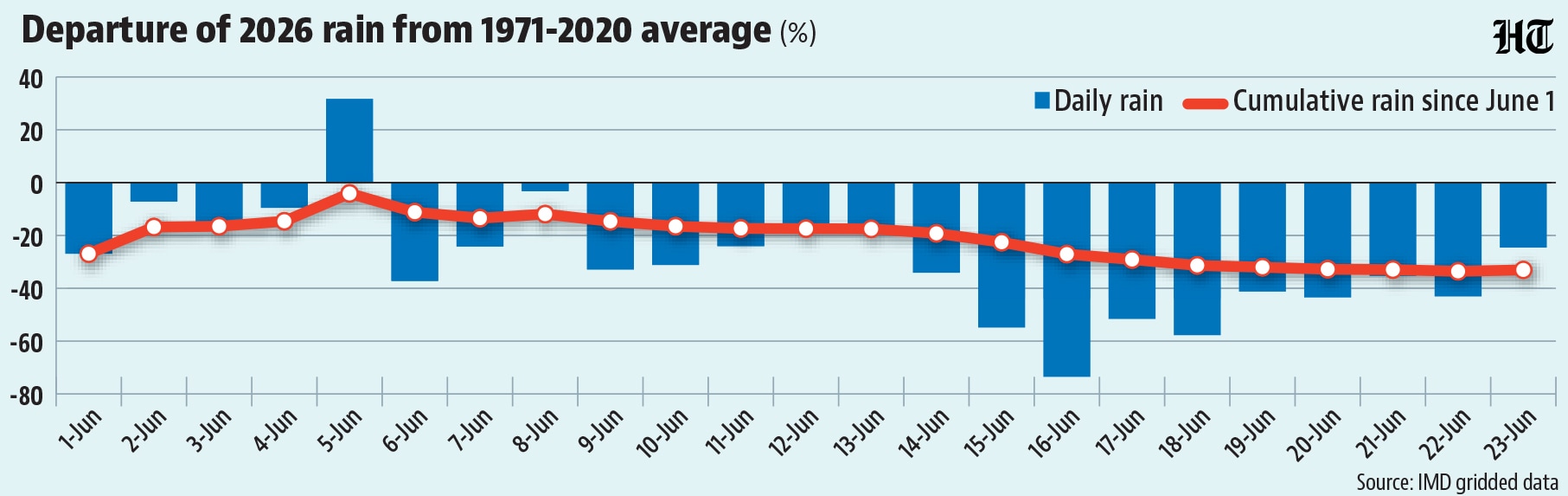
 June 2026, so far, is the 11th driest in 126 yearsThe gridded rainfall data of the India Meteorological Department (IMD), the only official dataset for computing rainfall statistics, is available from 1901. It shows that India received a cumulative 76.4 mm rain between June 1 and June 23 this year. This makes it the 11th lowest since 1901 for this period. When compared with the 1971-2020 average – IMD’s current benchmark for the Long Period Average (LPA) – it is 33% lower. To be sure, the actual deficit could be higher. IMD’s official statistics – they can differ from statistics calculated from the gridded data because of the stations chosen for generating them – put the cumulative deficit on June 23 at 42.3%.
- Monsoon overcoming its two-week long stall this week has made little difference to the current deficitThe monsoon brings rain because of a pattern of pressure, temperature, and winds. This system traverses India’s landmass in June from both the southwest and the southeast side. Both arms halted almost completely on June 12, the reasons for which were explained in detail in these pages. The southwestern arm of the monsoon has started making fast progress this week. But it has not plugged the cumulative national rainfall deficit, which increased marginally from 32.9% on June 21 to 33% on June 23. This is because daily rain deficit was over 25% even on June 23.
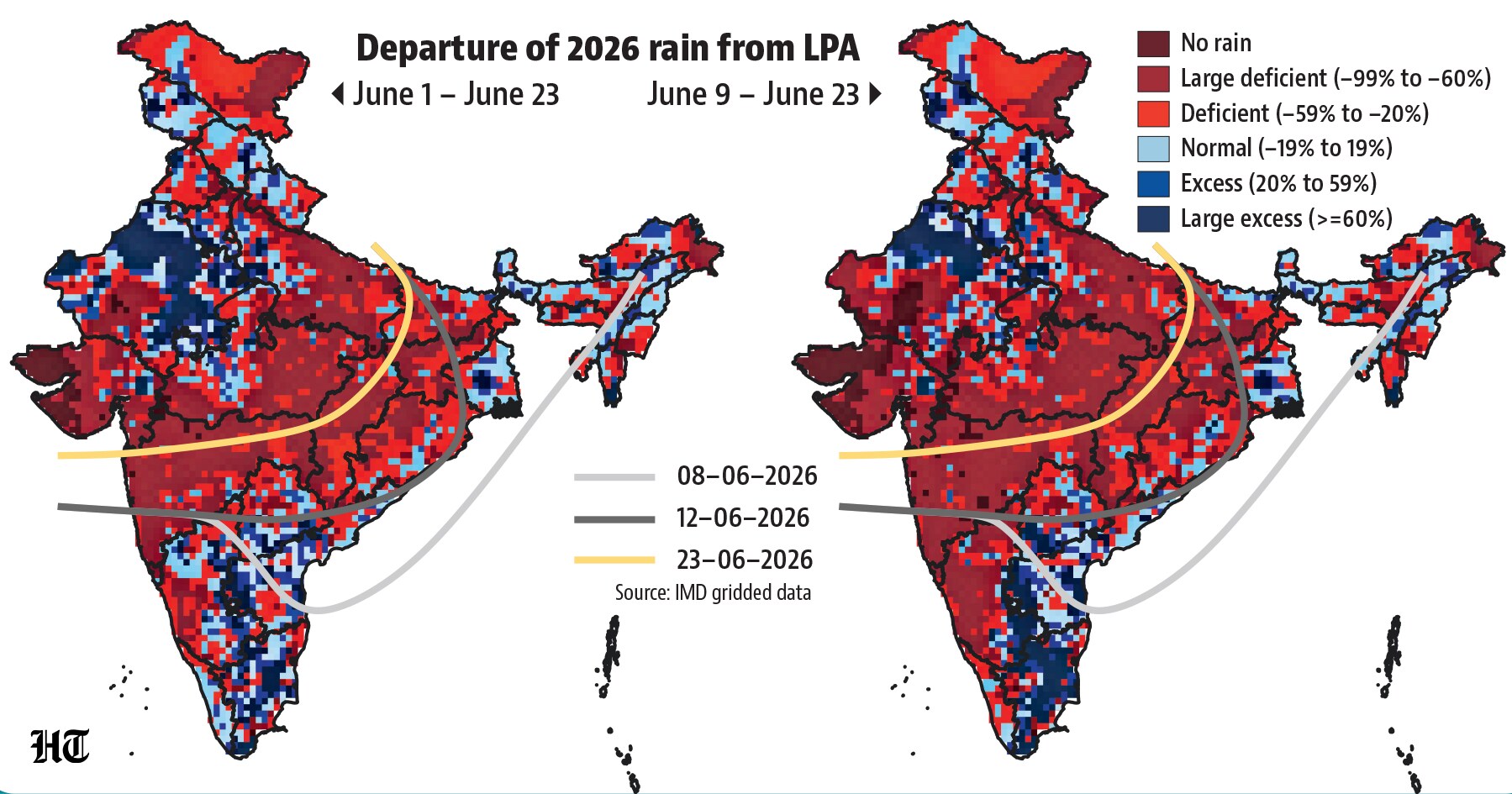
- Not all the rainfall deficit is because of monsoon stalling until last weekA cumulative rainfall deficit in June at the national level can exist despite of a good monsoon rainfall. This can happen if areas outside the monsoon’s coverage up to this period (such as in north-west) receive lower than normal rainfall. The 2026 deficit is driven by both monsoon and non-monsoon rainfall being lower than normal in large parts, as can be seen in the maps given below. For example, there is large deficit in rains in the period after June 8 even in places where the monsoon had reached by June 8. To be sure, there are also regions, such as Andhra Pradesh and West Bengal, which have been covered by the monsoon and have seen above average or surplus rainfall.
- How unprecedented is the rainfall deficit so far?This is the most important question from a mitigation point of view. There are 10 years since 1901 when June ended with a deficit of 30% or more, of which three -- 2019 (30.5%), 2014 (41.3%) and 2009 (43.5%) – were not very far back in time. All three of them were also El Nino affected monsoons like 2026. However, overall monsoon rainfall performance in these years had a smaller shortfall than what was seen in the month of June. In other words, a very big deficit on June 23 is a does not necessarily tell us what lies ahead in terms of total monsoon rainfall. Moreover, an overall surplus or deficit in monsoon rainfall for India is neither a good predictor of rainfall’s spatial or temporal distributiion. This matters more than the headline number for things such as crop production. This means that 2026 mitigation efforts should be nimble and granular rather than a kneejerk reaction to the monsoon’s performance so far.


Unlock a world of Benefits with HT! From insightful newsletters to real-time news alerts and a personalized news feed – it's all here, just a click away! -Login Now!


