E-Paper



Number Theory: How much of the world does the US fund?
.

 Prefer HTon Google


Donald Trump is set to be sworn in as the 47th President of the United States. In recent months, the President-elect and his team have consistently emphasised their commitment to continue the “America First” policies of Trump’s first term, which are significantly different from the approaches of past administrations. This more combative and inward-focused policy could lead to cuts in US funding for multilateral organizations such as the UN and reduced financial support for Ukraine, which is currently at war with Russia.
This two-part data series examines US funding of global initiatives and the impact of potential cuts. In this first part, we explore the extent of US contributions to the UN, NATO, and the global multilateral order — and the potential consequences of reduced support. The second part will look at direct foreign aid given by the US to countries, whether it actually spends enough on aid, and the link between foreign aid and domestic politics.
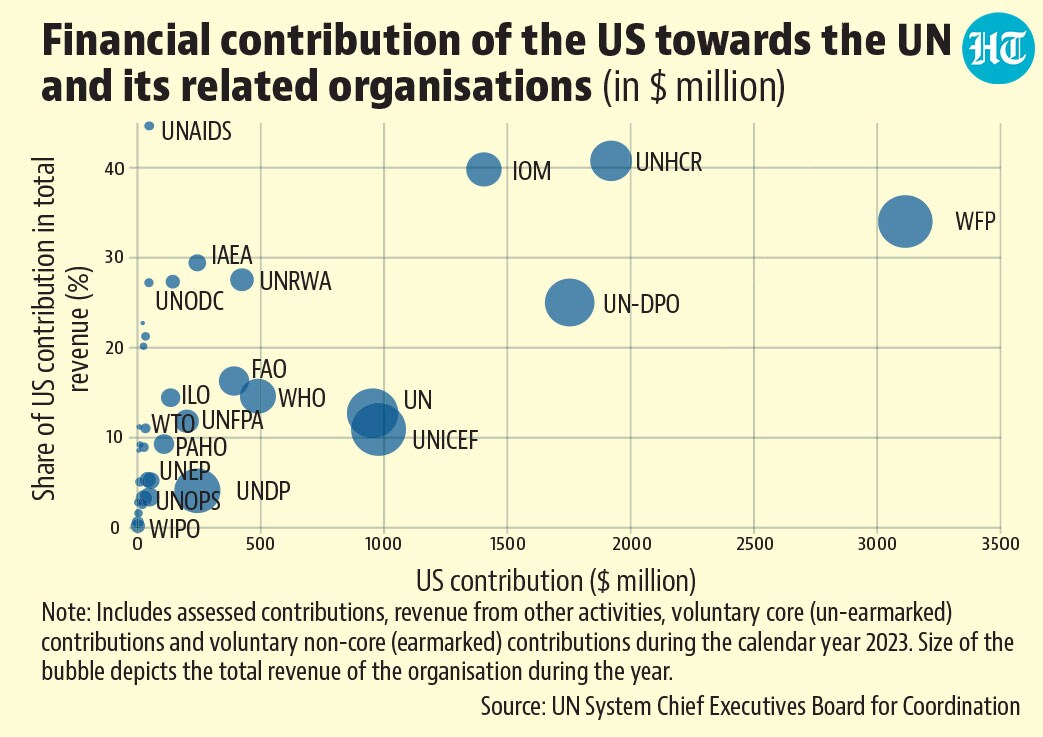
 How much does the US contribute to the UN?All 193 members of the UN must pay assessed contributions, which is an annual payment based on gross national income and population, to fund the global body’s core operations. The US is the largest contributor to the UN system, which includes its six principal organs and related organisations like the World Food Programme (WFP) and World Health Organization (WHO). In 2023, the US provided $12.97 billion in total contributions, and accounted for at least a fifth (20%) of the revenue of 12 UN organisations. The WFP received $3.1 billion, 34% of its funding, while the WHO, which the Trump administration reportedly plans to pull out of, received $486.9 million, 14.6% of its funding.
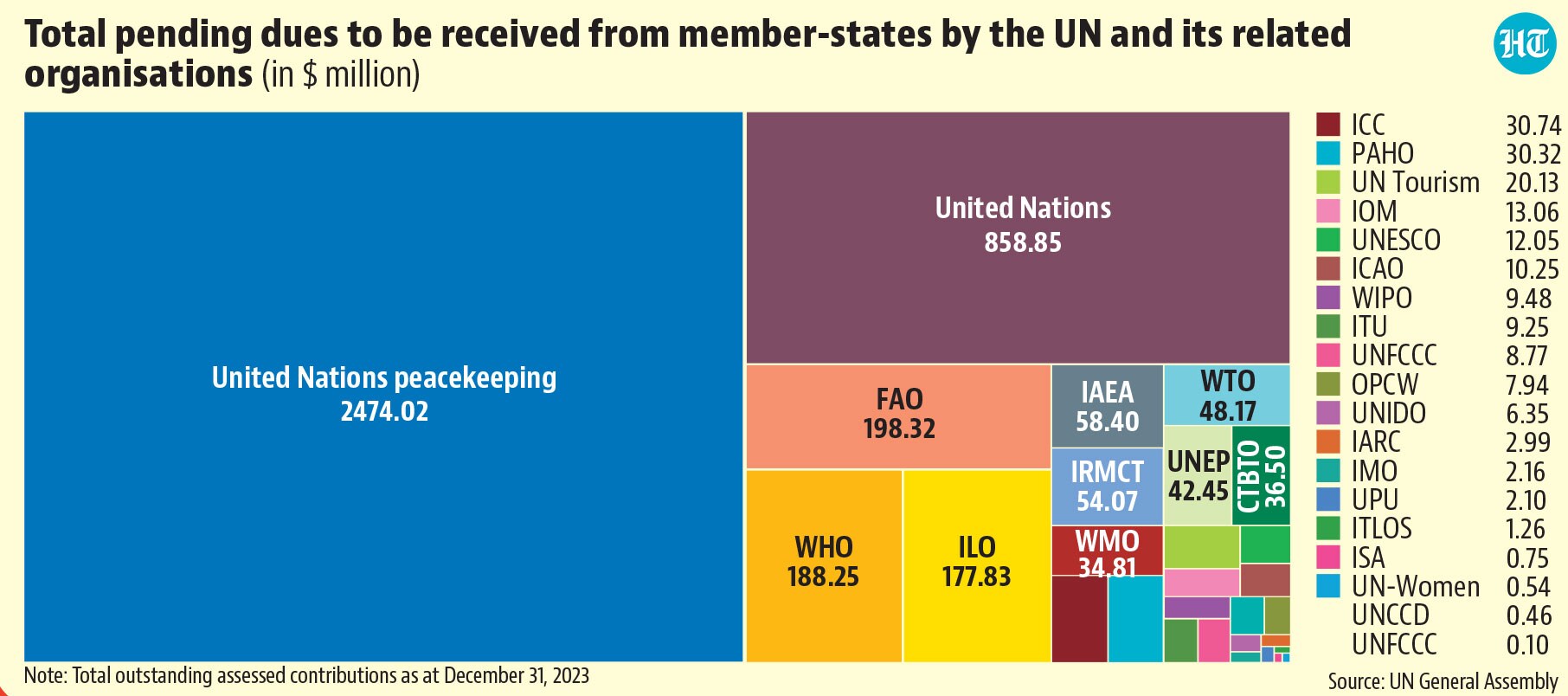
- US hitting the brakes on funding the UN will worsen the body’s already precarious financial positionWhile all member states are required to pay their assessed contributions, many delay their payments. A report to the UN General Assembly in October 2024 revealed that, as of December 2023, $4.34 billion in dues remained unpaid. Financial constraints have long been a problem for the UN, with countries accumulating arrears, causing liquidity issues. “The United States often accumulates arrears to the UN regular budget and other UN bodies due to differences between the US and UN fiscal years (which affects the timing of US payments), US withholdings from UN entities, and the State Department practice of paying assessments on a deferred basis, causing some US funding to be delayed by a year. (These deferrals originate from US withholdings by President Reagan.),” said a report by the US Congressional Research Service published in April 2024. Much of the US arrears are owed to the UN peacekeeping force—as much as $1.1 billion, according to the US Congress report. The US is responsible for 27% of the UN Peacekeeping budget as its assessed contribution. However, the US Congress caps payments to UN Peacekeeping at 25%, resulting in arrears. Notably, within the UN system, Peacekeeping also has the highest amount of dues outstanding, as can be seen from the chart below.
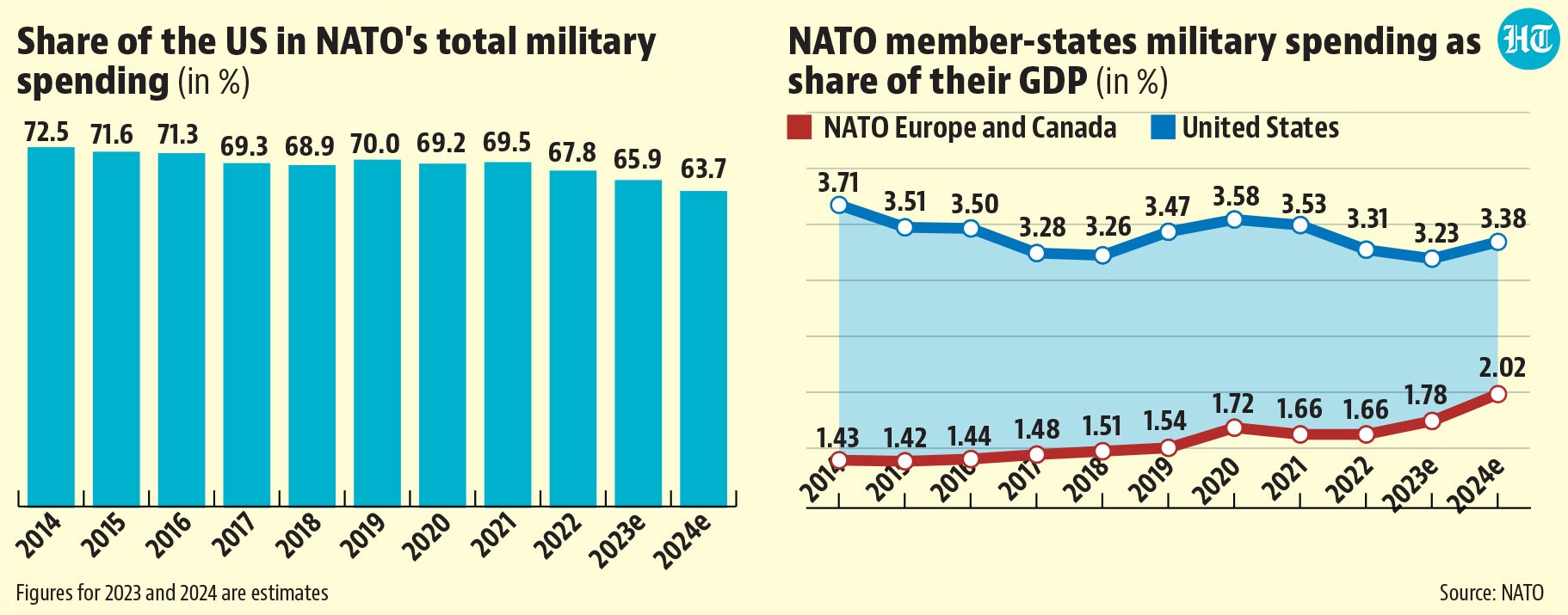
- The US solely accounts for the majority of NATO’s military budgetNATO is another organisation the incoming POTUS has shown scepticism towards. In a December NBC interview, Trump stated he would “absolutely” consider withdrawing the US from the alliance if other members didn’t treat the country fairly. Earlier this month, he urged NATO allies to raise their military spending to 5% of GDP, well above the current 2% target. While NATO members’ spending has increased from 1.43% to 2.02% of GDP over the last decade, the US still accounts for around 63.7% of NATO’s total military spending in 2024. This has made Europe’s security heavily reliant on the US. A previous story in these pages looked at how a NATO without the US lacks the combat readiness to hold-off Russia on the ground.