
 E-Paper



AICTE panel suggests new way to test engineering students
The committee has suggested a number of measures including a focus on projects, training and “situational questions”, an official said.


An All India Council for Technical Education (AICTE) committee has suggested changes to the way students are tested in engineering colleges across the country along the lines of the system used in premier institutes like IITs and NITs, officials familiar with the matter said on Sunday.
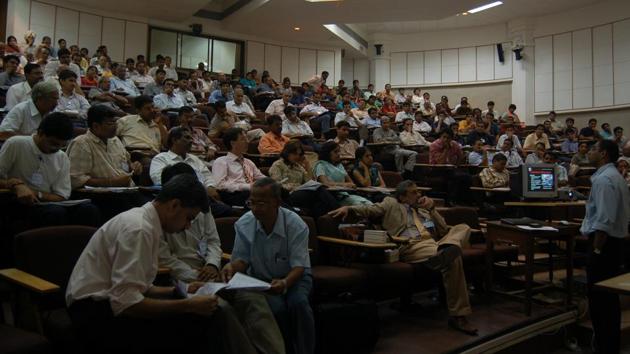
In premier institutes, students are rarely grilled on theory, but on concepts and application with an emphasis on analysis and ‘quants’ or quantitative problems. AICTE had setup the committee on exam reforms comprising of experts from various fields in earlier this year which submitted the draft report in March. Over 3,500 institutes are approved by the AICTE.
The AICTE, the apex body and regulator of technical education in the country, has called a meeting on Monday of vice-chancellors of technical universities, deans, directorate of technical education officials, and teachers, to discuss the report, according to an AICTE official, who did not want to be named.
The committee has suggested a number of measures including a focus on projects, training and “situational questions”, the official added.
“Currently we have descriptive questions that encourage rote-learning rather than promoting the critical thinking of the students. It also focuses more on testing the subject knowledge of the student,” the official said. The committee’s report also includes model exam papers prepared along the lines of the new method.
The plan now is to “have clear-cut learning outcomes for each programme and have an exam to test each of those outcomes,” said the official.
Explaining the new system, the official said that the committee modelled its approach on Bloom’s taxonomy, which is a tool to help develop learning objectives. The system classifies educational objectives in a hierarchy as cognitive, sensory and affective.
Experts think the move will help students develop thinking abilities. “It’s definitely a good step. For instance, Bloom’s taxonomy has been in existence for quite some time and the sensitisation that AICTE is doing is quite important. Framing of questions is significant as it can force a student to think, Even during the accreditation, institutes are currently also asked what outcomes have been achieved and how have you achieved it?...” said Dheeraj Sanghi, a professor of computer science at IIT Kanpur.


