E-Paper



All you need to know about career as a physiotherapist
Care therapy: Positive attitude, patience and persistence can help physiotherapists build a rapport with patients


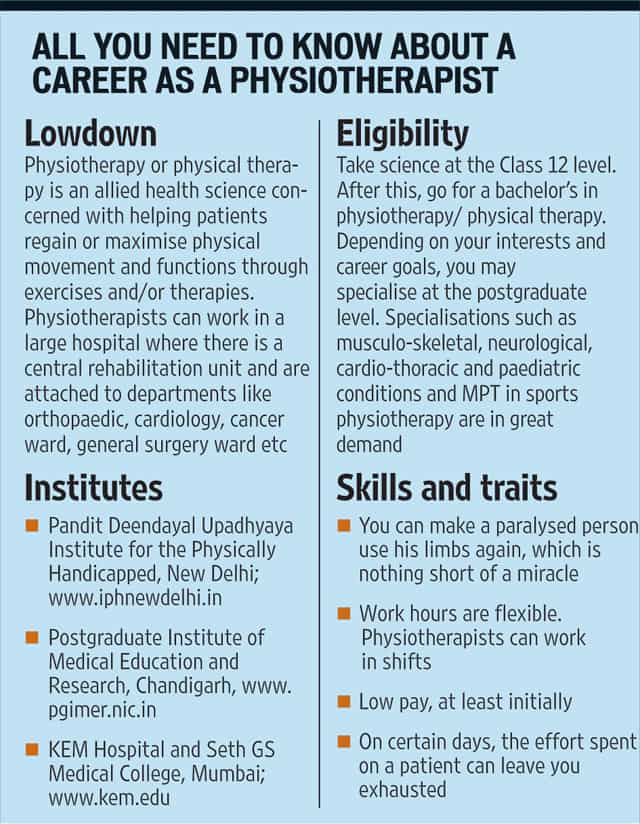
Gone are the days when physiotherapists dealt with strictly physical problems like neck pains or backaches. Today, the intervention of such health care professionals are required in nearly all branches of medicine, says Navneet Singh, a physiotherapist at Max Super Speciality Hospital, Saket.

“The scope of a physiotherapist’s work has increased. Not just orthopaedic, neurological and paediatric cases, today, physiotherapists are an integral part of patient care. Common conditions treated through physiotherapy vary from spinal and joint conditions such as arthritis, post accident treatment and rehabilitation to problems affecting children including cerebral palsy and spina bifida, cancer and palliative care, and simple pregnancy related problems such as back pain, sports injuries, brain injuries and other neurological problems,” says Singh.
The work is pretty exhaustive. Physiotherapists perform a history and physical examination, conduct assessments to determine a diagnosis process, select appropriate physical therapy interventions to treat the dysfunction, and monitor the effectiveness of treatment.
“Various therapeutic intervention techniques are used to treat a patient such as manual therapy, electrotherapy which include ultrasound, interferential therapy, transcutaneous electrical nerve stimulation, laser, acupuncture and exercises using equipment like robotics, treadmills, static cycle, force plates,” says Singh.
Talking about how he started his career, Singh says, “I joined Max Super Speciality Hospital, Saket as an intern after going through a rigorous interview process where my theoretical knowledge and clinical skills were examined. Then came the on-the-job training under supervision of the existing staff. The training went on for six months after which I was appointed in the hospital.”
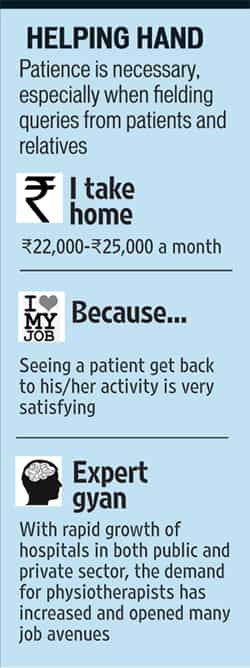
After three to four years of experience, Singh is currently working as a team leader of cardiac-oncology unit at the hospital. “My day starts with meeting patients, interaction with primary doctors followed by administrative work, taking physiotherapy sessions and supervising other staff members. I am also in charge of conducting training for interns and students of physiotherapy,” says Singh.
With hospitals coming up both in the public and private sector, the demand for physiotherapists has increased. Job avenues are available in hospitals, hospices, nursing homes, rehabilitation centres, private clinics, special schools, fitness centres, and non-government organisations working with the disabled and senior citizens.
But there is lack of awareness about the field. “Also, the fact that physiotherapists are not considered at par with doctors and low pay structure are often a deterrent for aspirants. However, it’s the flexible working hours that attracts them,” says Singh.
Although the work of a physiotherapist could get strenuous as it involves physically lifting and supporting patients, it brings much satisfaction to see a person get back on his or her feet.