E-Paper



Parents protest, Odisha board denies errors in matric assessment
BSE president Ramashish Hazra said students who have passed in A-1 grade this time are twice more than the previous year. Similarly, three times more students have cleared the test in A-2 grade this year


The Odisha Board of Secondary Education (BSE) has denied discrepancies in the alternative mode of assessment of matric students amid state-wide protests by students and their guardians over the same. BSE president Ramashish Hazra said on Tuesday, “After consultation with noted educationists, academicians and after observing modalities adopted by other states, the BSE prepared detailed guidelines for the assessment, which were shared with the district education officers and headmasters of the schools. Later, the detailed marking criterion was also uploaded on the board’s website. Based on the protocols, we requested the headmasters to send the list of marks of the students in school tests. Considering the previous performances of the students, we announced the results.”
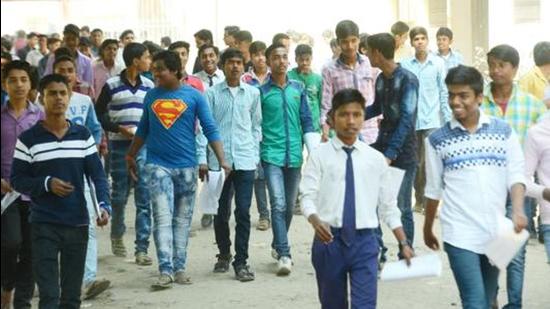
He said students who have passed in A-1 grade this time are twice more than the previous year. Similarly, three times more students have cleared the test in A-2 grade this year. This year, at least 500,000 students were registered for the Class 10 board examination in the state.
However, Hazra said that students dissatisfied with their marks can take the examinations in offline mode. The process for filling forms for the offline exams will start on July 5 and will continue till July 15. The exams will be conducted on August 5 and the results will be published within 10 days.
Following cancellation of the high school certificate examination this year due to Covid, the BSE announced the results on June 25, taking into account the results of Class 9 and periodic tests of Class 10. It was for the first time that the results were published without the conduct of the high school certificate exam. Around 98% students passed this year.
The results triggered demonstrations in Balasore, Cuttack, Bhubaneswar, Puri and other parts of the state, against the evaluation.“We are not satisfied with the marks awarded by the board. The marking was done in a faulty manner and evaluation by school teachers was not taken into account by the board authorities during final evaluation. My son had scored 95% marks in school tests, but he got only 60% in the final board exams,” alleged a parent while another mother said her daughter would end her life if the marks were not re-assessed.