E-Paper



DU admissions: No takers for seats reserved for acid attack survivors?
The University of Delhi has reserved seats for acid attacks survivors under the Persons with Disabilities quota. However, acid attack survivors say reserving seats not enough, attitude needs to change and more facilities needed.


The University of Delhi (DU), after adopting the revised Rights of Persons with Disabilities Act, 2016, has expanded its list to include even acid attack survivors in it. Though the reservation of seats for the survivors is a welcome move, NGOs working for them feel that just securing seats is not good enough.
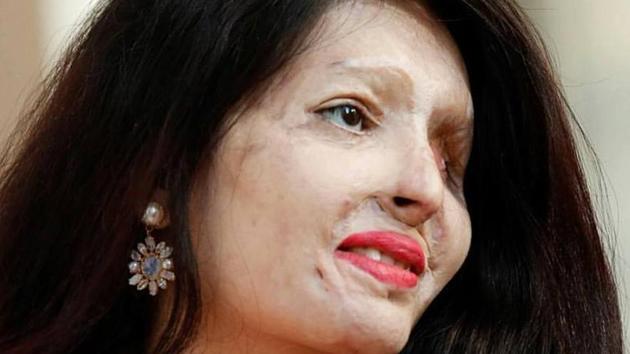
Ashish Shukla, coordinator of the NGO, Chhanv, says, “We appreciate the move, and we are gathering data about the previous education of the survivors to know their eligibility for admissions. Till now, none of those we work with have applied for any course. Since most of them are from other states, coming to Delhi is a challenge.”
Similarly, Pragya Prasoon, from Atijeevan foundation, says, “Coming up with mere reservations is not good enough; they need to provide accommodation and other facilities. Five victims from my NGO are studying in Sathyabama University, Chennai, because they have all the provisions like on-campus hostel and transportation. People are uncomfortable to share rooms with the victims and even landlords give lame excuses. For instance, they would say, ‘We don’t want to keep patient in our homes’.”
Volunteers from Acid Survivors Foundation of India (ASFI) share that none have applied from their NGO. Director of Delhi Chapter, ASFI, Mukul Verma says, “It’s impossible for survivors to travel in the heat for long. Their scars start burning. For victims to pursue education at DU, air-conditioned rooms are required. Students should also be sensitised so that no one teases them.”
Ria Sharma, from Make Love Not Scars, shares the same sentiment. Sharma, who feels that the rule has been passed for the heck of it, says, “Not a single survivor from my NGO has applied. Before coming up with such rules, you need to eradicate the social stigma attached to them. Also, most of the survivors couldn’t complete their primary education because they were alienated by students and even teachers. So, first school education for them needs to be in order.”
Reshma, an acid attack survivor studying in Lala Lajpat Rai University, Mumbai, says, “This is a great step and will provide motivation to many. But, the facilities need to be in order. For instance, my college has accommodation facilities and the atmosphere is quite friendly.”
Laxmi, another acid attack survivor says, “Undoubtedly, it’s a good initiative. We will get a chance to study with the normal people and that will boost our confidence. But, survivors need motivation to get enrolled. Despite knowing about the quota, very few will take admission.”
Apart from them, DU has expanded the reservation list for students with physical disability, intellectual disability (a condition characterised by significant limitation both in intellectual functioning and in adaptive behaviour), mental illness, disability caused due to chronic neurological conditions, dwarfism and blood disorders.
Follow @htlifeandstyle for more