
 E-Paper



Beyond the textbook: The power of project-based learning
A reminder that some of the most important skills aren’t taught, they’re experienced.

 Prefer HTon Google


In a world where information is just a click away, learning is no longer just about reading and remembering. It’s about “learning by doing”. That’s where project-based learning makes a real difference.
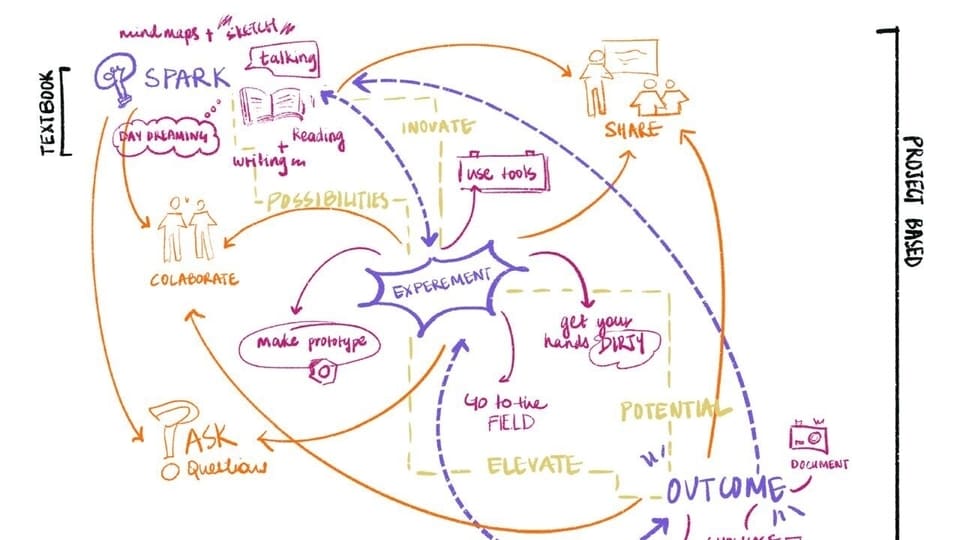
For the past six months, I’ve been working on a project as a ceramic designer. The goal? Introducing ceramics to prison inmates. But ceramics was only one part of it. I had to convince authorities, organise volunteers, and work with vulnerable groups. I managed budgets and resources.
I conducted workshops, created a curriculum, and revised it repeatedly as I taught it. This wasn’t in any textbook, but it was real learning, and it wouldn’t have been possible without a project.
Every project starts with an idea. It might come from a conversation, a walk, or a random midday nap. But to take that idea forward, we need to read, ask questions, and test things out. That’s the first step: making sense of the idea, not just for yourself but also for others.
After that comes scaling it, testing it in the real world, and seeing how it grows. That process builds life skills, decision-making, teamwork, communication, problem-solving and much more.
Single parent & worried? Teaming with your child's school can be a game changer!
As a student of ceramics and glass design, I’ve always worked with materials. But this project took me far beyond the studio and far beyond what I ever expected education to look like.
For my graduation work, the idea was to set up a ceramic unit inside a prison. This wasn’t just about making art. It was about connecting with people, building systems, and using design as a tool for change.
To make it happen, I had to work with prison officials, organise workshops, handle materials, negotiate with suppliers, crowdfund, and much more. I conducted field studies, took interviews, and worked closely with inmates. I had to revise my plans often to keep moving forward.
I didn’t learn ceramics as much as I learned about law, leadership, trust, and how to work with different kinds of people. I gained the confidence to speak in difficult spaces, to listen deeply, and to act with purpose.
Forbes shares must-have skills for students to increase chances of employment
A project is never done alone. It is always collaborative. Mine wouldn’t have been possible without the helping hands, open minds and generous time of so many people; mentors, volunteers, authorities, students, and the inmates themselves. Every project is held up by a community.
Learning to work with others, trust, delegate, and share credit is just as valuable as any skill you learn along the way. One turning point was to get approval to install a kiln in the prison. It took weeks of discussions and paperwork. But when it happened, it felt like a dream realised.
That’s the power of turning an idea into action.
“Tell me and I forget, teach me and I may remember, involve me and I learn.” -Benjamin Franklin
Project-based learning makes you use everything you know and pushes you to learn what you don’t. You test ideas in the real world, make mistakes, adjust, and keep going. Each project makes the next one better.
Students in project-based learning environments score up to 8% higher on standardised tests than those in traditional classrooms. (Source: Lucas Education Research, 2021)
To students reading this: dream big, but don’t stop there. Try things. Build things. Talk to people. Take risks. That’s when real learning begins. When you create something from scratch and watch it come to life, the feeling is unmatched.
Best emerging courses for science students in 2025: AI, biotechnology and more
Books are a great starting point. They give us ideas and theories. But a project adds many more layers, your own fieldwork, your testing, your responses. That’s how you form real opinions, insights and of course skills. In design, the process is never one-directional. People interact with your work. That changes how it grows. Learning can’t be flat. It has to be flexible and interdisciplinary.
And that’s true for everything you do, as design is a way of thinking and doing. It all begins with an idea. That idea turns into a proposal. Then it grows, shifts, and becomes something real. That’s the power of project-based learning. It prepares us for the world, multiple challenges at a time.
(Author Shreya Kumari Kedia is a 4th-year student at the National Institute of Design, Ahmedabad, and a Design Researcher. Views are personal.)


