E-Paper



From Engineer to Executive: Why an EMBA could be the next career move
An EMBA can help them build business acumen, strategic thinking and decision-making skills needed to transition from project experts to organisational leaders.

 Prefer HTon Google


Across global engineering firms, technology companies, and project infrastructure projects worldwide, a decisive structural shift is underway. The professionals who once measured success in terms of project specifications, uptime, and delivery milestones are now asking a very different question: ‘How do I lead the organisation, not just the project?’ For technical experts envisioning the next decade of their careers, doing an EMBA has become the necessary credential for answering this question.
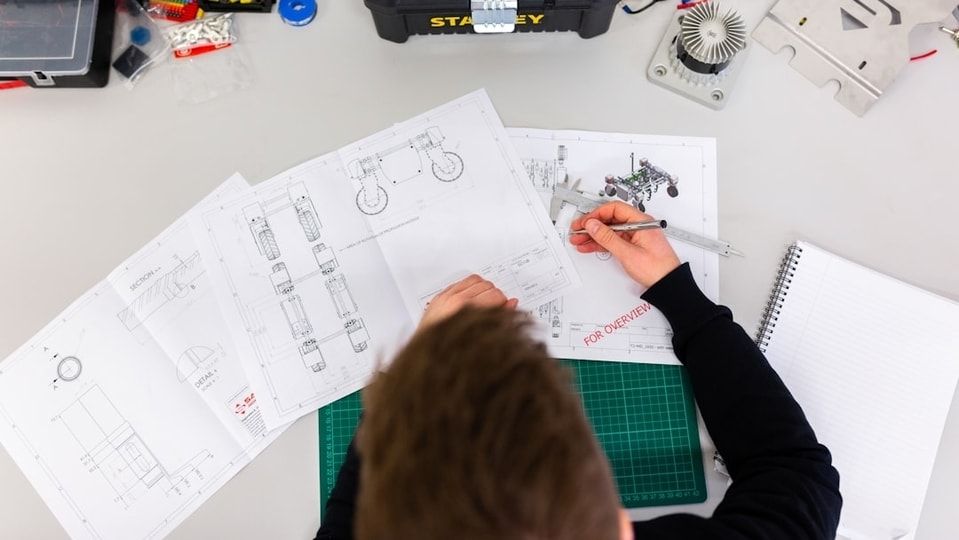
Engineer’s Career Strategic Inflection Point: Every technical career eventually reaches a ‘ceiling’ defined not by achievement, but by scope and level of position. Engineers and technologists routinely out-perform on project delivery yet find themselves passed over for roles requiring commercial judgment, stakeholder influence, and enterprise wide decision-making. That ceiling is not a skills gap in the traditional sense, rather, it is a business capability gap.
Preparing to Study in France: Here’s what students need to know
Technical Expert to Capable Leader: Organisations don't promote their best individual contributor by default. Rather, they promote the person who can translate technical depth into business acumen outcomes. Making that leap requires a demonstrable shift from ‘I can build this’ to ‘I can decide what we build, why, and at what cost.’
Technical Skills Alone are no longer enough: Automation and Generative AI are compressing the value of pure technical execution. What remains very scarce and highly rewarded is the ability to combine domain expertise with both strategic and financial reasoning.
How B-schools are reinventing themselves for India's startup economy
New Expectations of Senior Executives: Boards and Executive Committees now expect technical leaders to speak fluently about Strategic challenges, Profit & Loss, Strategic, Market and Financial risk appetite, and customer awareness. Deep technical credibility earns you a ‘seat in the room’. However, business acumen is what ‘keeps you in the room’.
Bridging Engineering Logic and Leadership: Engineering training builds analytical rigor. Leadership demands something further i.e. the ability to navigate ambiguity, influence without authority, and make decisions with incomplete information. This is precisely the business acumen an EMBA is designed to build.
Business Vocabulary: Accounting, Finance, Marketing, Strategy and HRM are not abstract theoretical courses. Rather, they are the operating language of senior leadership. Fluency in this language changes how technical professionals are perceived to be contributing.
Excelled at St Stephen’s, worked at Bain — so why did Tanya Gupta choose ISB next?
Strategic Mindset: Technical professionals are trained to solve the problem in front of them. Doing an EMBA further train to assess whether it's the right problem to solve and the right question to ask. Furthermore, to weigh making a strategic decision against competing priorities, resource constraints, and long-term strategy.
Networks Open Doors: An EMBA cohort typically comprises a cross-section of senior managers from other sectors and functions. For engineers whose networks have historically been technical and internal, this is often a much value add of doing the degree.
Designed for Working Professionals: Designed for busy, working professionals already carrying significant responsibility, the EMBA enables the immediate application of models, frameworks and theories to ‘live’ project business challenges, without stepping away from a career already in full swing.
Turning Technical Credibility into Career Capital: The goal isn't to abandon technical expertise. Rather, it's really about how to convert it into a value add leadership currency. EMBA graduates leave not as former engineers, but as leaders whose technical grounding now enables a career sustainable competitive advantage.
Conclusion: There are many reasons why career oriented engineers should pursue an EMBA. For technical experts ready to make a leadership transition, the EMBA isn't simply an academic upgrade. Rather, it’s a strategic pivot point of any career built to lead. Why don’t you do one and find out for yourself.
(The author Dr. Gary Stockport, (MBA Warwick; PhD Cranfield) is the Dean EMBA and Professor Strategy at SP Jain School of Global Management)