
 E-Paper



Excelled at St Stephen’s, worked at Bain — so why did Tanya Gupta choose ISB next?
In an interaction with HT Digital, Tanya Gupta opens up about choosing ISB, lessons from setbacks and why she believes ambition and contentment can co-exist.

 Prefer HTon Google


Tanya Gupta, an ISB PGP Cohort 27 student and St. Stephen's College graduate, has built her journey around academic excellence, leadership and a willingness to embrace challenges.
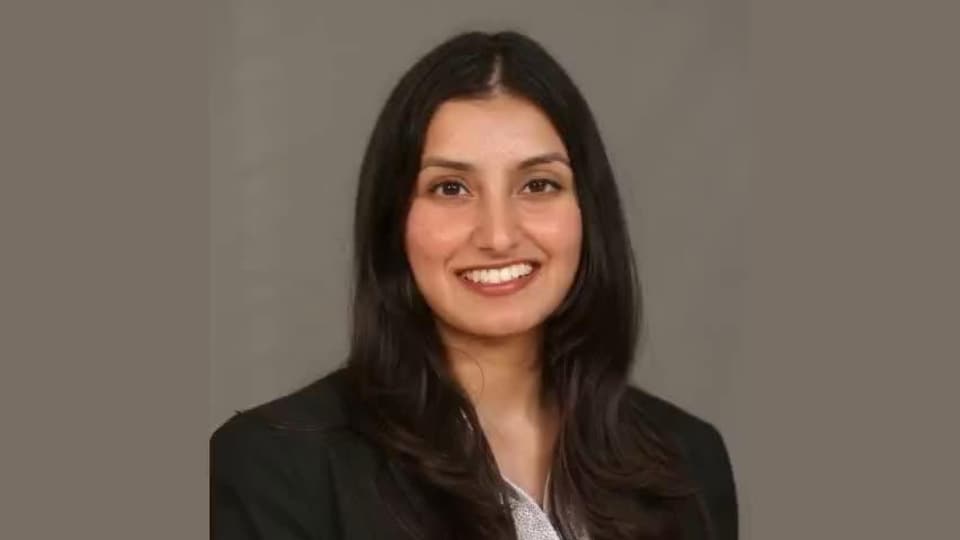
For Tanya, the decision to return to the classroom came after a journey spanning academic excellence, leadership, and consulting.
Since school days, Gupta was a topper. She secured the top rank in her Class XII batch and in Gurgaon city and was among the top 0.1% of CBSE candidates nationally in English Communicative. She also won a Silver medal at the regional level of the Odyssey of the Mind, USA creative problem-solving competition and qualified for its international round in Belarus.
At St Stephen’s, Gupta served as Treasurer and Vice President of the Economics Society, leading a 15-member council and organising 10+ flagship events with over 4,000 participants. She later joined Bain & Company in its business and management consulting practice. While she enjoyed consulting, Gupta wanted greater ownership and the flexibility to explore opportunities beyond the sector, which eventually led her to ISB.
While speaking to HT Digital about her journey from college to college again, Tanya shares her definition of success, what each phase of life has taught her, why she chose ISB, and her future ambitions. Check them out.
From Student Protest to Policy Action: What comes next for Indian education?
1. You have excelled consistently across academics, leadership and creative problem-solving. What do you believe has been the biggest factor behind your journey so far, and how has your definition of success evolved over time?
Answer: I believe that the biggest factor has been the ability to see things through and stick to what I said I would do. For me, success has shifted from typical metrics/indicators to contentment and happiness. I have seen many people doing exactly what I hope to do one day, having what I yearn for, and still being miserable. So, to avoid finding myself in that situation, I am practising being satisfied and content with what I have, while still aspiring to have more and giving my 100% to get it. Contentment and ambition can co-exist. I believe that it's a muscle you have to build. It's exciting to attach myself to the planning and the process of trying to get something while detaching myself from the outcome. Now I know that every setback makes me understand myself, people, and the world a little more. And I like to be grateful for every win, big and small. This clarity of thought and the drive to keep becoming better every day has helped me a lot in my journey.
2. From being among the top 0.1% of CBSE candidates to leading the Economics Society at St. Stephen’s and later working at Bain & Company, you have experienced very different environments. What has each phase taught you that the others could not?
Answer: Each environment — whether it was my school, my undergraduate college, or the two companies I worked for (Praxis Global Alliance and Bain & Company) — taught me one thing or another. In school, I got to build the foundation of who I am. My routines, habits, and need for structure slowly came together. School was less challenging than the later parts of my life, so I got to grow and experiment under very few difficulties. In college, I was lucky enough to be surrounded by very smart peers. That phase opened my eyes to how much I could be doing in terms of learning and networking to get what I want. St. Stephen’s and my peers there taught me smart work, not hard work. At work, I could apply everything I had learned so far. When you start working, there’s no timetable. No adult looking over you. You're free to make whatever you want of your day. So, my work experience helped me understand the kinds of environments and projects that I thrive under, and how I like to spend my time and attention outside of work when I have no restrictions placed on me.
3. You chose to pursue the PGP at ISB after gaining experience in business and management consulting. What made ISB the right next step for you, and what were you specifically looking for in a business school?
Answer: Honestly, I felt it was essential for me to upskill myself and get an MBA degree to widen my employment opportunities. Although I enjoyed my work in the consulting sector, I wanted more ownership and more opportunities (not just in consulting but in other industries as well). Lately, for instance, I have felt drawn to working with consumer brands in the beauty, F&B, and retail space. An MBA degree opens doors to roles that I would otherwise not have access to. I thought to myself: if I'm quitting work for my Master's, I better do it once and do it well. Undoubtedly, ISB is a spectacular institution. I hope to make full use of the knowledge I gain at ISB, build contacts, and develop my personal brand to land opportunities that would otherwise have come more slowly, or never at all.
Cybersecurity hiring to surge With AI and cloud risks rising, says IIIT-Delhi Associate Professor
4. How has your experience at Bain & Company influenced the way you approach problems, make decisions and think about your career—and how do you hope to build on that at ISB?
Answer: I was in the Marketing and Customer Experience team at Bain. Most of the client issues I dealt with were about improving the company's experience for its customers. This consisted of making the customer journey seamless and continuously improving it by gathering useful data. On the surface, these problems sound straightforward and mechanical. But my work at Bain really helped me appreciate how even the biggest problems could be broken down into smaller chunks ( what they call "structured problem solving" in consulting). More than that, I really appreciated the culture. I realised that surrounding myself with good, warm, hard-working people can make anything easy to do. I know that being happy at work is a priority for me. So, I pick and choose activities and opportunities that I want to do rather than those expected of me or look good on paper.
5. Leadership has been a recurring theme in your journey, from the Economics Society at St. Stephen’s to your professional experience. What is one leadership lesson you learned through experience rather than in a classroom?
Answer: I have always found myself gravitating towards leaders who are honest about their own shortcomings. It humanises them. Such leaders exhibit warmth and compassion, and it motivates me to work even harder. So, an important leadership lesson for me is to be decisive and informed, yet maintain an honest, open-door policy with my team. I will strive to build a bond with those I am working with by voicing out my wins and flops of the day, and encouraging others to do the same so we can learn from each other. This brings life and purpose to otherwise menial work.
6. Looking back at your academic and professional achievements, is there a particular setback, challenge or moment of self-doubt that taught you more than any achievement did?
Answer: Definitely. During my placement season at St. Stephen's, I was not getting the results I had hoped for. I started doubting myself. I had prepared a lot for interviews (or so I thought). Yet I could not make it to the "dream" companies. I felt less than. I am glad I experienced it, though. Life doesn't always go the way you think it will, and confronting that reality sooner in life is better. Back then, I thought my life was over. I thought I'd never be happy again because I didn't get a job offer from a company I really wanted. Now I know that I could have done more back then — I just wasn't aware of the gaps I had left in my preparation. It has been a great learning experience. Now I keep asking myself whether I am leaving any page unturned while preparing for any challenge in life. That period of time in my life made me more sympathetic and understanding of other people’s moments of self-doubt and struggle. I am way past that period now. It gave me faith that you can bounce back from anything in life. Or you learn to. There's no other way.
7. As you begin your journey at ISB, what are the key skills, experiences or perspectives you hope to gain, and where do you see yourself applying them in the next five to ten years?
Answer: I believe ISB is a great environment to simulate, in low doses, what life after the MBA will look like – with triple the professional and personal responsibilities. At ISB, I want to learn from people who have many more years of experience and those who come from various walks of life. I want to juggle ten things at once so that I find it easier to adapt to professional and personal responsibilities when I step out into the real world again. I want to participate in as many activities as possible. It's the perfect environment to try and try. I'll never again be surrounded by this kind of variety of people and opportunities. Lastly, I hope that I learn to live a rich life, without worrying about what could have been. It will help me stay focused on my goals and on the happiness of myself and those around me. In the next 5–10 years, this will be critical as I transition into more challenging roles and responsibilities.


