
 E-Paper





Debabrata Mohanty is a senior assistant editor of Hindustan Times who works as state correspondent from Odisha covering the state's politics, governance, public policy, natural disasters, environment and its society for close to three decades. With his long years of reporting from the state capital of Bhubaneswar, Mohanty has been known as one of the most experienced and credible journalists covering Odisha for the national English dailies. His reporting combines on-ground detail with deep institutional knowledge detailing the state's changing politics, governance issues, administrative reforms and the functioning of its public institutions. He has regularly reported on issues ranging from legislative developments and public policy implementation. Politics is his core areas of expertise as he closely tracks Odisha's political landscape, including the rise and transformation of the Bharatiya Janata Party (BJP), the Biju Janata Dal (BJD), the two principal political parties in Odisha. His long association with the state's political establishment enables him to write on contemporary developments in a larger political context. Mohanty takes a deep interest in writing human interest stories, environmental issues and documenting the impact of cyclones, floods, heatwaves, and other climate-related events in one of the most disaster-prone states. His coverage extends to public health, governance reforms and stories on accountability of government institutions. Before joining Hindustan Times, Mohanty worked with The Indian Express, Mail Today, and The Telegraph, where he covered at least six general elections and as many assembly elections. In 2007, he was selected for the prestigious Chevening Young Indian Print Journalist Programme at the University of Lincoln, United Kingdom, where he received advanced training in print journalism. In 2009 he won the Press Institute of India-International Committee of Red Cross award on conflict reporting for his on-ground reportage of 2008 Kandhamal riots.
Odisha panel recommends law making computerised counselling mandatory for teacher transfers
The recommendations came amid persistent shortages of teachers in tribal-dominated districts, from where teachers often seek transfer to urban centres.

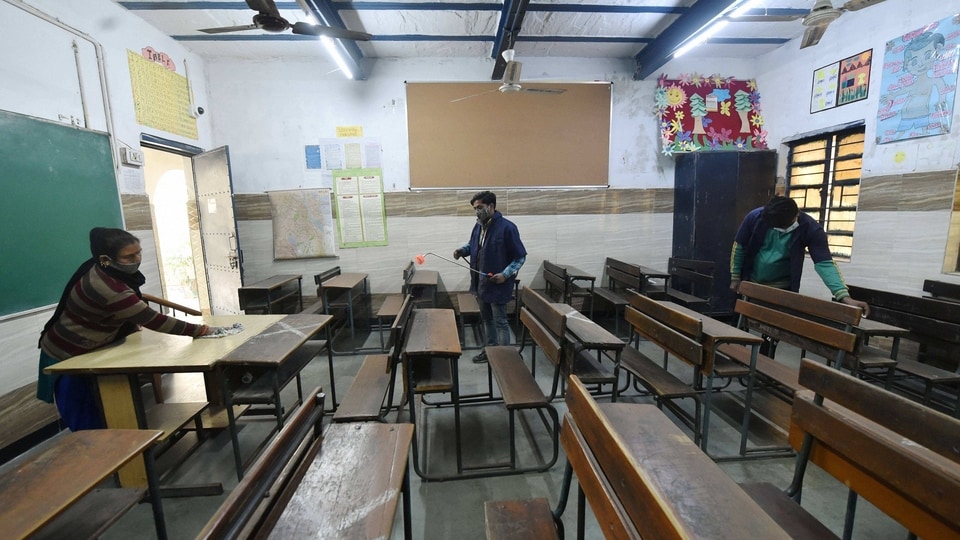
A high powered committee on administrative reforms in Odisha has recommended enactment of a law making computerised counselling mandatory for all teachers' transfers as discretionary postings from remote and tribal areas to urban centres have deprived schools in disadvantaged regions short of teachers and adversely affected the education of tribal and poor children.
The Committee on Governance and Administrative Reforms (CGAR), constituted by the Odisha government to suggest reforms in the Scheduled Tribes and Scheduled Castes Development, Minorities and Backward Classes Welfare (SSD) department, told the government in its report last month that the existing transfer guidelines and computerised portal were not sufficient to prevent arbitrary decisions as there was no statutory backing for the process.
There was no immediate comment from the state government at the time of filing this report.
The three-member committee is headed by former Odisha chief secretary Jugal Kishore Mohapatra and comprises former Karnataka chief secretary TM Vijay Bhaskar and former joint secretary in department of personnel and training, Om Prakash Agrawal. HT has reviewed the recommendations of the committee.
The panel said teachers seeking postings at places of their choice often spend considerable time and money obtaining recommendation letters and pursuing transfer cases, resulting in their travel from remote, rural and poorly connected areas to urban and better-connected locations.
"This deprives the neediest schools of teachers and permanently affects the learning process of ST, SC and other poor children," the committee said, advising the state government to enact a law so that all teachers' transfers are undertaken exclusively through computerised counselling.
"While government orders and departmental rules could be changed, suspended or amended to accommodate exceptions, an Act passed by the state legislature would provide a stronger legal safeguard. Violating it becomes illegal, and any manual bypass can be directly challenged in the High Court as a violation of the law," it said.
The recommendations came amid persistent shortages of teachers in tribal-dominated districts, from where teachers often seek transfer to urban centres. In June this year, 648 teachers from tribal-dominated Koraput, Malkangiri, Nabarangpur and Rayagada districts applied for transfers outside their districts under the terminal illness quota, forcing district education officials to constitute a medical board to verify the genuineness of terminal illness claims.
The large-scale transfers from tribal areas to urban centres have led to a skewed student-teacher ratio. In Mayurbhanj, the student-teacher ratio in residential schools run by the SSD department has reached 46-50 students per teacher, against the Right to Education Act norms of 30:1 and 35:1. In Rayagada, 84 primary schools are functioning with a single teacher, while Koraput has 119 such schools.
The Unified District Information System for Education Plus report for the year 2025-26 showed Odisha has 1,458 single-teachers, up from 1,089 in the previous academic year.
Dibakar Sabar, president of the Rayagada district unit of Odisha Adibasi Manch, called for the cancellation of informal deputations of teachers to urban schools.
"The School and Mass Education department should order a blanket cancellation of all informal, administrative deputations to urban schools, mandating that personnel report back to their sanctioned rural stations. As per 2011 Census, literacy among tribal population stood at 52.24 per cent, considerably below the state's overall literacy rate of 72.87 per cent," he said.
The committee said till a law regulating teacher transfer was put in place, the government should utilise the software being developed by the Odisha Computer Application Centre (OCAC) for teachers' transfers. Currently, teachers' transfers are handled by district-level transfer committees.
The panel also said as teachers are reluctant to serve in Sevashram and Ashram schools located in remote tribal pockets, a suitable percentage of vacancies in these institutions be reserved for candidates belonging to local forest-dwelling tribal communities.
The committee also recommended creating separate administrative departments for Scheduled Tribes and Scheduled Castes, besides Other Backward Classes and minorities, with independent directorates and field-level offices as Scheduled Tribes account for 22.85 per cent and Scheduled Castes 17.12 per cent of Odisha's population.
The panel said a separate department for tribal development was particularly necessary given the relatively poor human development indicators and high levels of poverty among Odisha's tribal population.
At present, the departments dealing with the welfare of Scheduled Tribes, Scheduled Castes, OBCs and minorities operate under a common Commissioner-cum-Secretary and share the same field-level administrative structure, despite being formally divided into two departments under the state's Rules of Business.


