
 E-Paper



Prepping up for JEE - this is how toppers do it right
A flexible routine and strong focus on building concepts can take you places in the Joint Entrance Exam


Deepanshu Jindal’s “fascination” for mathematics prompted him to take up science in Class 11 and start preparing for a spot in one of the Indian Institutes of Technology (IITs). Balancing school studies and Joint Entrance Exam (JEE) preparations smartly, he managed to secure all-India rank 1 in the tough engineering entrance exam. For Animesh Bohara, Delhi JEE Advanced topper 2016, preparation for JEE began in Class 9 with coaching. “I studied all three subjects in a day, instead of focusing on a single subject,” he says.
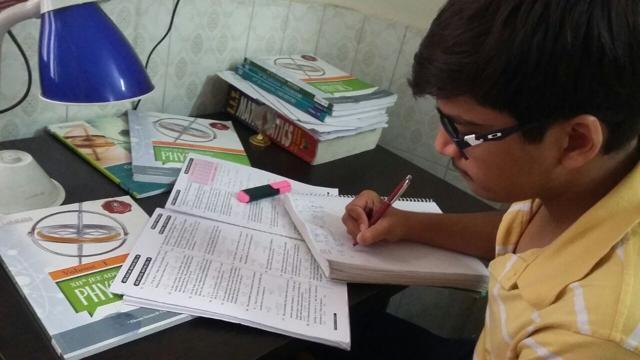
Jindal’s strategy was simple. He focused on building concepts and acquire knowledge on the topics taught diligently by his (school) teachers and then built up on that knowledge by practising questions based on the lessons.
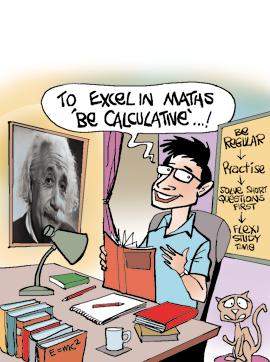
Planning the time table
Most toppers lay emphasis on a smartly worked out time table but Jindal wanted to take on only “healthy” pressure. “I was flexible with my routine and did what I wanted to do at a given moment based on the need of the hour. As a result, some days I did double the amount of studies and sometimes simply took an off day. I always considered science as fun so studying the subject was never a burden,” he says.
Bohara, too, did not have a specific time table because he felt quality of study hours mattered, not the quantity. “I studied only when I felt like studying, and used to take a short break of 15-20 minutes after every two hours of study. During breaks, I rejuvenated by playing a light game or listening to music. In the last few months, I solved the previous years’ JEE papers to help myself get acquainted with the type of questions asked in the actual paper,” he says.
Attempting the paper
While attempting the paper, Bohara went for the short questions first, leaving the lengthy questions for last. Jindal attempted it in three phases. “First, do all questions you can answer without calculations and then go for questions which require calculations followed by the remaining ones. Selecting such questions is an art which can be developed when you’re preparing for JEE with mock tests and analysis of results. Keep calm and composed, maintain the tempo and even if the paper looks difficult, don’t lose hope as it’s difficult for everyone,” he advises.
Preparing for JEE Advanced
While Bohara religiously solved the study material provided by his coaching institute and didn’t miss any of the tests conducted at the institute, Jindal treated JEE Advanced like any other exam. “This was necessary to play down the immense pressure involved. I gave special attention to multiple correct type and integer answer type questions,” he says.
The time between JEE (Main) and Advanced was used by both candidates for gruelling study sessions. Jindal was regular with his schedules, devoting time equally between the three subjects. “I covered all the topics through exhaustive revision of notes and practising questions. This was followed by a selective study topics I was not very good at,” he adds.
During this time Jindal’s day started at 6 am and was divided into four-hour time slots for each subject, making up around 12 hours of study. To ensure that this routine did not take a toll on his health, he practised meditation techniques.
Success mantra
Jindal’s mantra’s were smart work, over and above putting in hard work. “Be flexible in schedules and strike a balance between co-curriculars and academics. Always introspect because you know what will be best for you and be realistic. Listen to everyone’s advice but practise your own discretion. All topics are important to learn at first, but once you have gone through things then you can decide which ones will work for you. For example, by general trends, in mathematics, calculus and coordinate geometry can always give you an edge,” he adds.
For Bohara, concentration is key. “Also, you must focus on problem-solving and practice. Topics and concepts from Class 11 should also be revised simultaneously while you are preparing for your Class 12 Boards,” he advises.
Next ahead: common counselling
Jindal has simply filled up his choices. He wants to study computer science from IIT Delhi. “Rather than going for your dream college, you should go for the dream course. The Joint Seat Allocation Authority recommends filling as many preferences as possible to ensure maximum chances of getting your seat,” he says.
Bohara too, wants to take up BTech computer science, but plans to join IIT Bombay. “You need to prepare religiously, much before you get into Class 12. Do not ignore your extra-curriculars. Tackle each stage of screening at a time and you will get into your dream college,” he concludes.
Read more: Will aptitude test eliminate the need for JEE coaching?


