E-Paper



Daughter of Rage review: Laura Baumeister's debut digs out grit and resilience
Daughter of Rage review: The Spanish-language film by Laura Baumeister, which also marks the first narrative feature directed by a Nicaraguan woman, revolves around 11-year-old Maria (Araceli Alejandra Medal), who is in search of her mother.

 Prefer HTon Google


Daughter of Rage opens on a huge dumpyard near Nicaragua, called La Chureca, as the camera pans out on the piles and piles of waste that have almost formed a mountain. The scene zooms in to find some small children figuring their way out in the waste- scavenging there is a way of life they cannot seem to escape. The stunning shot establishes the gritty and somewhat formulaic terrain in Daughter of Rage, the Spanish-language film by Laura Baumeister, which marks the first narrative feature directed by a Nicaraguan woman. (Also read: Starring Jerry as Himself review: A vital genre-bending documentary experiment)
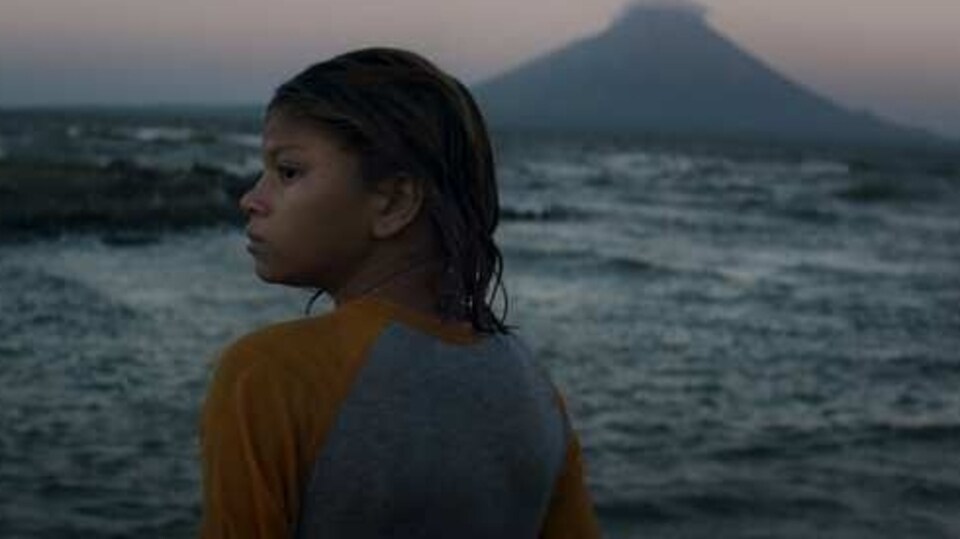
Premiering at the Santa Barbara International Film Festival, Daughter of Rage follows 11-year-old Maria (Araceli Alejandra Medal), who lives with her steely mother Lilibeth (Virginia Raquel Sevilla Garcia) in a makeshift shed near the dumpyard. Lilibeth has no time or energy to put up with Maria's childplay; she wants her daughter to remember that, "if you want something, you have to fight for it." Even if Maria wants to keep a puppy in the shed, Lilibeth can't allow that. She would rather sell the puppies in exchange of money to repair their roof. But there are larger, more serious crises too that occurs beyond the comprehension of Maria- as Baumeister sets the events rolling against the backdrop of the government's decision to transfer the disposal space into private sectors.
The accustomed world in the dumpyard comes to an end once Lilibeth leaves Maria in a local recycling centre and sets off. Hesitant and angry, Maria spends days awaiting her mother's return, although she knows she's certainly in some kind of danger. Here she also meets one of the many abandoned and orphaned children like her who work inside the plant, who is somehow kind to her. There is a beautiful scene here as Maria spends the night there with the other children for the first time, and all of them sing a lullaby together until they fall asleep. Eerily reminiscent of the gritty realism of Beasts of the Southern Wild (that also enveloped around the fantastical), Daughter of Rage is a wrenching, if predictable, snapshot of an unresolved generation coming to terms with a reality where one has to fight their way out like an animal to survive. I wished the film had dared to leap into that void a little more.
Nevertheless, Baumeister's compassion for her characters is fierce and protective, finding visual poetry as they frantically co-exist in their land that is in a state of ruin and waste. Aided with cinematographer Teresa Kuhn, she chooses to focus on close-ups of her character, especially Maria, now that she has to follow her own instincts if she wants to know what happened to her mother. Baumeister also extracts a moving performance from Medal- displaying the verve and raw energy in her disregard of a new environment that she cannot call her home. And as Lilibeth, the brutish mother of Maria who suddenly disappears, Sevilla Garcia offers a quietly affecting turn, particularly in those drawn out visions in the film which are cleverly left understated.
The mother-daughter story at the crux of Daughter of Rage opens up to read the ecological crises in a state that has no intention to care for the disenfranchised. In order to survive in this state of ruins, what must they become? Baumeister's film could have easily slipped into melodramatic tendencies if not for the carefully orchestrated second half finding its way to that slow burn of a denouement. It occasionally does tend to slow things down. The turns in the succeeding moments might feel a tad bit predictable as well, yet never not moving in its processing of resilience. By the end, Maria knows how to read the signs. She has learnt how to fight for her own.