
 E-Paper



Chumbak makers on Hanuman Ansh success and Ranbir Kapoor’s Ramayana: ‘Cultural resurgence of sorts’
In an interview with Hindustan Times, JD Majethia and Aatish Kapadia reveal their vision behind their new Netflix show Chumbak.

 Prefer HTon Google


JD Majethia and Aatish Kapadia, known for iconic shows like Khichdi and Sarabhai vs Sarabhai, have released their new show Chumbak on Netflix. The family entertainer follows neighbours who come together to solve each other’s problems, have some fun along the way and, most importantly, make audiences laugh with their antics.
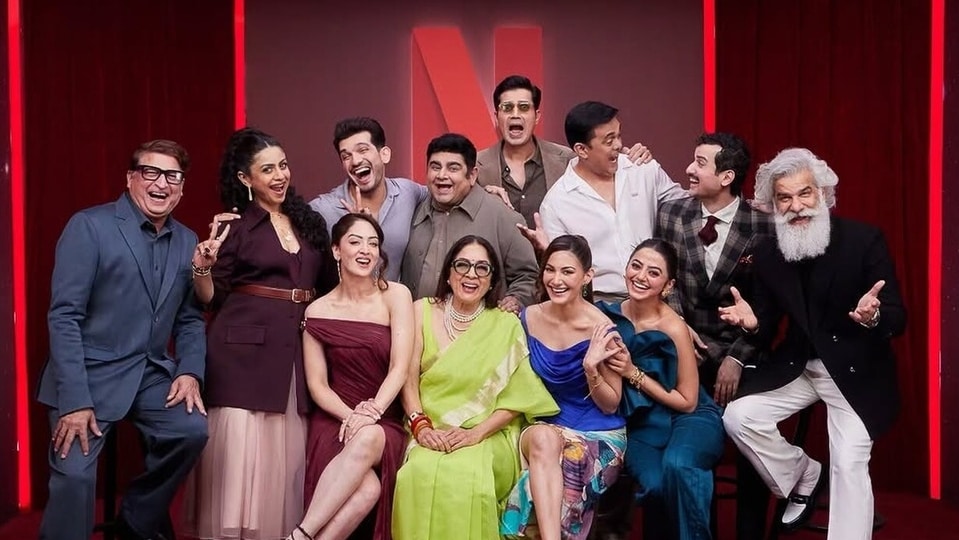
In an exclusive chat with Hindustan Times, the producer-director duo spoke about how the idea for Chumbak came about. They also opened up about the controversies surrounding Samay Raina’s India’s Got Latent and why family entertainers are back in demand.
How did the idea of setting a comedy around five neighbouring families come about?
Aatish: There was a time when whenever we had an emergency and had to rush, we would leave our grandparents and kids at our neighbour's house. We would happily take the children in, and we would also know what the children's allergies were and what they could or couldn't eat. We could even scold the neighbour's children, treating them as our own. Today, such a situation has arisen that we have become a polite, hypocritical society. So we thought, why don't we bring back that old-world charm again, where people have modern mindsets and modern houses, but bring back that lost value system where your neighbour is your first family
That's where it was born. So, five families living in a colony in an upmarket, upscale neighbourhood, all educated people, but having an old-world value system where anybody goes into anybody's house without knocking whenever there is an emergency.
JD: It was also somewhat personal because we have a group of five friends. Moreover, Aatish and I lived in the same building for many years. We shared life in such a way—for example, alcohol wasn't consumed at my house for many years, so whenever there was a dinner party, guests would have drinks at Aatish's house first before coming over to mine. We experienced that neighborhood closeness and friendship together, so we felt that we could bring everything together and create a show called Chumbak.
One must view life differently to be able to write comedy for decades. How do you do it?
Aatish: Life is miserable for everybody —whether the maid doesn't show up, the driver bumps the car, or a child is late for school. But you don't have to become miserable yourself; you just change the lens. Personally, I have faced a lot of problems in life. But instead of moping over my own struggles, I laughed at them. When you apply that lens, you find humour in hardships. In Chumbak, all the characters have problems, but have turned it around into warmth, humour, and hidden love. This show is made as an antidote to deal with real-life problems. It serves as a soothing balm for audiences' headaches.
You've worked with legendary actresses like Neena Gupta, Supriya Pathak, and Ratna Pathak Shah. What are the similarities and differences among them?
Aatish: The common thread among all three is discipline and total commitment to their characters. For instance, Neena ji said that she didn't bring her expertise to this show as she wanted to completely immersed herself into this world. She never forgot anything.
Ratna Pathak Shah read the script of Sarabhai vs Sarabhai and said, “Oh my god, this is middle-class bashing.” But she believed it. I told her she has to be a little bit hoity-toity, and not in a superficial way; you have to mean it, and she got it. She also suggested that her character shouldn't speak in complete sentences every time, which influenced how we wrote her dialogues.
Supriya Pathak never dolled up for any of her roles. She was the Shyam Benegal actor. And we mad her Hansa, who would just dress up and do nothing. She effortlessly transformed into her Hansa. Her persona changed as soon as she would put on her costume and gajra. All these three actors become those people. They don't have an alternate.
What is your opinion on modern YouTube comedy, such as Samay Raina's show, versus family-friendly comedy? And what do you think about censorship on such shows?
JD: We don't comment on others, as everyone has their own way of thinking and creating content. We practice self-censorship to ensure our content can be watched together by the entire family. If our families can watch it together, we are fine with that. Chumbak aims to bring families back together in the living room like a magnet because families have been separated by social media and other things. So this show is an attempt to make them sit together and watch.
Aatish: Personally, I doesn't watch comedy shows — I prefers dark thrillers and supernatural genres. My comedic writing is a natural byproduct of how I view everyday life.
What are your thoughts on Hanuman Ansh and the family entertainers that are being appreciated?
JD: I have seen the film, and I also researched it. Like in Gujarati, Laalo was a hit. People are facing tragedies and calamities, so they see hope, faith, and simple, realistic storytelling that touches the heart. Hanuman Ansh worked because it gave a good message in a simple-realistic way that touched the audience's hearts. Nobody sees the scale of film; people want to see goodness on screen.
Aatish: There is also a cultural resurgence where audiences want to reconnect with their roots and heritage. We have not exploited the kind of people India has produced, the stories we have had. Now, Ranbir Kapoor's Ramayana will come. When Ranbir said, "I will bring Sita back," I was like I am going to watch this film. So, there is a cultural resurgence of sorts.
In today's economy, do you think Maya Sarabhai would take advice from Monisha on how to save money?
Aatish: Maya would take Monisha's advice and then would do the exact opposite.


Get more updates from Bollywood, Taylor Swift, Hollywood, Music and Web Series along with Latest Entertainment News at Hindustan Times.


