E-Paper



India, Pak heatwave 100 times more likely by climate crisis: UK Met Office
The study shows that the natural probability of a heatwave exceeding the average temperature in 2010 is once in 312 years, the UK weather office said in a statement. In the current climate -- accounting for climate change -- the probabilities increase to once in every 3.1 years.

 Prefer HTon Google


New Delhi: The chances of a record-breaking heatwave in north-west India and Pakistan in the months of April and May was made more than 100 times more likely because of climate change, according to a study by the United Kingdom Met Office released on Wednesday.
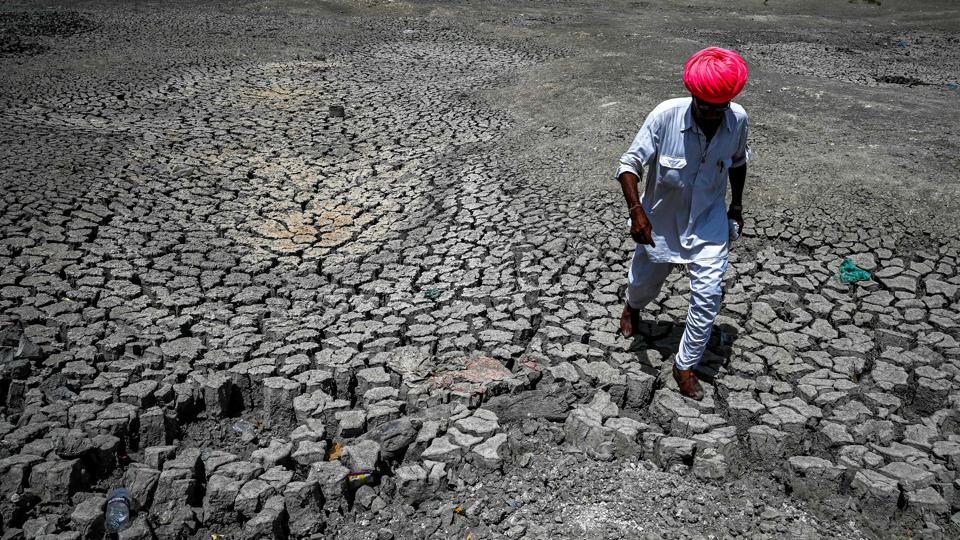
April and May in the year 2010 saw the highest combined average temperature in the region since 1900, according to the UK weather office. Therefore, it conducted an attribution study to estimate the chances of exceeding the record-breaking temperature witnessed in those months in 2010.
“The study shows that the natural probability of a heatwave exceeding the average temperature in 2010 is once in 312 years. In the current climate – accounting for climate change -- the probabilities increase to once in every 3.1 years. And by the end of the century, the study -- incorporating climate change projections -- shows this will increase to once every 1.15 years,” the UK Met Office said in a statement on their website on Wednesday.
“Spells of heat have always been a feature of the region’s pre-monsoon climate during April and May. However, our study shows that climate change is driving the heat intensity of these spells making record-breaking temperatures 100 times more likely. By the end of the century increasing climate change is likely to drive temperatures of these values on average every year,” said Nikos Christidis, who produced the attribution study.
“With temperatures exceeding 50°C in recent days, it is clear the current heatwave is an extreme weather event affecting communities and livelihoods,” said Professor Peter Stott, Met Office Science Fellow in Climate Attribution.
Although a new record is thought likely, climate scientists will have to wait until after the end of the month – when all the temperature records for the April-May period have been collated -- to see whether the current heatwave will exceed the levels experienced in 2010, they said.
The extreme pre-monsoon heatwave has eased a little after peak temperatures reached 51°C in Pakistan on Sunday, they said.
“However, the heat looks likely to build again from mid-week, peaking later in the week or into the weekend, with maximum temperatures again likely to reach 50°C in some spots, with continued very high overnight temperatures, Through the weekend temperatures are likely to lower again closer to average. There is also a continued enhanced risk of fires (largely from planned agricultural burning) in the region which would further add to the poor air quality. Some strong winds will lift dust plumes at times too,” said Paul Hutcheon, of the UK Met Office’s Global Guidance Unit.
“The link of climate change and increasing severity of heat waves is very simple. When the mean temperature goes up over time, the extremes will also change. This will also lead to changes in the atmospheric circulation. The mid-latitude oscillation or circulation will change and so will the Arctic Oscillation. We do not need to look at any other complex phenomenon, the fact that the mean temperature is going up makes it obvious that heat extremes will go up,” explained former earth sciences secretary and climate scientist M Rajeevan, responding to the UK Met Office statement.
“2009 was an El Nino year and the impact of that El Nino was felt till the pre-monsoon summer season of 2010. So the April-May temperatures for 2010 may have been the warmest so far. Climate change causes incremental changes in temperature so the possibility of severe heat waves is always there. But atmospheric conditions also contribute to this,” said DS Pai, director at the Institute of Climate Change Studies, government of Kerala and former IMD scientist.
“Long dry period, clear skies and incursion of warm northwesterlies made conditions favourable of extreme heat this year. This however may not be reflected in average temperature for 2022. Similarly all years in future will not record such heat wave spells but there will be higher possibility of severe heat,” said Pai.
A 2020 report titled “Assessment of Climate Change Over the Indian Region” by the ministry of earth sciences said a study of a 30-year period (1986–2015) shows a significant spike in the all India average annual increase of warm days (about 9.9 days per decade) and warm nights (about 7.7 days per decade) and decrease of cold nights (about −6.9 days per decade).
“The temperatures that formerly constituted ‘extreme’ are now just unusual. And temperatures which were previously all but impossible are the new definition of extreme. Crucially, the change of likelihood happens fastest for the most extreme temperatures… an increase of 1°C in global temperature therefore makes heat waves more than 1°C hotter,” the World Weather Attribution (WWA) network said in its guide for journalists on ‘Reporting extreme weather and climate change’ released last week.
WWA cited an IPCC report in 2021 that said a heatwave that would have occurred once in 10 years in the pre-industrial climate will now occur 2.8 times over ten years and be 1.2°C hotter. At 2°C of global warming, it will occur 5.6 times and be 2.6°C hotter.
Similarly, a heatwave that would have occurred once in 50 years in the pre-industrial climate will now occur 4.8 times over 50 years and be 1.2°C hotter. At 2°C of global warming, it will occur 13.9 times and be 2.7°C hotter.
WWA said heat waves form due to the behaviour of the atmosphere. For example, meanders of the jet streams, known as planetary waves can lead to extreme heat. Some examples of this include Europe 2003 and Russia 2010, in which 70,000 and 55,000 people died, respectively.
“India’s current heatwave has been made hotter by climate change that is the result of human activities like burning coal and other fossil fuels. This is now the case for every heatwave, everywhere in the world. Until net greenhouse gas emissions end, heatwaves in India and elsewhere will continue to become hotter and more dangerous”, said Friederike Otto, senior lecturer in Climate Science at the Grantham Institute, Imperial College London, according to a statement by the institute to Climate Trends, a climate communications organisation in April. Otto leads the WWA group.
“Heat waves have been occurring in India in heat wave prone pockets. It’s a matter of natural climate variability. But a 2004 attribution study managed to conclude that the 2003 heat wave in Europe that killed thousands of people is likely to have been caused by climate change. Attribution studies are very important so that there is more focus on adaptation and policy making to adapt to the changing climate. Unfortunately, in India such studies are not done. Heat waves of extreme intensity or very long duration etc are likely to be due to climate change and not natural variability alone. My feeling is that the recent heat wave spell in India is a result of climate change. I don’t have any data to back it but that’s my reading of the recent heat extremes in India,” Rajeevan had said earlier this month.
This year, the heat wave spell over India began in March. It lasted from March 11 to 19; March 27 to April 12; April 17 to 19 and April 26 to 30. In April several parts of northwest India recorded temperatures above 45°C spiking to over 47°C. Around 14 stations in different parts of the country broke temperature records in April.
India, on average, recorded its warmest March days in 121 years with the maximum temperature across the country clocking in at 1.86°C above normal, an analysis by the IMD had shown. Northwest and central India have experienced the hottest April this season in 122 years. In May again, there has been more than one heat wave spell, with parts of Delhi recording a maximum temperature of over 49°C.