
 E-Paper



Can AI Replace Human Emotions in Arts and Literature?
The emergence of AI-generated art raises questions about authenticity and emotional depth, as it lacks the human touch.

 Prefer HTon Google


Can AI truly replace human emotions and generate everlasting, extraordinary works of art and literature? This is a question that lingers in an era where AI-generated works of arts and literature are emerging into the cultural mainstream. A growing concern is whether people can even differentiate between human-made and AI-made work, especially when the latter is rarely labelled for readers and art connoisseurs.
The rise of social media has already made copying and plagiarism effortless. Now, AI allows people to bypass even more loopholes. The result: greater risks for originality and fairness in creative industries.
Although plagiarism and imitation have existed for years, the impact today is far more severe for young writers and artists. Competition is intense, and the pool is crowded with fresh talent. The responsibility for authenticity must lie with publishers, platforms, and profit-driven AI apps. Any AI-generated work should be clearly labelled, and copied work should be traceable to its origin.
Authors and publishers sued AI company Anthropic, for using their unauthorised books to train an AI model (Claude). The Indian news agency ANI filed a lawsuit against OpenAI in a New Delhi court, alleging that OpenAI used ANI’s published content without permission to train its AI model. These cases are a strong evidence of concerns over misuse of existing works for training AI, intellectual property rights, and attribution issues. This shows the need for constant reforms in IP rights, to keep pace with the evolving technology.
Yet beyond the legality lies a deeper issue, that is emotions. Non-fiction literature often comes from personal and lived experiences. It flows from the heart, into the imaginations of mind and then into the words or brushstrokes in case of art. Human work is not always perfect, symmetrical, or linear but its beauty lies in the imperfections. It is the way human emotions flow and pour into art and literature, leaving an indelible mark on those who experience them, that makes these creations truly remarkable.
AI, in contrast, can only recombine what humans feed into it, lacking any connection to those emotions. Even as it improves and expands its database, it cannot capture the vast range of emotions that surge through a human brain, in a single moment. Still, demand for AI-generated novels, paintings, poetry, music, and other forms is growing. It is quick, efficient, and nearly flawless, requiring little brainstorming or originality from the user.
More recently SAG-AFTRA condemned the introduction of “Tilly Norwood,” an AI-generated Actor, stressing that creativity must remain human-centered. SAG-AFTRA emphasized that AI lacks life experience, emotion, and audience appeal, and that its use creates ethical and economic problems.
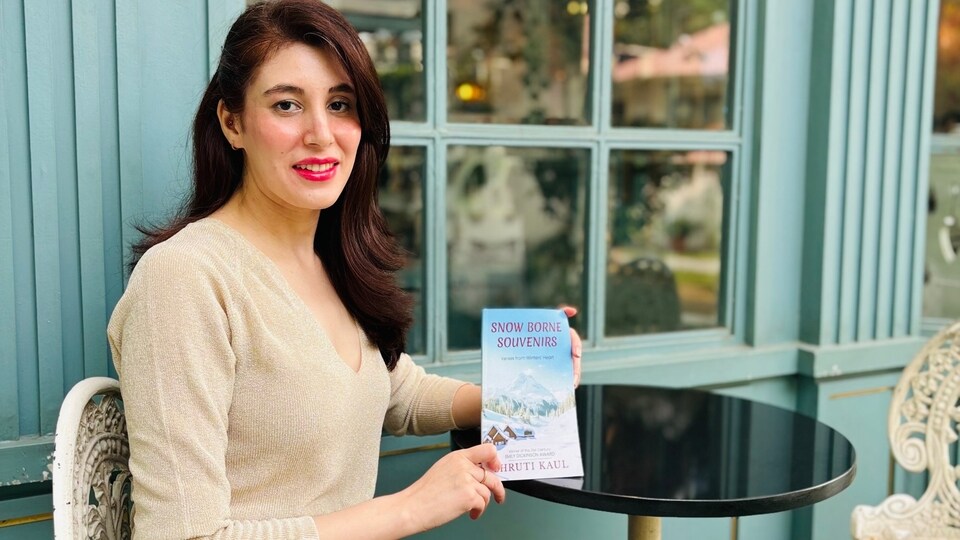
At Rising 2024, an AI-generated poem was presented in honour of IPS Officer and Former Lieutenant Governor of Puducherry Ms. Kiran Bedi. AI’s ability to mimic certain poetic styles and evoke emotions, using other poets’ work as training fodder, diminishes the value of human writing. As a poet and author of the poetry book Snow Borne Souvenirs, this invokes insecurity, ethical concern, and self doubt.
As a writer and artist, I do not disapprove of AI entirely. In fact, these tools can enhance creativity: pruning drafts, refining structure, and shortening the production timelines. From publishing assistance and market research to creating visual art and experimenting with artistic boundaries, AI plays a crucial role in collaboration between humans and machines. The exhibition Neti-Neti: Glitch in the Code by LN Tallur, held at Nature Morte Gallery in New Delhi, blends science, data, mythology, and AI themes. The pieces (bronze sculptures and mixed media) question reproduction, commodification, and how identity is coded and re-coded through technology. It is a strong example of how contemporary Indian art is engaging critically with AI’s cultural implications.
As AI continues to expand its reach in the creative sphere, and reshape our relationship with art and literature, it must be monitored and regulated. Perhaps the future will not be about machines replacing artists, but about redefining creativity in an age where human touch and digital precision coexist. The challenge, and the opportunity, lies in ensuring that the technology amplifies, rather than erases, the voices and emotions that make art and literature timeless.
The article is written by Shruti Kaul, a poet, author of the book Snow Borne Souvenirs, and a content creator. Kaul pursued engineering and an MBA before stepping into the world of writing.
Note to the Reader: This article is part of Hindustan Times' promotional consumer connect initiative and is independently created by the brand. Hindustan Times assumes no editorial responsibility for the content.


