
 E-Paper



The New Workplace Contract: What the Next Generation of Employees May Expect from Workspaces
The shift in India's workforce dynamics sees Gen Z and millennials prioritising meaningful office experiences.

 Prefer HTon Google


As Gen Z and millennials now make up the majority of India’s workforce, the definition of a good office has shifted completely. The companies that recognise this early are not just winning at hiring. They are building cultures that actually last.
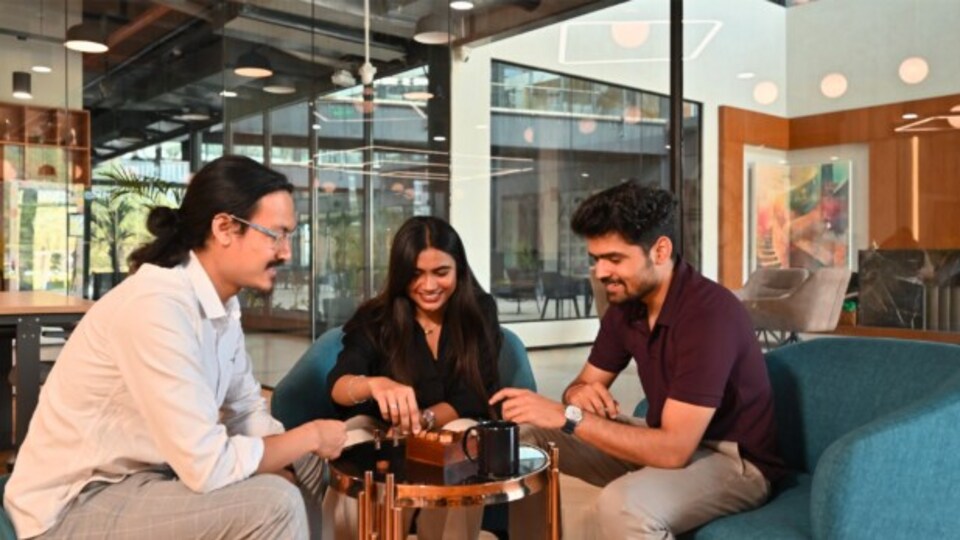
Something has gradually changed in how Indian professionals relate to the idea of going to work. For an earlier generation, the office was largely functional. You showed up, you sat down, you got through the day. For the generation now filling much of India’s workplaces, the office carries a different kind of meaning. It acts as a signal. It indicates, before a single word is spoken, how the organisation views the people working within it.
This is not about entitlement. It reflects evolving expectations, shaped by a world where talented people have real choices. And the companies adapting to this shift early are seeing changes in how they attract and retain talent. Managed workspace operator DevX, with over 1.5 million square feet of office space across 12 cities, has been observing this change over time.
The Office as an Expectation, Not a Perk
The years of remote and hybrid work did not just change where people work. They changed what people are willing to put up with when they return to offices. Employees came back with clearer preferences: natural light, flexible seating, spaces that support focused individual work as easily as they support group conversation. The old formula of rows of desks under bright overhead lighting, a pantry in the corner, and a few glass-walled meeting rooms simply does not hold in the same way anymore.
“The new generation of employees are not asking for a desk and a Wi-Fi password. They want to feel genuinely proud of where they work. An environment that tells them their employer actually thought about their day. That signal matters far more than most organisations realise.”
-- Parth Shah, Chairman, DevX
Across DevX’s network of 250+ enterprise clients and 12,000+ professionals, the same pattern is observed. Organisations that invest in their workspace may see changes in engagement, attrition, and day-to-day output. A well-designed office is not just an overhead. It is, in practice, one of the tools that can support retention.
Design That Does the Talking
When a next-generation employee walks into an office for the first time, they form an opinion within minutes. Poor design may signal lack of attention. Considered design may communicate that the organisation has thought about the people using the space. This is exactly the space that DevX Design and Build, DevX’s dedicated design and build vertical, has stepped into. The team’s work is not about aesthetics in isolation. It is about aligning a company’s culture and values with the physical workspace experience.
Acoustic zones that protect deep work, biophilic elements that reduce stress, collaboration pods, and high-energy brainstorming areas sitting alongside quiet, focused cabins. Next-gen employees understand instinctively that different kinds of work require different environments, and they expect their office to honour that reality.
“Design is the first language an organisation speaks to its people. Before any policy document is shared, or any onboarding session begins, the space itself has already communicated about something. When we work on a DevX client space, we are not decorating. We are building trust between an employer and the people they are asking to show up every single day.”
-- Rushit Shah, Director, DevX
Staying Because They Want To, Not Because They Have To
There is a contrast at the heart of next-gen workforce behaviour. This generation is perfectly comfortable moving on when something is not working. And yet, when the conditions are right, they may stay for longer durations. This is particularly visible through DevX GCC, DevX’s global capability centre vertical, which has been helping enterprises build stable and functional teams in India’s Tier 2 cities.
Professionals choosing Ahmedabad, Vadodara, or Indore are making a deliberate trade. They are closer to family. They are not spending a third of their salary on rent or two hours of everyday commuting. And when they arrive at an office that has been designed with care, the choice to stay may become easier. Industry data consistently shows attrition in these markets running 8 to 12 percentage points lower compared to major metros.
“What we see consistently across our GCC deployments is that Tier 2 professionals are not settling. They are choosing, with real intention. They have the skills that global companies genuinely need, and they want workspaces that reflect that value back at them. When the workspace gets it right, the retention takes care of itself.”
-- Umesh Uttamchandani, Managing Director, DevX
The Belonging Question
Beyond the physical environment, the next generation is asking something harder to quantify: does this place give me something to be part of? DevX’s approach to community across its spaces, through curated events, inter-company connections, and a real focus on the day-to-day well-being of every professional, reflects a conviction that a great office is an ecosystem rather than just a piece of real estate.
“Everyone talks about engagement but very few actually build for it. At DevX, we think about the happiness index of every person in our spaces. The environment, the touchpoints, the sense that someone has thought about making their day a little better. That is what the next generation is really asking for. Not just a good office. A good day, every day.”
-- Yash Shah, Director, DevX
The next generation is not asking for more than those who came before them. They are asking for something different. Something less transactional, more intentional. Workspaces that treat them as whole people, not just seat counts.
For enterprises that meet this expectation, the returns are observable in metrics such as attrition and engagement. For those still treating the office as a line item to be minimised, the cost will show up in turnover, in quiet disengagement, and in talent that eventually finds somewhere better.
The companies that will win the next decade of talent are not waiting for the workplace debate to settle. They are already being built. DevX has been doing exactly that since 2017, across 12 cities, 1.5 million square feet, and hundreds of enterprises that chose to take workspace seriously. Through DevX Design and Build and DevX GCC, the infrastructure for a people-first future of work is not just a conceptual framework. It is already in operation.


