
 E-Paper



Alwar lynching victim’s family waits for justice
A year on, the death of Rakbar Khan in an attack by cow vigilantes has thrown the lives of his friends and family in disarray. His eldest daughter had to quit school and his friend is facing the long-drawn legal process.


With a blue dupatta over her head, a frail Asmeena lies on a charpoy in the courtyard of her mother’s house. She squirms with discomfort as flies buzz around her face and legs until her mother raises her hand to ward them off. Paralysed from the waist down after an accident, she switches sides with great effort and little assistance, only to aimlessly stare at the blank blue wall against which the charpoy rests.
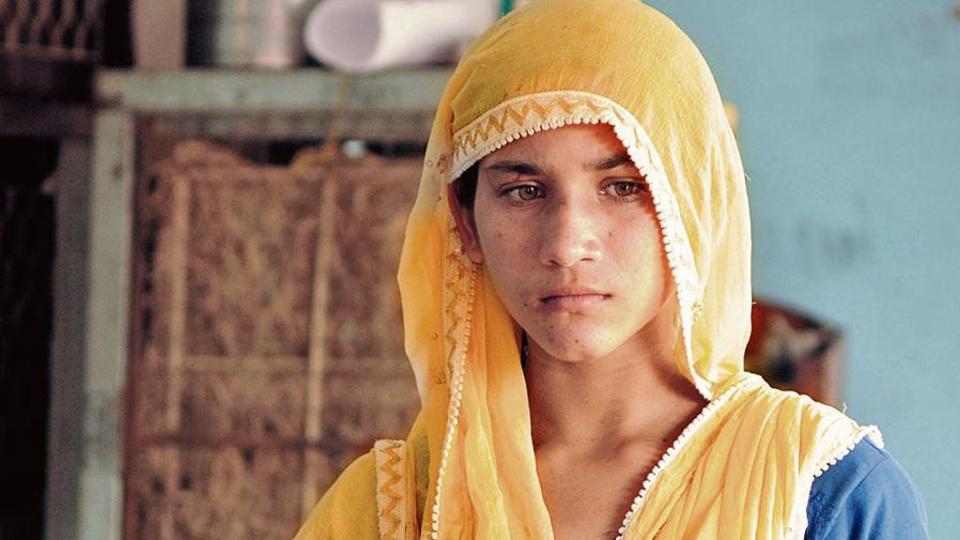
Asmeena is the wife of Rakbar Khan, a Muslim dairy farmer from Mewat, who was lynched on suspicion of cattle smuggling last year in Alwar’s Lalawandi village. Khan was returning to Mewat with his friend Aslam after purchasing two milch cows when they were confronted by a group of vigilantes. The mob caught hold of Khan while Aslam managed to escape.
A resident of Kolgaon village, Khan’s murder wasn’t the first time that someone from the district had been attacked on suspicion of cow smuggling. Roughly a year before, Pehlu Khan, a cattle farmer from Jaisinghpur village in the district, was lynched on suspicion of cow smuggling.
A year after Rakbar Khan’s death, Hindustan Times visited Tapkan and Kolgaon villages in Mewat district to speak to those whose lives had been altered forever, following the incident.
Tapkan
The events of July 20, 2018, are well etched in Asmeena’s mind. She has, after all, spent the past year cursing the ill-fated day and wishing, albeit in vain, that it never unfolded the way it did. “I kept calling him repeatedly, but his phone was switched off. The next morning, I got a call from the sarpanch (village head) who said that he had been killed in Ramgarh. My world was destroyed,” recalls Asmeena, as her eyes well up with tears.
Her voice wavers as she cries and tries to talk incoherently in snatches. “They could have taken him to the police. Why did they have to kill him?” she asks, directing her piercing gaze at her family members, who had gathered around. With no answer forthcoming, she started talking again.
“Gau ke upar insaan ki jaan le li (they killed a human life for a cow). An animal’s life is dear to them but there is no value for a human life. His only crime was that he was a Muslim. We used to rear cows and treated them like our children. With no source of income, we survived on the little money we got by selling cow milk,” Asmeena said.
On the fateful day, Khan had taken ₹30,000 from Asmeena and told her he would buy milch cows from Ramgarh. By selling more milk, he wanted to increase his income and send all his children to school. Little did Asmeena know that he would pay with his life for dreaming big.
“He was beaten brutally by the killers. His neck was broken in three places. All that is left with me are memories of him. Even if I try, I cannot forget him. He was a loving father and husband,” said Asmeena, crying uncontrollably, while holding up a passport-sized photograph of Khan.
Khan left behind Asmeena and seven children. While the eldest daughter Sahila, 14, and the youngest Manshira, seven, are living with their mother, their siblings are studying at a charitable madrasa in Aligarh.
She said the children were sent away in the hope that they would be able to do something better with their lives; something that would empower them and not force them into a struggle for survival — a struggle that didn’t deprive them of their right to life, as had happened with their father.
“My children went to Aligarh within 15 days of their father leaving us. It was a difficult decision, but I had to look at their best interests. How would I take care of all of them without any support?” said Asmeena.
The days that followed, however, came with their own set of trials and tribulations for both Asmeena and her children. “The hostel warden often calls to say that my children cry a lot. They are unable to control their tears when they remember their father. They miss him so much. My house that once used to teem with people and happiness has now become empty. There is no joy in life after losing Khan. He loved his children unconditionally. Even with meagre resources, he tried to fulfil all promises. The girls cry when they recall memories of him,” she says.
In the aftermath of the tragedy, the Haryana government and the Haryana Waqf Board gave the family a compensation of ₹5 lakh and ₹3 lakh, respectively.
When Asmeena was yet to overcome the grief of losing her husband, tragedy struck again. In December, barely four months after her husband’s death, the family met with an accident when Asmeena, her eldest daughter Sahila, and Asmeena’s niece were on their way to Aligarh to visit other family members.
“I was going to visit my children for the first time in months. We left early in the morning in a rented car and had reached the highway when a truck hit the car. It all happened in a span of seconds. The next thing I remembered was waking up on a hospital bed three days later,” said Asmeena.
Asmeena’s niece, Sanjida, succumbed to her injuries, while she and Sahila were critically injured. With a broken spinal cord, rib cage and other major injuries, Asmeena was admitted to the AIIMS Trauma Centre in New Delhi for 20 days. Sahila was treated for injuries at the Nalhar Medical College in Mewat.
Asmeena has been bedridden since the accident and has been living with her maternal family in Tapkan. Doctors are unsure if she would be able to walk again. Asmeena’s mother, Kareeman, said around ₹1 lakh from the compensation amount had already been used up on Asmeena and Sahila’s treatment.
“The bank account where the compensation amount has been deposited is in Doha village, near Kolgaon. However, Asmeena’s in-laws are not in favour of her withdrawing the money. We withdrew ₹50,000 on two occasions for Asmeena’s treatment when she was admitted to AIIMS,” she said.
Asmeena said she has little hope of getting justice since all the accused are yet to be arrested even one year after the incident. She, however, wants the killers to be given the death penalty. “The ones who killed Khan should be given the death penalty or life imprisonment. The government should not be lenient towards them,” she said.
Asmeena’s eldest daughter Sahila studied in Class 5 in the government school near Kolgaon until last year. Sahila took on the responsibilities of the household while Asmeena underwent iddat (four-month mourning), and had to quit school. She would wake up at the crack of dawn to feed the cows and get ready to leave school by 8am and return by three in the afternoon. School days, she said, were carefree. She misses school, but of all the things that she left behind, she regrets losing the opportunity of learning English the most.
“I used to like Hindi, maths and English. It was the first time that we were being taught English in school. I still remember the alphabets and can write some words,” she said, excitedly picking up a pen to demonstrate her skills.
“R K B R” she writes and reads it aloud as “Rakbar”. When informed about the missing vowels, she smiled sheepishly and said, “It’s been more than a year since I left school. Too many days have passed, due to which I must have forgotten to write.”
Sahila’s books and other belongings were left behind in Kolgaon when she moved to Tapkan with her mother. She has remained away from books and friends, but is hopeful of resuming her studies one day. “If given a chance, I will go to school again. Education is everything. By studying, I can become a lawyer or a teacher. What will I do without education?” Sahila said.
Last year on July 21, around 8am, Sahila was in a neighbourhood madrasa when she first heard of her father’s death from a boy. An incredulous Sahila vehemently brushed aside the possibility back then, knowing little that it would change her life forever. “A boy at the madrasa told me that my father had been killed. I asked him to go away. This could not be true. Mera baap tou kaam par gaya tha (my father had gone out for work),” she said.
Sahila had asked Khan to buy her clothes and barfi (sweet) from Rajasthan when she last saw him. “He had promised to bring all that I had asked, but he never returned. I miss him a lot,” Sahila said.
Kolgaon
Kolgaon in Ferozepur Jhirka is one of the last villages of Mewat that touch the Rajasthan border, after which one enters Alwar. Most people in the village are into cattle farming and visits to Rajasthan for buying cattle weren’t out of the ordinary. Khan’s murder, however, has changed the locals’ equation with the neighbouring state. Most residents of the village are sceptical about going to Alwar for cattle-related needs.
Khan’s death continues to weigh heavily on the people’s minds, and the fear of becoming the next victim of lynching is palpable.
Over the past year, locals have also got accustomed to visitors — people from law enforcement agencies, media, and activists — who visit often, asking for Khan’s house.
Located in a narrow and winding interior street of the village, Khan’s house wears a deserted look, as no one lives there. The cows that Khan left behind are now taken care of by his parents, who live on the outskirts of the village in a modest dwelling. The family’s house has one room and a small shed next to it. Khan’s father, Suleiman, lives here with his wife, Habeeban.
On July 21 last year, around seven in the morning, Suleiman got a call from his elder son, Ilyas, informing him that Khan had been killed. “I ran to his house. With 10-15 people, we went to the police station in Ramgarh, where we were told that he had been sent to the hospital. The doctors told us that Khan had been hit at 35 spots. He was well-built and couldn’t be overpowered by two or three people. He was surrounded by 10-15 people who hit him all over his body with lathis, we were told by his friend,” said Suleiman.
One year later, Suleiman still shivers when he thinks about the brutality with which Khan was killed. “I couldn’t see him. His body was swollen. There was blood all over and patches of clothes. He was ice-cold. No father should live to see a day like that.”
Suleiman alleged the police washed its hands of by saying Khan had been admitted to a hospital, while the hospital said they had discharged him. “It was a mere formality for them. He was killed and taken to the hospital much later.”
Suleiman is hopeful that justice will prevail and Khan’s killers will be punished. He has been selling off his goats to arrange money for trips to Alwar.
“We want justice. It’s the only hope that is keeping us alive. Around 15 times a month, I go to court. We hardly have any resource or money to manage travel and lodging expenses. But giving up is not a choice for us,” he said.
Suleiman’s family isn’t the only one that is awaiting justice for Khan’s murder. Aslam, who was accompanying Khan when the incident took place, has also spent the past year under a cloud of uncertainty.
While he was lucky to have survived, fear has gripped him and family.
An eyewitness in the ongoing case, he fears for his life. “Those who killed Khan threatened me when I identified them in the court. Since then, I avoid travelling anywhere outside the village. I cannot take up any work that requires me to travel outside the village either,” said Aslam.
While fear and uncertainty have become a constant in his life, he is most troubled by the painful memories of the incident. Aslam recalls how both he and Khan were confronted by a group of eight to nine people, with two others on a motorcycle.
Addressing the two as cow smugglers, they started attacking Khan with lathis and rifle butt amid abuses. Aslam, meanwhile, slipped into the cotton fields under the cover of darkness.
“I hid in the fields for what felt like hours. I survived but I can never forget what happened to Khan. He kept pleading but they did not relent. They kept using religious slurs while hitting him and said they enjoyed the support of a local politician. After a while, I could no longer hear his voice,” said Aslam, who reached Kolgaon the next afternoon.
Aslam identified five people in the court, of whom three have been held. Dharmendra Yadav, Paramjeet Singh, and Naresh Singh were arrested, while Nawal Kishore, a protector appointed by the Vishwa Hindu Parishad, and Vijay are mentioned in the FIR.
Kasim Khan, the advocate who is fighting Suleiman’s case, said it is usual for trials to take one year. “Some more evidence needs to be produced in the court after which the statement of those accused will be recorded. The relief is that the accused are in jail. Their bail applications were rejected by the high court,” said Khan.


