
 E-Paper


Forest dept proposes to fix tracking device on leopards
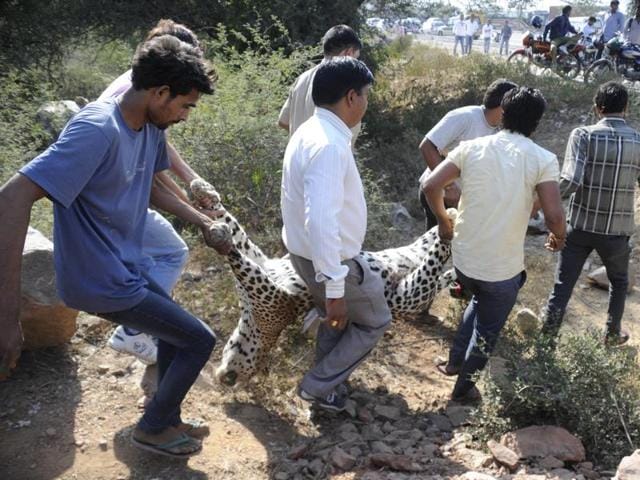
The forest department has sent a proposal to the Wildlife Institute of India (WII) to conduct a long-term study on leopards in the Aravallis. The move comes after residents of Mandawar village in South Haryana beat to death a leopard that strayed out of its habitat and attacked villagers.


The forest department has sent a proposal to the Wildlife Institute of India (WII) to conduct a long-term study on leopards in the Aravallis. The move comes after residents of Mandawar village in South Haryana beat to death a leopard that strayed out of its habitat and attacked villagers.
As per the proposal, five leopards in south Haryana will be captured, fitted with a GPS-enabled radio-collar and released back into the forest. If the proposal is approved, it will be a first-of its-kind programme in the state.
As the wildlife population is increasing in the Aravallis, there is a need to study the pattern of movement of animals to develop a clear management plan for conservation, and avoid man-animal conflicts.
Over the last two months, five leopards and a few hyenas were spotted by camera traps in Bandhwari, Damdama and Mewat. The camera traps were installed by the forest department.
“Only after a detailed study will we get information about the movement of wildlife in the area. It will help form a clear plan to manage wildlife in the region,” MD Sihna, conservator of forest, south Haryana, said.
“A similar project was conducted in Maharashtra and it was successful as human beings and leopards co-exist in the same area now. We plan to adopt a similar project in the region,” Sihna said.
In March, the WII conducted a survey in the Aravallis to assess the presence of wildlife species, especially leopards and other predators, in the region. The radio-collars project will help in identifying major wildlife hot spots and managing local machineries, Sinha said.
Bilal Habib, project head for wildlife survey, WII, said, “Radio-collars will help gather information about leopards. The habitat and their path can be traced if the animals are fitted with GPS-enabled collars. This exercise will also give information on the pattern of their entry into humans habitations.”
During the survey in March, the team found a 2.5-km-long trail of leopard pugmarks near Damdama Lake. Pugmarks of hyena and Indian fox were also found. The survey also confirmed the presence if mongoose, jackal and nilgai in the region.

Stay updated with all the Breaking News and Latest News from Mumbai. Click here for comprehensive coverage of top Cities including Bengaluru, Delhi, Hyderabad, and more across India along with Stay informed on the latest happenings in World News.


